Lahabi Kebab
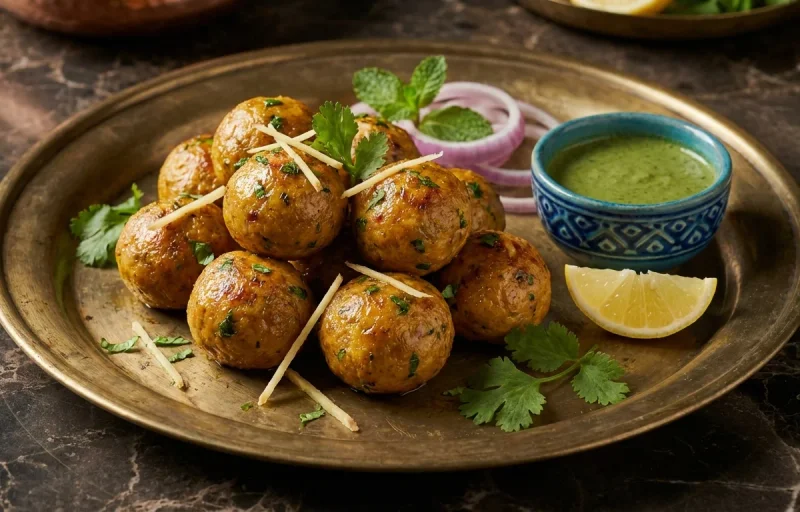
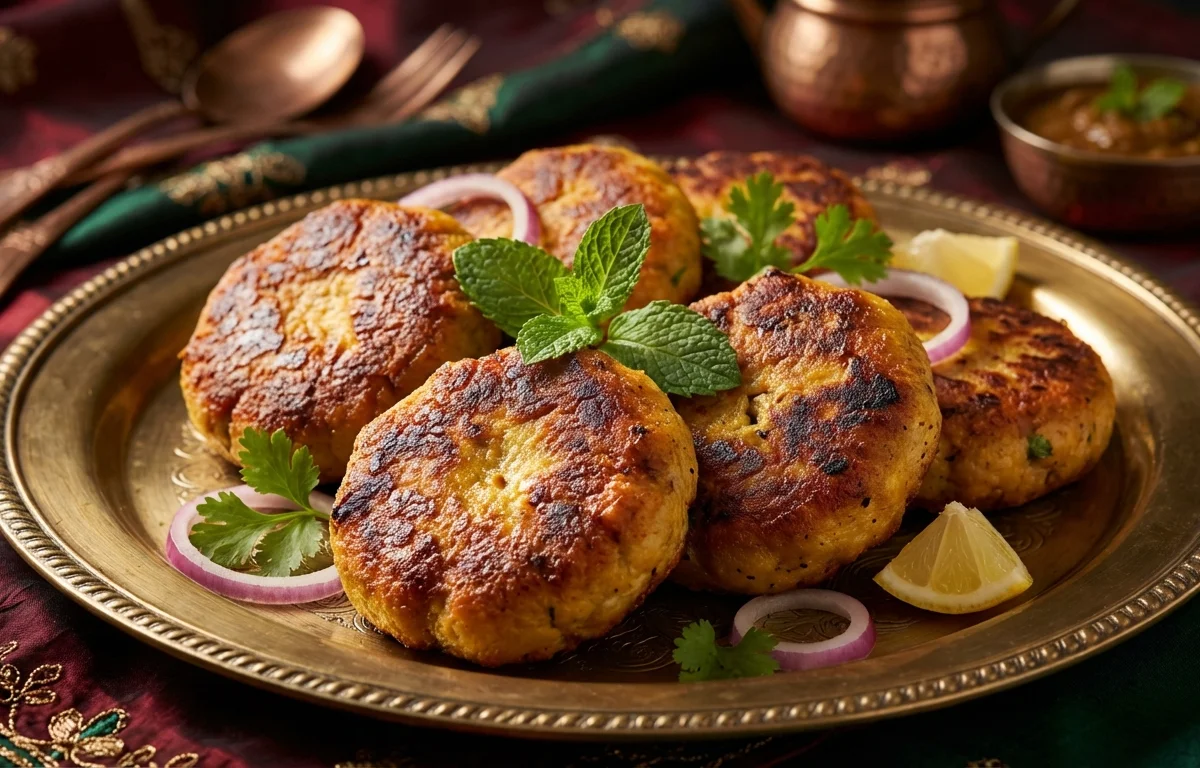
Incredibly tender, melt-in-your-mouth mutton kebabs with a velvety texture that comes from raw papaya paste and slow pan-frying. These Awadhi-style flat kebabs are delicately spiced, pan-seared to a golden crust, and finished with a squeeze of lemon. A regal appetizer that defines Lucknowi cuisine.
For 4 servings
- prep · ~10 min
Mince the mutton to a fine paste.
1.Wash and pat dry the boneless mutton pieces.2.Run them through a meat mincer using a fine plate; mince twice for a smooth, pasty texture.3.Transfer the minced mutton to a large mixing bowl.TIPIf you don't have a mincer, pulse chilled mutton cubes in a food processor until smooth, but avoid over-processing into a paste. - mix · ~30 min
Marinate the kebab mixture.
1.Add grated raw papaya, ginger-garlic paste, chopped onion, green chili, coriander leaves, and mint leaves to the minced mutton.2.Sprinkle roasted gram flour, garam masala, cumin powder, red chili powder, black pepper, and salt.3.Add lemon juice and mix everything thoroughly with your hands for 2 minutes until well combined.4.Cover and marinate in the refrigerator for 30 minutes.TIPRaw papaya contains enzymes that tenderize the meat naturally. Don't marinate for more than 1 hour or the meat can turn mushy. - prep · ~5 min
Shape the kebabs.
1.Divide the mixture into 8 equal portions.2.Wet your palms with a little water and flatten each portion into a thin, round patty about 2.5 inches wide.3.Keep the edges smooth and even so they cook uniformly.TIPSlightly damp hands prevent the meat mixture from sticking while shaping. - fry · ~10 min
Pan-fry the kebabs until golden.
1.Heat 1 tbsp ghee in a non-stick pan over medium heat.2.Place 3-4 kebabs in the pan without overcrowding.3.Fry for 3-4 minutes on one side until golden brown and crisp.4.Flip gently with a spatula and fry the other side for 3 minutes, adding a few drops of ghee around the edges if needed.5.Repeat with remaining ghee and kebabs in batches.TIPMedium heat is key — high heat will burn the outside before the inside cooks through. - garnish
Garnish with onion rings and lemon wedges.
1.Arrange kebabs on a serving platter.2.Scatter sliced onion rings over the top.3.Place lemon wedges on the side for squeezing over the hot kebabs.TIPServe immediately while the kebabs are hot and crisp for the best melt-in-your-mouth experience.
What to keep in mind.
7 tips from the recipe — small details that make a real difference to the final dish.
- 1For authentic Awadhi taste, mince the mutton twice to achieve a smooth, homogenous paste.
- 2Raw papaya is a natural meat tenderizer; do not marinate for more than 60 minutes to avoid mushy kebabs.
- 3Wet your palms lightly while shaping each kebab to prevent the mixture from sticking.
- 4Fry on medium heat only; high heat will burn the crust while leaving the inside raw.
- 5Use roasted gram flour (besan) to bind the mixture and add a nutty flavor — roast it until fragrant before adding.
- 6Serve the kebabs immediately after frying to retain their crisp exterior and tender interior.
- 7Store uncooked shaped kebabs in the fridge for up to 6 hours; freeze them between parchment for later use.
Adapt it for your goals.
Low-oil
Replace pan-frying with shallow-frying using just 1 tablespoon of ghee per batch, or bake at 200°C (400°F) for 12-15 minutes, flipping halfway, for a lighter texture.
chicken versionChicken version
Substitute boneless chicken thighs for mutton (no raw papaya needed) for a quicker, milder-flavored kebab that cooks in less time.
air fryerAir-fryer
Brush shaped kebabs with ghee and air-fry at 180°C (350°F) for 8-10 minutes, flipping once, for an extra-crisp exterior without deep-frying.
Why this is on our healthy list.
High-Quality Protein
Mutton is a rich source of complete protein, essential for muscle repair and growth.
Digestive Aid from Papaya
Raw papaya contains papain, an enzyme that aids protein digestion and supports gut health.
Iron for Energy
Mutton provides heme iron, which is easily absorbed and helps combat fatigue.
Antioxidant Herbs
Fresh mint and coriander leaves add antioxidants and anti-inflammatory compounds to every bite.
Frequently asked questions
Yes, boneless lamb leg works well — it's more tender, so reduce the papaya marination time to 20 minutes.