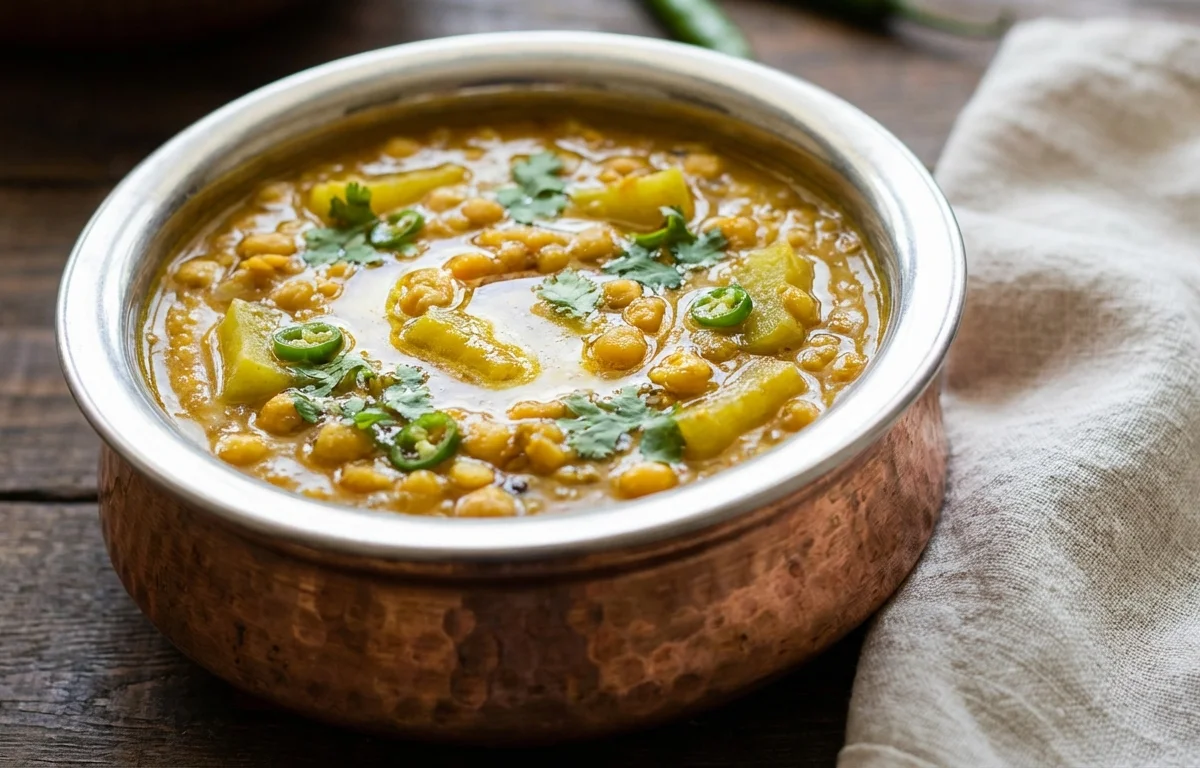
Lauki Chana Dal
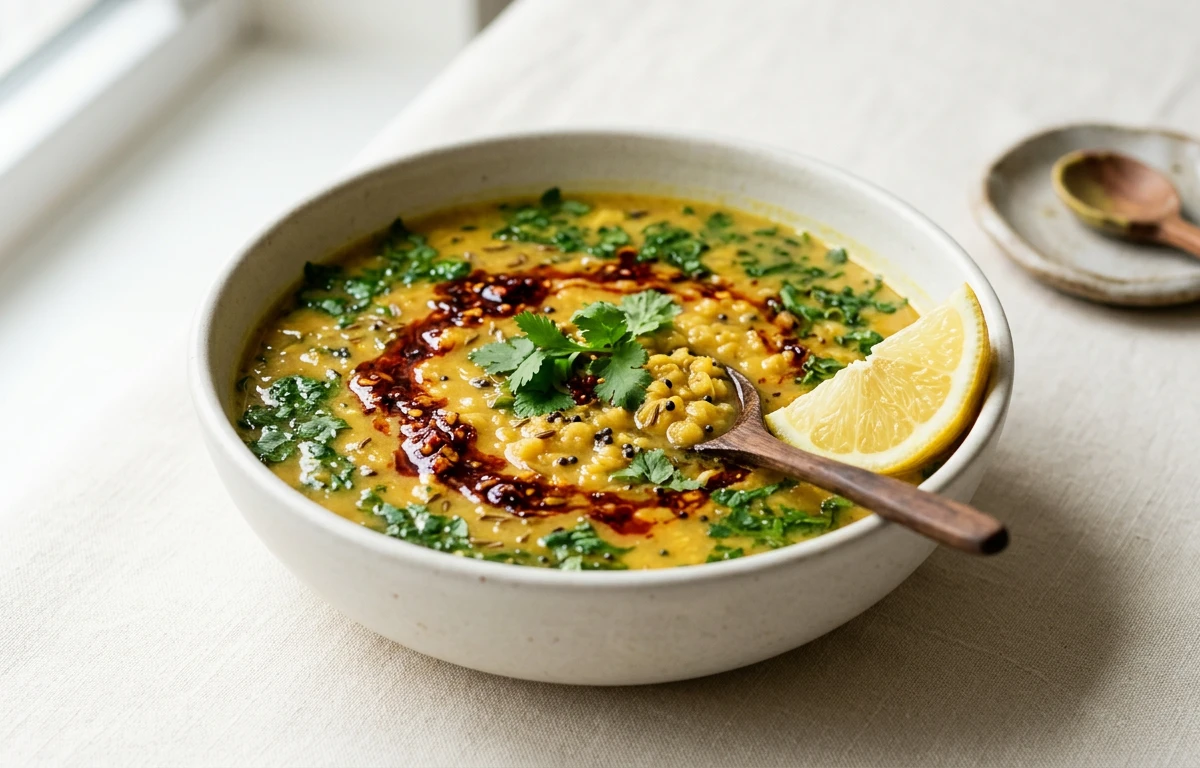
A light, homestyle curry where tender bottle gourd cooks down with nutty chana dal, ginger, tomato, and simple spices. It is comforting, easy on the stomach, and fits beautifully with roti or a small bowl of rice.
For 4 servings
- prep · ~15 min
Prepare the dal and vegetables.
1.Wash the chana dal well and soak it in water for 30 minutes.2.Peel the lauki and cut it into small even cubes.3.Chop the onion, tomato, ginger, and garlic.4.Slit the green chili and keep the coriander leaves ready. - saute · ~10 min
Cook the onion and spices.
1.Heat oil in a pressure cooker over medium heat.2.Add cumin seeds and let them sizzle for 20 to 30 seconds.3.Add onion and cook until soft and light golden, about 4 minutes.4.Add ginger and garlic, then cook for 1 minute until fragrant.5.Add tomato, turmeric powder, red chili powder, and coriander powder. Cook until the tomato softens, about 4 to 5 minutes.TIPKeep the heat medium so the spices toast without burning. - pressure cook · ~15 min
Pressure cook the lauki and dal.
1.Drain the soaked chana dal and add it to the cooker.2.Add the lauki, green chili, salt, and water.3.Mix well and close the lid.4.Pressure cook for 4 whistles, then let the pressure release naturally.TIPThe dal should be soft but still hold its shape slightly for the best texture. - simmer · ~4 min
Simmer to finish the dal.
Open the cooker and stir the dal gently. If it looks too thick, add a little water. Sprinkle in the garam masala and simmer uncovered for 3 to 4 minutes so the flavors come together.
- garnish
Finish with coriander leaves and lemon juice.
- serve
Serve hot with roti or plain rice.
What to keep in mind.
6 tips from the recipe — small details that make a real difference to the final dish.
- 1Cut the lauki into small, even cubes so it softens at the same rate as the chana dal.
- 2Do not skip the 30-minute soak; it helps the chana dal cook evenly without turning chalky in the center.
- 3Cook the tomatoes until the oil looks glossy at the edges, or the curry can taste raw and sharp.
- 4After pressure cooking, stir gently so the lauki pieces stay intact instead of dissolving completely.
- 5Add lemon juice only after switching off the heat to keep its fresh brightness and avoid bitterness.
- 6If reheating leftovers, add a splash of water first because chana dal thickens noticeably as it sits.
Adapt it for your goals.
No-onion-no-garlic
Skip onion and garlic, use a little extra ginger and cumin, for a lighter satvik-style version that still tastes balanced.
spicierSpicier
Add one more green chili or a bit more red chili powder if you want the gentle dal to have more heat.
thin soupyThin-soupy
Increase water slightly and simmer less after pressure cooking for a more fluid dal that pairs especially well with rice.
tadka finishTadka-finish
Top with a quick ghee tempering of cumin and a pinch of chili powder for a richer, more aromatic homestyle finish.
Why this is on our healthy list.
Fiber-Rich Meal
Chana dal and lauki both contribute fiber, making this curry filling while still feeling light.
Plant-Based Protein
Chana dal adds satisfying plant protein, helping make this simple curry more substantial.
Gentle, Hydrating Ingredients
Bottle gourd has a high water content and cooks into a soft texture that many people find easy to eat.
Moderate Oil Cooking
The recipe uses only a small amount of oil, relying on pressure cooking and simmering for texture and flavor.
Frequently asked questions
Yes, but the chana dal will usually need longer pressure cooking and may cook less evenly than soaked dal.