
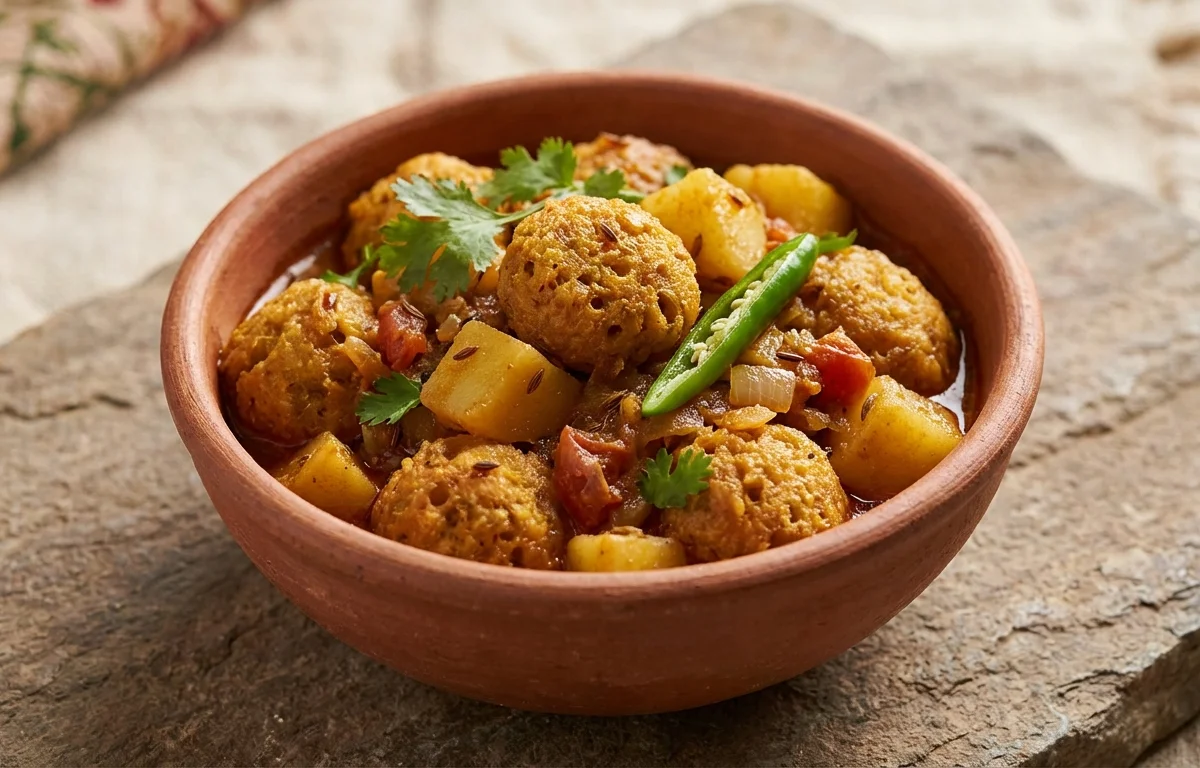
Mangodi Aloo Sabzi
A comforting Rajasthani-style potato curry with sun-dried moong dal mangodi simmered in a lightly spiced tomato-onion gravy. It cooks into a hearty sabzi that pairs beautifully with roti or plain rice.
For 4 servings
- prep · ~10 min
Prepare the vegetables and mangodi.
1.Peel and cube the potato into medium pieces.2.Finely chop the onion and tomatoes.3.Slit the green chilies and grate the ginger.4.Break the mangodi into smaller bite-size pieces if they are large. - fry · ~3 min
Fry the mangodi lightly.
Heat 1 tbsp oil in a pan over medium heat. Add the mangodi and fry until lightly golden and fragrant, then take them out to a plate.
TIPKeep the heat medium so the mangodi crisp up without turning dark. - temper · ~2 min
Make the tempering.
1.Add the remaining 1 tbsp oil to the same pan.2.Add cumin seeds and let them crackle.3.Add asafoetida and stir for a few seconds.4.Add onion, green chili, and ginger. - saute · ~8 min
Cook the masala base.
1.Sauté the onion until soft and light golden, about 4 to 5 minutes.2.Add tomatoes, turmeric powder, red chili powder, coriander powder, and salt.3.Cook until the tomatoes soften and the masala looks pulpy and glossy.TIPIf the masala sticks, splash in 1 to 2 tbsp water instead of adding more oil. - simmer · ~18 min
Simmer the sabzi.
1.Add the potato cubes and fried mangodi to the pan and mix well with the masala.2.Pour in the water and stir well.3.Cover and cook on low to medium heat until the potatoes are tender and the mangodi soften, about 15 to 18 minutes.4.Stir once or twice during cooking so nothing catches at the bottom. - garnish · ~2 min
Finish with garam masala and coriander leaves.
Uncover the pan and check the consistency. Add garam masala and simmer 2 more minutes if needed, then sprinkle coriander leaves on top.
- serve
Serve the mangodi aloo sabzi hot.
What to keep in mind.
6 tips from the recipe — small details that make a real difference to the final dish.
- 1Lightly fry the mangodi only until golden and nutty; over-browning can make them taste bitter after simmering.
- 2Cut the potatoes into even medium cubes so they finish cooking at the same time as the mangodi softens.
- 3Cook the onion-tomato masala until glossy before adding water; this prevents a raw, sharp gravy.
- 4If the sabzi thickens too much as the mangodi absorbs liquid, add a small splash of hot water and simmer briefly.
- 5For the best texture, rest the sabzi 5 minutes after cooking so the mangodi fully soak up the spiced gravy.
- 6This sabzi tastes even better after a few hours, making it a good make-ahead option for lunchboxes or thali meals.
Adapt it for your goals.
No-onion-no-garlic
Skip the onion and build the gravy with extra tomato, ginger, hing, and coriander powder for a simpler fasting-style or satvik-friendly version.
spicierSpicier
Add more green chili or a little extra red chili powder if you want the sabzi closer to a robust, homestyle Rajasthani heat level.
dry sabziDry-sabzi
Use less water and cook uncovered at the end so the gravy clings tightly to the potatoes and mangodi for serving with roti.
peas addedPeas-added
Add a handful of green peas with the potatoes for a touch of sweetness and extra color in the sabzi.
Why this is on our healthy list.
Dal-Based Protein Support
Mangodi made from moong dal adds plant protein and makes the potato curry more filling than a plain aloo sabzi.
Comforting Yet Balanced
Potatoes provide satisfying carbohydrates, while onion, tomato, ginger, and spices add flavor without needing a rich cream-based gravy.
Digestive Spice Blend
Cumin, ginger, asafoetida, and coriander are traditionally used in Indian cooking to make hearty dishes feel warmer and easier to digest.
Frequently asked questions
No, this recipe does not require soaking. Lightly frying first and then simmering in the gravy is enough to soften the mangodi properly.



.webp)
.webp)
.webp)