
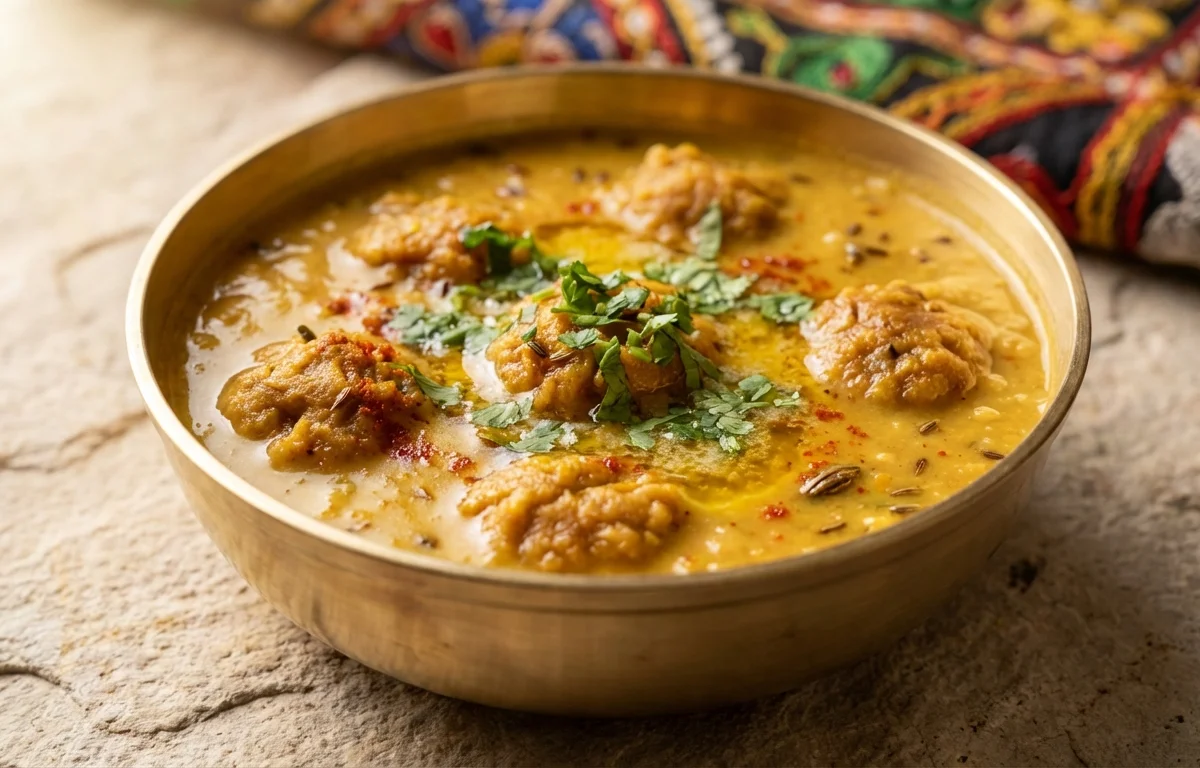
Mangodi Dal
A comforting Rajasthani-style lentil curry where moong dal is simmered with crisp-fried mangodi and simple spices. It has a homely, earthy taste and pairs beautifully with roti or plain rice.
For 4 servings
- prep
Wash the dal and prep the vegetables.
1.Rinse the moong dal in 2 to 3 changes of water until the water runs clearer.2.Chop the onion and tomatoes finely.3.Slit the green chilies, grate the ginger, and chop the garlic. - fry · ~3 min
Fry the mangodi lightly.
Heat 1 tbsp oil in a pressure cooker or heavy pot over medium heat. Add the mangodi and fry for 2 to 3 minutes until lightly golden and fragrant, then remove to a plate.
TIPKeep the heat medium so the mangodi toasts evenly without turning bitter. - temper · ~1 min
Make the tempering.
1.Add the remaining 1 tbsp oil to the cooker.2.Add cumin seeds and let them crackle for a few seconds.3.Add asafoetida and stir briefly. - saute · ~6 min
Cook the onion, ginger, garlic, and chili.
1.Add the chopped onion and cook until soft and light golden, about 4 to 5 minutes.2.Add ginger, garlic, and green chili.3.Cook for 1 minute until the raw smell fades. - saute · ~6 min
Add the tomatoes and dry spices.
1.Add the chopped tomatoes and cook until soft and pulpy, about 4 to 5 minutes.2.Add turmeric powder, red chili powder, coriander powder, and garam masala.3.Mix well and cook for 30 seconds. - pressure cook · ~15 min
Pressure cook the dal with mangodi.
Add the washed moong dal, fried mangodi, salt, and water. Mix well, close the lid, and pressure cook for 3 whistles or until the dal is soft and the mangodi is tender.
TIPIf using a pot instead of a cooker, simmer covered until the dal turns soft, adding a little more water if needed. - simmer · ~4 min
Adjust the consistency and simmer briefly.
Open the cooker once the pressure drops. Stir the dal, mash a little with the back of a spoon for a creamier texture, and simmer for 3 to 4 minutes if needed to reach a medium gravy consistency.
- garnish
Finish with lemon juice and coriander leaves.
Turn off the heat, stir in the lemon juice, and garnish with chopped coriander leaves.
- serve
Serve hot.
What to keep in mind.
6 tips from the recipe — small details that make a real difference to the final dish.
- 1Fry the mangodi only until lightly golden; over-browning can make it taste bitter after pressure cooking.
- 2Cook the onion to a light golden stage before adding ginger and garlic, so the dal gets a deeper, sweeter base.
- 3Let the tomatoes turn fully soft and pulpy before adding dal and water; this prevents a raw tang in the final curry.
- 4After pressure cooking, mash just a spoonful or two of dal into the gravy to thicken it without losing the mangodi texture.
- 5Add lemon juice only after turning off the heat so its brightness stays fresh and doesn't turn dull.
- 6If reheating leftovers, add a splash of hot water first; moong dal thickens noticeably as it sits.
Adapt it for your goals.
No-onion-no-garlic
Skip onion and garlic, increase hing slightly, and use a little extra ginger for a simpler satvik-style version.
spicierSpicier
Add an extra green chili or a bit more red chili powder if you want the earthy dal to have more heat.
thinner dalThinner-dal
Use a little more water and simmer less after cooking for a lighter, more pourable dal to serve with rice.
ghee finishedGhee-finished
Replace some or all of the oil with ghee for a richer aroma that suits roti and bajra rotla especially well.
Why this is on our healthy list.
Protein-Rich Lentil Base
Moong dal and mangodi both contribute plant protein, making this a satisfying vegetarian main dish.
Gentle and Comforting
Moong dal is commonly valued as a lighter lentil, and the simple spice profile keeps the dish homely and approachable.
Contains Digestive Spices
Cumin, ginger, garlic, and asafoetida add flavor while traditionally supporting easier digestion in lentil dishes.
Tomato and Herb Freshness
Tomato, coriander leaves, green chili, and lemon juice add freshness and a range of plant-based antioxidants.
Frequently asked questions
No, split yellow moong dal usually cooks quickly without soaking, especially in a pressure cooker.


