Marvai Pundi Curry
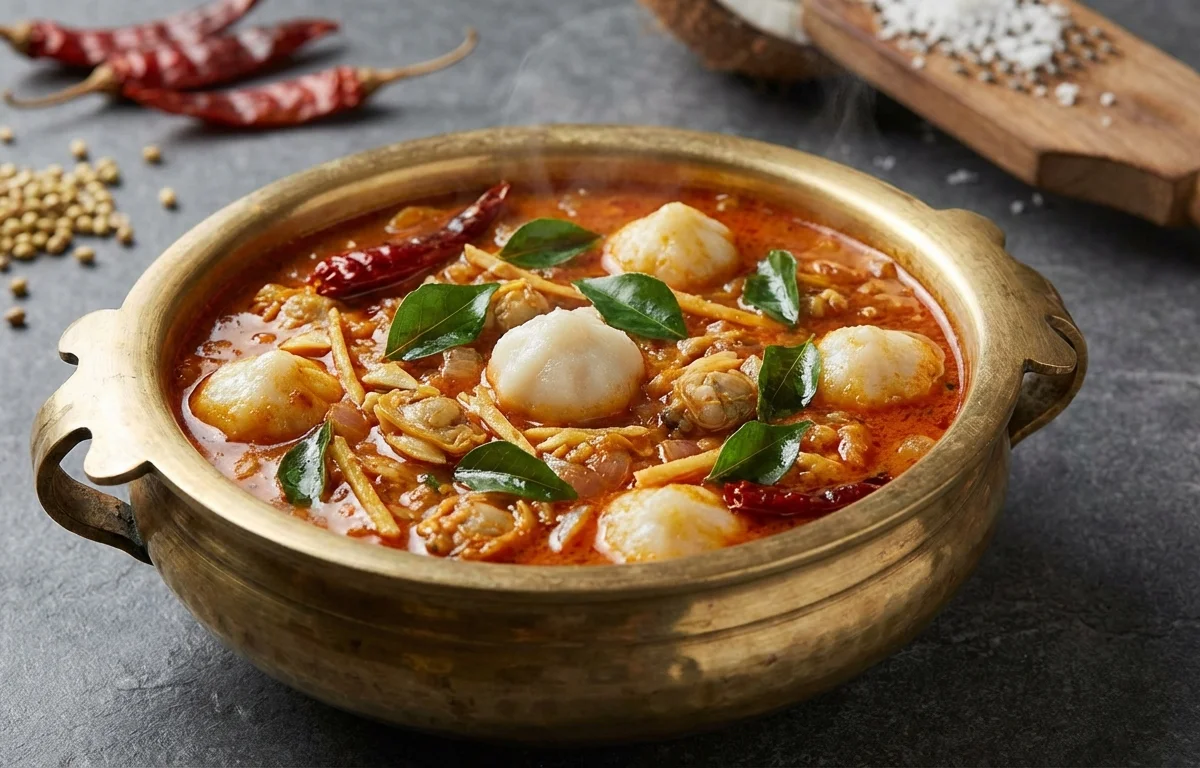
A coastal Konkan-style clam curry with soft rice dumplings simmered in a lightly spiced coconut gravy. It is comforting, fragrant, and especially good with its mix of briny seafood flavor and tender pundi in every spoonful.
For 4 servings
- prep · ~30 min
Soak the rice and clean the clams.
1.Wash the rice well and soak it in water for 30 minutes, then drain.2.Rinse the clams several times to remove grit.3.If using clams in shell, scrub them well and discard any that stay open.TIPClean clams thoroughly so the curry stays free of sand. - mix · ~5 min
Grind the pundi batter.
Grind the soaked rice with 0.75 cup water and 1 pinch salt to a slightly coarse batter. It should be thicker than dosa batter and easy to shape.
TIPKeep the batter thick; a runny batter makes the dumplings break in the curry. - steam · ~12 min
Shape and steam the pundi.
1.Grease your palms lightly with 1 tsp coconut oil.2.Shape small oval dumplings from the rice batter.3.Arrange them in a steamer and steam until firm and cooked through. - saute · ~7 min
Toast the masala ingredients.
1.Heat 1 tsp coconut oil in a pan over medium heat.2.Add dried red chili, coriander seeds, cumin seeds, garlic, and ginger.3.Add the sliced onion and cook until lightly softened.4.Add the chopped tomato and turmeric powder, and cook until the tomato turns soft.TIPDo not brown the masala too much; gentle cooking keeps the curry fresh and balanced. - mix · ~5 min
Grind the curry masala.
Cool the sautéed mixture slightly, then grind it with the grated coconut and tamarind paste to a smooth masala. Add a little of the curry water if needed to help it blend.
- saute · ~1 min
Start the curry base.
Heat 1 tbsp coconut oil in a pot. Add curry leaves and slit green chili, then stir for a few seconds until fragrant.
- simmer · ~8 min
Cook the clams in the masala.
1.Add the ground masala to the pot and rinse the blender jar with 2 cups water.2.Pour the water into the pot and mix well.3.Add the remaining salt and bring the curry to a gentle simmer.4.Add the cleaned clams and cook until they just open and turn tender.TIPDo not overcook the clams or they can turn chewy. - simmer · ~5 min
Add the pundi and finish the curry.
Slide the steamed pundi into the simmering curry and cook gently for 4 to 5 minutes so they soak up the coconut gravy without breaking.
- rest · ~5 min
Let the curry rest for 5 minutes.
- serve
Serve the Marvai Pundi Curry hot.
What to keep in mind.
7 tips from the recipe — small details that make a real difference to the final dish.
- 1Keep the rice batter slightly coarse and thick so the pundi hold their shape in the gravy.
- 2Steam the dumplings until firm before adding them; undercooked pundi can split while simmering.
- 3If using shell-on clams, discard any that stay closed after cooking and any that were open before cooking.
- 4Add the clams only after the curry reaches a gentle simmer to keep them tender, not rubbery.
- 5Let the curry rest for a few minutes before serving so the pundi absorb more of the coconut-tamarind gravy.
- 6Taste the curry after the clams open, since clams release natural salinity and may reduce the need for extra salt.
- 7This curry reheats best on low heat with a splash of water, so the coconut masala does not catch at the bottom.
Adapt it for your goals.
Shell-on
Cook the clams in shell for a deeper sea flavor and a more traditional presentation.
spicierSpicier
Add an extra dried red chili or another slit green chili if you want a hotter coastal-style curry.
fishFish
Replace clams with firm fish pieces when shellfish is unavailable; simmer gently so the fish stays intact.
softer pundiSofter-pundi
Shape slightly smaller dumplings for a softer bite and better masala absorption in each spoonful.
Why this is on our healthy list.
Mineral-Rich Seafood
Clams provide seafood-based protein along with important minerals, making the curry more nourishing than a plain coconut gravy.
Energy From Rice
The rice pundi add satisfying carbohydrates, turning the curry into a hearty one-pot meal.
Beneficial Aromatics
Garlic, ginger, curry leaves, and spices add aroma and plant compounds while keeping the dish flavorful without heavy cream.
Frequently asked questions
Yes. Steam the pundi in advance, cool them fully, and refrigerate. Add them to the curry only for the final simmer so they do not get soggy.