
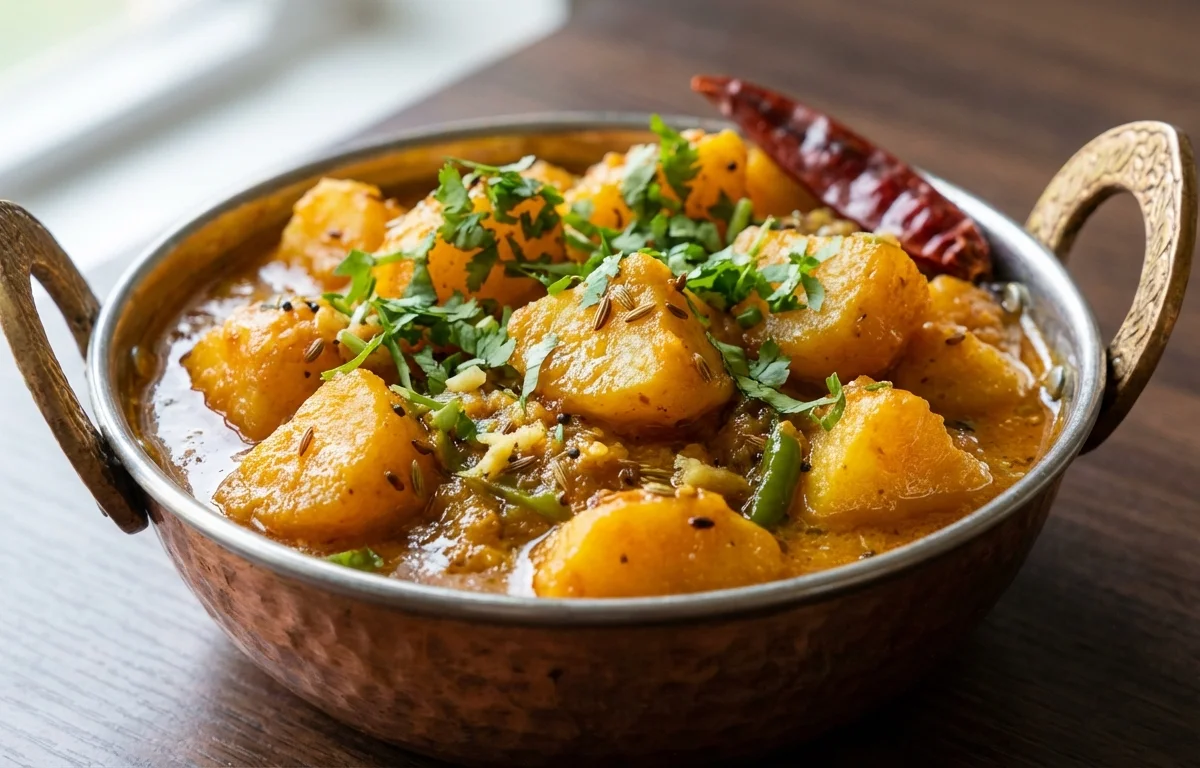
Marwari Aloo Sabzi
A comforting Rajasthani potato curry with a light, tangy gravy and simple everyday spices. It comes together quickly and tastes especially good with puri, paratha, or plain phulka as part of a homestyle meal.
For 4 servings
- prep · ~10 min
Boil and break the potatoes.
Boil the potato until just tender, peel them, and lightly break them by hand into uneven chunks. Keep a few pieces slightly mashed so the gravy gets a natural body.
TIPHand-broken potato gives this sabzi its rustic Marwari texture better than neat cubes. - temper · ~2 min
Make the tempering.
1.Heat oil in a pan over medium heat.2.Add cumin seeds and let them crackle for 20 to 30 seconds.3.Add asafoetida, green chili, and ginger.4.Cook briefly until fragrant, about 30 seconds.TIPKeep the heat medium so the cumin blooms without turning bitter. - saute
Cook the spices.
Add turmeric powder, red chili powder, and coriander powder. Stir quickly for a few seconds so the spices toast in the oil without burning.
- mix · ~2 min
Add the potatoes and water.
1.Add the broken potato and mix well with the masala.2.Pour in water and stir to combine.3.Add salt and dry mango powder.4.Lightly mash a few potato pieces into the liquid for a slightly thicker gravy. - simmer · ~10 min
Simmer the sabzi.
Bring the sabzi to a gentle simmer and cook until the flavors come together and the gravy looks light but slightly starchy. Stir once or twice so the potato does not catch at the bottom.
TIPThis sabzi is usually kept a little loose, which makes it ideal with puri or paratha. - garnish
Finish with coriander leaves.
Turn off the heat and stir in coriander leaves for a fresh finish.
- serve
Serve hot.
Serve Marwari Aloo Sabzi hot with puri, paratha, or phulka as part of a meal.
What to keep in mind.
7 tips from the recipe — small details that make a real difference to the final dish.
- 1Break the boiled potatoes by hand, not into neat cubes, so rough edges release starch and give the gravy its rustic body.
- 2Do not overboil the potatoes; they should be just tender or they will dissolve too much during simmering.
- 3Add the powdered spices on medium-low heat and stir immediately, since coriander and chili can scorch in seconds.
- 4Keep the gravy slightly loose rather than thick; this style of aloo sabzi is meant to pair well with puri and paratha.
- 5Mash only a few potato pieces into the liquid so the curry thickens naturally without turning pasty.
- 6Add the amchur after the water goes in, which keeps its tang bright instead of muted by direct frying.
- 7This sabzi reheats well; add a splash of water before warming because the potatoes continue to absorb liquid as it sits.
Adapt it for your goals.
Low-oil
Use a little less oil and a nonstick pan for a lighter everyday version; keep the tempering gentle so the spices still bloom properly.
no onion no garlicNo-onion-no-garlic
This sabzi is already ideal for no-onion, no-garlic meals, making it suitable for simple vrat-style or homestyle thali cooking.
spicierSpicier
Increase green chili and red chili powder for a sharper heat that stands up especially well to puri or plain phulka.
tomato addedTomato-added
Add a small chopped tomato after the tempering for a slightly fuller, more saucy gravy with extra tang.
Why this is on our healthy list.
Comforting Energy Base
Potatoes provide satisfying carbohydrates, making this sabzi filling and useful as a hearty main vegetable dish.
Digestive Spice Support
Cumin, ginger, asafoetida, and coriander are traditional spices often used to make simple potato dishes feel lighter and more balanced.
Herb and Spice Rich
Turmeric, coriander powder, green chili, and fresh coriander add plant compounds and flavour without needing a heavy gravy.
Frequently asked questions
Hand-breaking creates rough, uneven pieces that release a little starch into the gravy, giving this sabzi its traditional rustic texture.



.webp)
.webp)
.webp)