
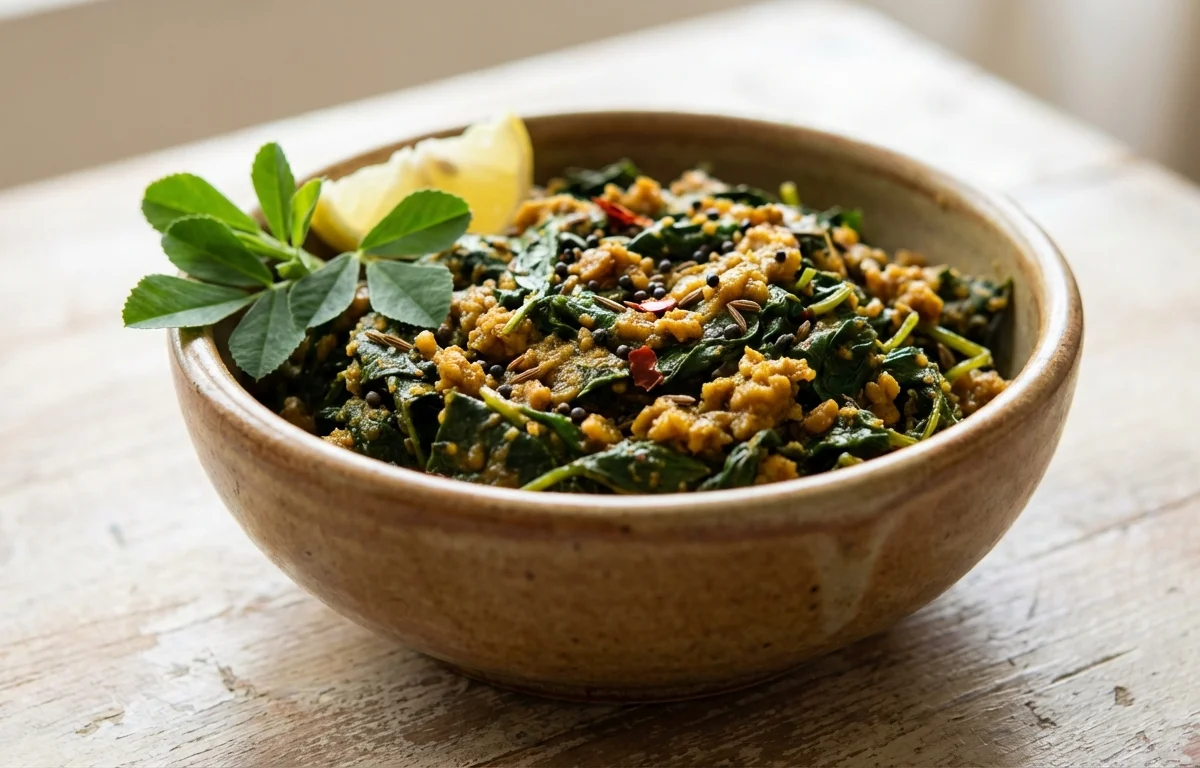
Methi ni Bhaji nu Shaak
A hearty Gujarati winter staple made with fresh fenugreek leaves and tender chickpea flour dumplings. The lightly spiced, sweet-and-tangy gravy clings to every morsel, making it a comforting dish best served with bajra rotla or steamed rice.
For 4 servings
- prep
Prepare the methi leaves.
Pluck the methi leaves from the stems, discarding any tough stalks. Wash thoroughly in multiple changes of water, drain well, and roughly chop.
TIPSoaking the chopped leaves in salted water for 5 minutes helps reduce bitterness; drain and squeeze before using. - mix
Make the muthiya dough.
1.In a bowl, combine besan, 1 tbsp oil, and a pinch of salt.2.Add 1 tbsp of the ginger-green chili paste and the whisked yogurt.3.Mix well and gently knead into a firm, smooth dough. Do not add water unless absolutely necessary.TIPThe dough should be firm enough to roll into logs. If it feels too sticky, add a teaspoon more besan. - rest · ~10 min
Rest the dough and shape the muthiya.
Let the dough rest for 10 minutes. Divide into 2 equal portions and roll each into a smooth log about 6 inches long and 1 inch thick.
- steam · ~18 min
Steam the muthiya logs.
1.Grease the steamer tray lightly with oil.2.Place the muthiya logs in the steamer, cover and steam on medium heat for 15-18 minutes.3.Check doneness by inserting a knife; it should come out clean. Cool completely.TIPSteaming on high heat can make the muthiya crumbly. Keep the water at a gentle simmer. - prep · ~7 min
Slice and shallow-fry the muthiya.
Slice the cooled logs into ½-inch thick rounds. Heat 1 tbsp oil in a wide pan and lightly fry the muthiya slices until golden on both sides. Remove and set aside.
TIPFrying is optional but gives the muthiya a lovely crisp exterior that holds up in the shaak. - temper · ~2 min
Make the tempering.
1.In the same pan, heat 1 tbsp oil over medium heat.2.Add mustard seeds and let them splutter.3.Add cumin seeds and asafoetida, and let them sizzle for 15 seconds.4.Add the remaining ginger-green chili paste and sauté for 30 seconds until fragrant. - saute · ~8 min
Cook the methi leaves.
1.Add the chopped methi leaves to the pan and stir well.2.Add turmeric powder, red chili powder, and coriander powder. Mix thoroughly.3.Cover and cook on low heat for 5 minutes until the leaves wilt and reduce in volume.4.Add the jaggery, salt, and tamarind water. Mix well.TIPCooking on low heat allows the methi to release its moisture naturally, creating a richer flavour. - simmer · ~10 min
Add the muthiya and simmer.
1.Add the fried muthiya slices to the pan and gently toss to coat with the methi mixture.2.Add ¼ cup water, cover and simmer on low heat for 8-10 minutes.3.Stir gently once halfway. The curry should be semi-dry with the muthiya having absorbed the flavours.TIPAdd water sparingly — the shaak is meant to be a dry-ish curry that clings to the dumplings, not a thin gravy. - rest · ~5 min
Rest the shaak before serving.
Turn off the heat and let the shaak rest covered for 5 minutes so the flavours meld together.
TIPThis dish tastes even better the next day as the muthiya soak up the tangy-spiced methi.
What to keep in mind.
7 tips from the recipe — small details that make a real difference to the final dish.
- 1Pluck methi leaves from thick stems to avoid stringy bits in the shaak.
- 2Soak chopped methi in salted water for 5 minutes, then squeeze dry to reduce bitterness.
- 3Let the muthiya dough rest for 10 minutes so the besan hydrates fully for a tender texture.
- 4Steam muthiya logs over a gentle simmer, not a rolling boil, to prevent them from becoming crumbly.
- 5Shallow-fry the steamed muthiya slices until golden — this gives them a crisp outer layer that holds up in the gravy.
- 6Cook the methi on low heat covered so it releases its own moisture, deepening the flavour without extra water.
- 7Add water sparingly in the final simmer — the shaak should be semi-dry, coating the muthiya, not soupy.
Adapt it for your goals.
Low-oil
Skip the shallow-fry step after steaming the muthiya — simply add the steamed slices directly to the methi gravy. This reduces oil while keeping the dish hearty and flavourful.
high proteinHigh-protein
Add 1/2 cup of cooked chana dal or sprouted moth beans along with the muthiya for an extra protein boost that still pairs beautifully with the fenugreek and spices.
jainJain
Replace the yogurt with an equal amount of thick plant-based yogurt (like soy or coconut) and skip the ginger-garlic if used — ensure your jaggery is vegetarian-friendly. The shaak remains authentic and satisfying.
veganVegan
Swap yogurt with a thick, unsweetened plant-based yogurt (cashew or coconut works well) and use a vegan jaggery. The muthiya will be slightly less rich but still delicious.
gluten freeGluten-free
This dish is naturally gluten-free as written, since besan is chickpea flour. Confirm that your asafoetida brand contains no wheat starch to keep it safe for celiac diets.
Why this is on our healthy list.
Rich in Dietary Fibre
Fenugreek leaves and chickpea flour are both excellent sources of fibre, which aids digestion and helps maintain steady blood sugar levels.
High in Plant Protein
Besan (chickpea flour) provides a good amount of plant-based protein, making this dish a satisfying option for vegetarians.
Good Source of Iron
Fenugreek leaves are naturally rich in iron, which supports healthy red blood cell production and energy levels.
Supports Digestive Health
The combination of ginger, asafoetida, and cumin in the tempering aids digestion and helps reduce bloating.
Low Glycemic Impact
Chickpea flour has a lower glycemic index than refined wheat flour, helping to keep blood sugar levels stable after meals.
Frequently asked questions
Fresh methi is essential for this recipe — dried methi has a very different texture and flavour and won't yield the same soft, wilted green base or juicy gravy.


