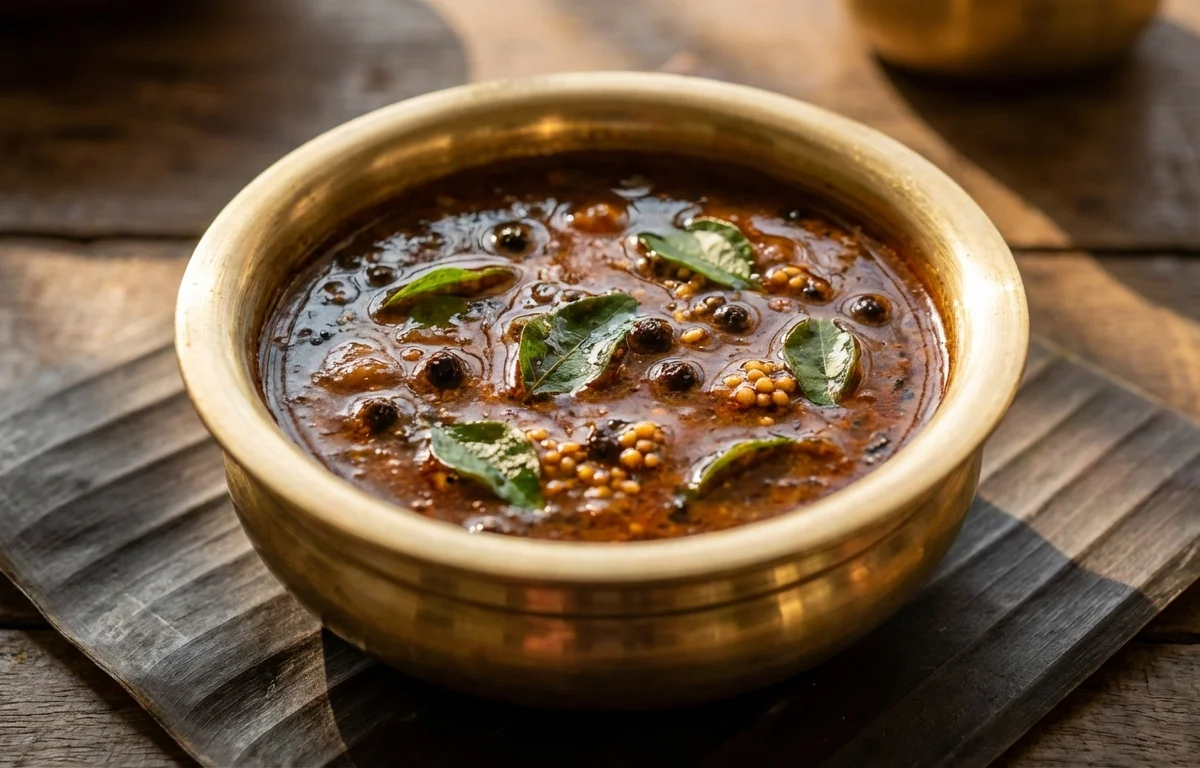
Milagu Kuzhambu
A bold, tangy Tamil-style pepper kuzhambu with deep tamarind flavor and a warm black pepper kick. This comforting gravy keeps well, tastes even better the next day, and is perfect with hot rice and a little ghee.
For 4 servings
- prep · ~10 min
Soak the tamarind.
Soak the tamarind in 1 cup warm water for 10 minutes. Squeeze well and strain to get a smooth tamarind extract.
TIPA smooth extract gives the kuzhambu a clean finish without stringy bits. - roast · ~3 min
Roast the spices.
1.Heat a small pan over low heat.2.Add black peppercorns, cumin seeds, toor dal, coriander seeds, and dried red chili.3.Roast until fragrant and the dal turns lightly golden, about 2 to 3 minutes.4.Take off the heat and cool slightly.TIPKeep the heat low so the pepper turns aromatic, not bitter. - mix · ~1 min
Grind the roasted spices.
Grind the roasted spices to a coarse powder. Do not make it too fine; a slightly coarse texture gives the kuzhambu more body.
- temper · ~1 min
Make the tempering.
1.Heat sesame oil in a kadai over medium heat.2.Add mustard seeds and let them splutter.3.Add fenugreek seeds, asafoetida, and curry leaves.4.Cook for a few seconds until fragrant.TIPDo not darken the fenugreek seeds too much or the gravy will taste bitter. - simmer · ~15 min
Cook the kuzhambu.
1.Pour in the tamarind extract and remaining 2 cups water.2.Add the ground spice powder, turmeric powder, salt, and jaggery.3.Mix well and bring to a gentle boil.4.Lower the heat and simmer until the kuzhambu thickens slightly and the raw tamarind smell disappears, about 12 to 15 minutes.TIPStir once or twice while simmering so the spice powder does not settle at the bottom. - serve
Serve hot with rice.
What to keep in mind.
7 tips from the recipe — small details that make a real difference to the final dish.
- 1Roast the pepper-spice mix only until the toor dal turns pale golden; over-roasting makes the kuzhambu harsh and bitter.
- 2Keep the ground masala slightly coarse so it thickens the gravy naturally and gives the classic rustic mouthfeel.
- 3Simmer until the raw tamarind aroma is completely gone; that is the clearest doneness cue for a balanced kuzhambu.
- 4Use sesame oil for the tempering if possible, since its nutty flavor is traditional and rounds out the sharp pepper-tamarind taste.
- 5Add fenugreek after the mustard splutters and cook just a few seconds; dark fenugreek can dominate the whole dish with bitterness.
- 6This kuzhambu tastes better after resting a few hours, so make it ahead when serving for lunch or the next day.
- 7Store refrigerated for a few days and reheat gently; the gravy will deepen in flavor as the tamarind and spices meld.
Adapt it for your goals.
Garlic
Add a few crushed garlic cloves to the tempering for a more robust, home-style milagu kuzhambu that pairs especially well with hot rice.
jainJain
Skip asafoetida if needed and ensure your jaggery is suitable; the dish still keeps its peppery tamarind character.
extra pepperyExtra-peppery
Increase black pepper slightly and reduce the dried red chilies for a sharper, more pepper-forward version without extra chili heat.
shallotShallot
Sauté small shallots after the tempering for a sweeter, thicker kuzhambu with more body and everyday meal appeal.
Why this is on our healthy list.
Digestive Spice Support
Black pepper, cumin, asafoetida, and curry leaves are traditionally used in South Indian cooking to make tangy gravies feel lighter and more digestible.
Rich in Aromatic Plant Compounds
Pepper, coriander, fenugreek, and curry leaves contribute a range of natural flavor compounds that bring depth without needing heavy ingredients.
Light Yet Satisfying
Because this kuzhambu is built from tamarind, spices, and a modest amount of oil, it delivers bold taste in a relatively light gravy.
Frequently asked questions
The usual causes are over-roasted pepper or fenugreek, or simmering the fenugreek too long in hot oil. Roast gently and keep fenugreek very light.