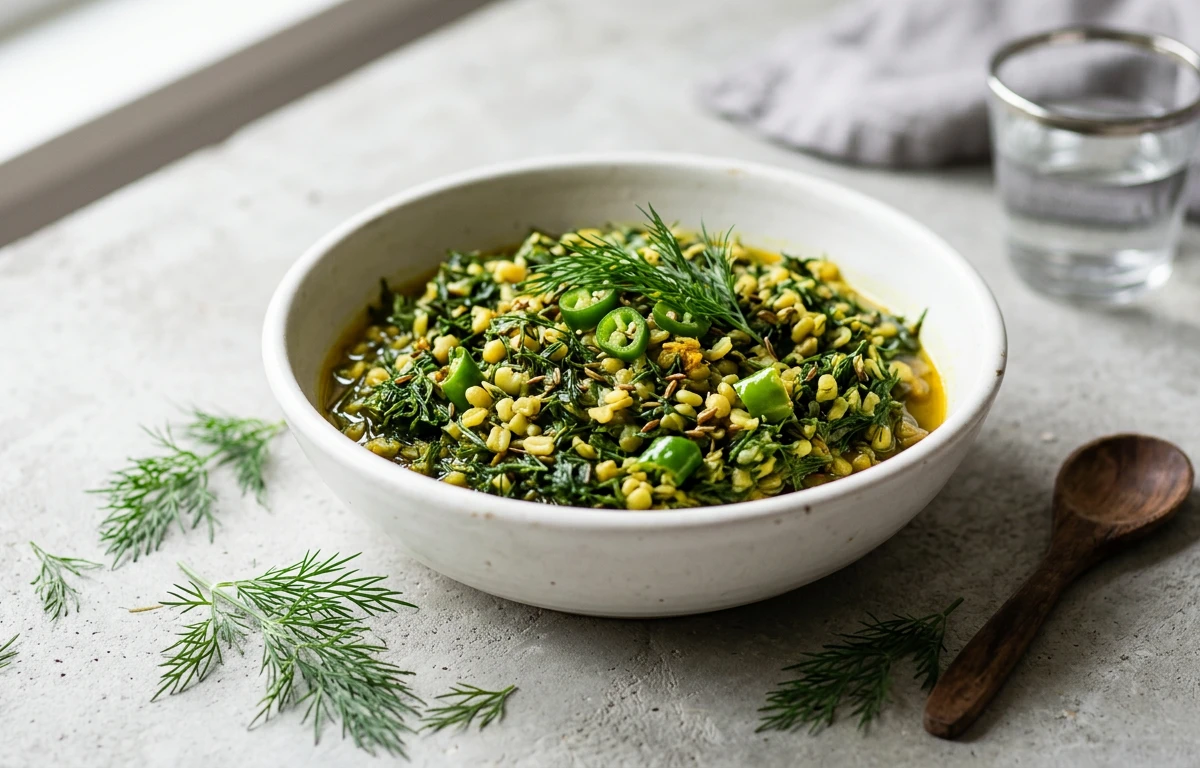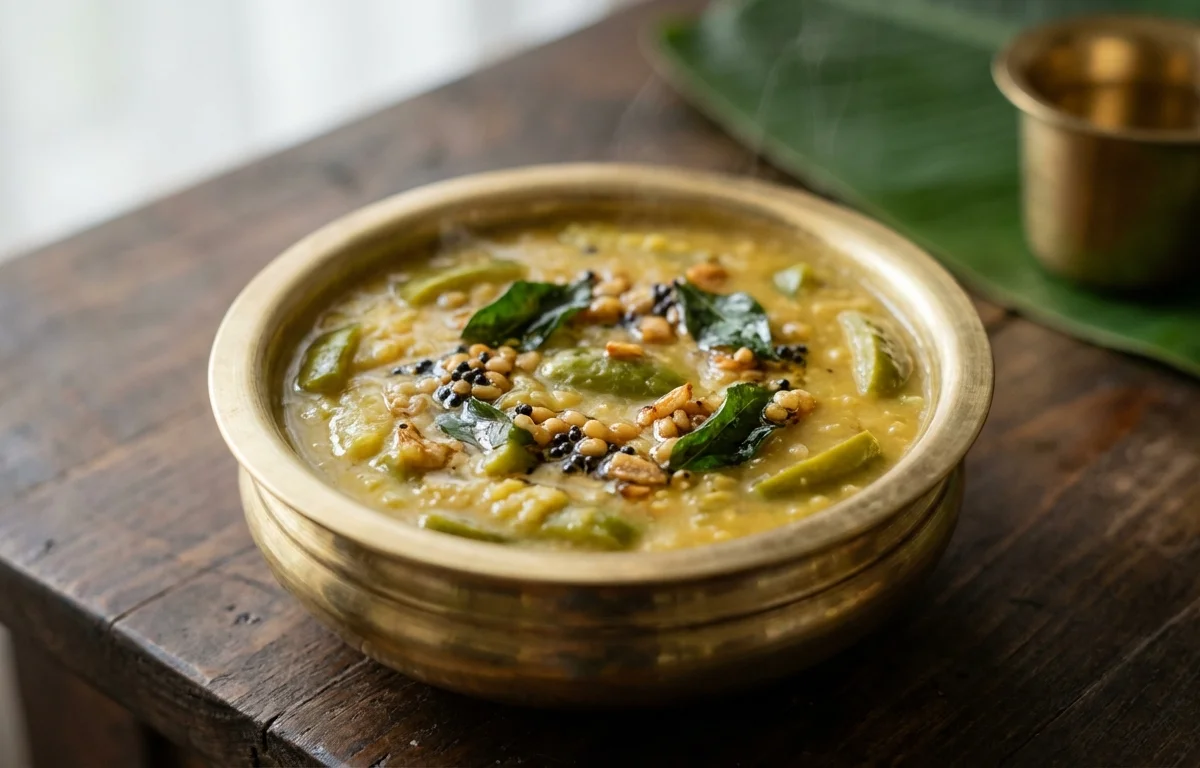
Moong Dal Koddel
A comforting and simple Konkani-style moong dal curry with a luscious coconut and roasted spice masala. Unlike regular dal, the lentils are cooked just with turmeric and water, then simmered in a fragrant ground paste of fresh coconut, dry red chilies, and coriander seeds. A final crackling tadka of mustard seeds and curry leaves brings the dish alive.
For 4 servings
- prep · ~18 min
Cook the moong dal.
1.Wash 1 cup moong dal in water until it runs clear.2.Add dal to a pot with 3 cups water, a pinch of turmeric, and 0.5 tsp salt.3.Bring to a boil, then lower heat and simmer until soft but holding shape (15-18 min).4.Lightly mash the dal with the back of a spoon. - prep · ~5 min
Prepare the coconut masala.
1.Heat 1 tsp coconut oil in a small pan over medium-low heat.2.Add 2 tsp coriander seeds and 3 dried red chilies. Roast until fragrant and seeds darken slightly (2 min).3.Transfer roasted spices to a grinder, add 0.75 cup grated coconut and 0.5 cup water.4.Grind to a smooth, thick paste. - simmer · ~7 min
Combine dal and masala.
1.Pour the ground coconut paste into the pot with the cooked dal.2.Stir well to combine. If the dal is too thick, add a splash of water to reach a gravy consistency.3.Bring to a gentle simmer. Cook for 5-7 minutes until flavors meld and the raw smell of coconut disappears.TIPDon't let it boil hard — a gentle simmer keeps the coconut from splitting. - temper · ~1 min
Make the tadka.
1.Heat 1 tsp coconut oil in a small tadka pan over high heat.2.Add 1 tsp mustard seeds and let them pop and splutter (30 sec).3.Lower heat, add 8 curry leaves and a pinch of asafoetida. Fry for 10 seconds until fragrant.4.Immediately pour the sizzling tempering over the simmering dal and stir in. - serve
Serve the Moong Dal Koddel hot.
Ladle into bowls and serve immediately with steamed rice or as part of a Konkani thali. A squeeze of lemon on top is optional but brightens the dish.
What to keep in mind.
6 tips from the recipe — small details that make a real difference to the final dish.
- 1For the best texture, cook the moong dal until just soft but still holding its shape — do not let it turn mushy.
- 2Roast the coriander seeds and dried red chilies on low heat until fragrant; over-roasting will make the masala bitter.
- 3Use fresh, frozen, or desiccated coconut rehydrated with warm water; avoid canned coconut milk for the authentic granular texture.
- 4Grind the coconut masala with just enough water to form a smooth, thick paste — too much water dilutes the flavor.
- 5Do not boil the dal aggressively after adding the coconut paste; a gentle simmer prevents the coconut from curdling.
- 6Always pour the tadka (mustard seeds, curry leaves, asafoetida) while it's sizzling hot over the dal and stir immediately to trap the aroma.
Adapt it for your goals.
Low-oil / oil-free
Skip the oil for roasting the coconut masala — dry roast the coriander seeds and chilies, then continue as usual. This reduces the fat content while keeping the flavor intact.
High proteinHigh-protein
Add a handful of soaked and chopped baby spinach along with the coconut masala, or stir in some crumbled paneer just before serving to boost the protein punch.
VeganVegan
This dish is naturally vegan! Verify your asafoetida brand is gluten-free (if needed), and serve with rice or gluten-free grains.
SpicierSpicier
Use a mix of Byadgi (color) and Guntur (heat) dried red chilies, or add 1-2 slit green chilies to the tadka for an extra layer of fresh heat.
Why this is on our healthy list.
Rich in Plant Protein
Moong dal is a high-quality, easy-to-digest plant protein, making this curry an excellent meatless meal for muscle repair and sustained energy.
Supports Digestive Health
Turmeric, asafoetida, and coconut work synergistically to soothe the stomach and aid digestion, which is why this dish is traditionally enjoyed in Konkani cuisine.
Good Source of Healthy Fats
Fresh coconut and cold-pressed coconut oil provide medium-chain triglycerides (MCTs), which support metabolism and brain function.
Low Glycemic Index
Moong dal has a low glycemic index compared to many grains, helping to stabilize blood sugar levels after a meal.
Frequently asked questions
No, split yellow peas are larger and have a different texture. Stick with moong dal (yellow split mung beans) for the signature soft, creamy consistency.

.webp)