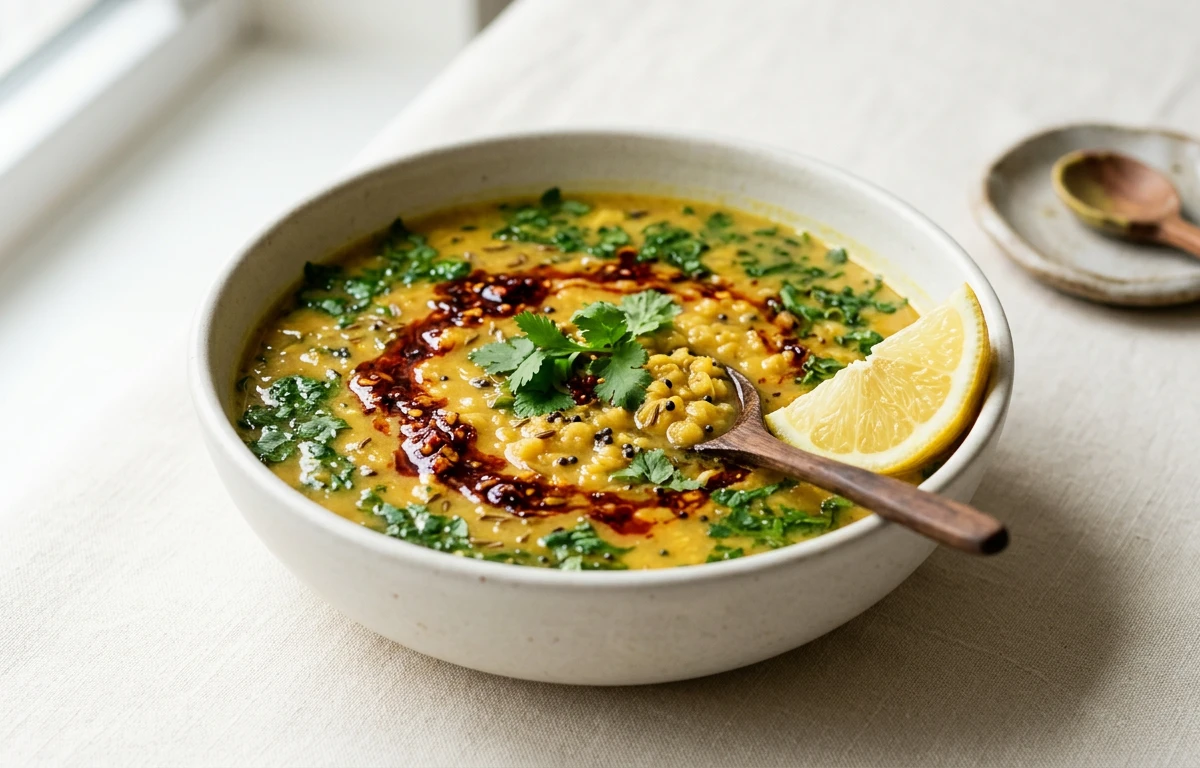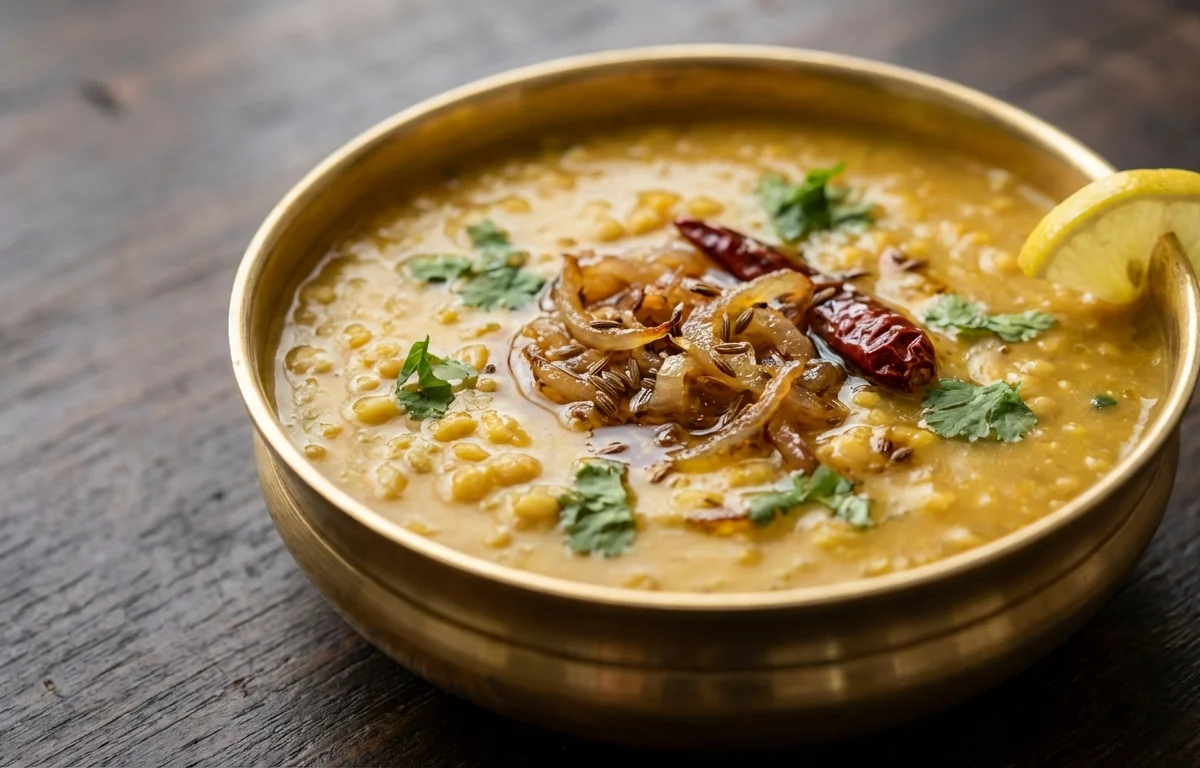
Moong Dal Tadka
A comforting bowl of yellow moong dal cooked until soft and finished with a fragrant onion, tomato, and cumin tempering. Light yet satisfying, this everyday Indian dal pairs beautifully with rice or roti.
For 4 servings
- prep · ~20 min
Wash and soak the moong dal.
Rinse the yellow moong dal a few times until the water runs clearer. Soak it in fresh water for 20 minutes, then drain.
- pressure cook · ~15 min
Pressure cook the dal until soft.
1.Add the soaked dal to a pressure cooker with water, turmeric powder, and salt.2.Mix once and close the cooker.3.Cook on medium heat for 2 to 3 whistles, until the dal turns soft and mashable.4.Let the pressure release naturally, then open and lightly whisk the dal.TIPIf the dal looks too thick after cooking, loosen it with a few spoonfuls of hot water. - temper · ~3 min
Make the tadka.
1.Heat ghee in a small pan over medium heat.2.Add cumin seeds and let them sizzle for a few seconds.3.Add asafoetida, garlic, ginger, and green chili.4.Cook until the garlic smells fragrant and just begins to turn light golden.TIPKeep the heat medium so the garlic browns lightly without burning. - saute · ~7 min
Cook the onion and tomato.
1.Add onion to the tadka pan and cook until soft and lightly golden.2.Add tomato and cook until it breaks down.3.Add red chili powder and garam masala.4.Mix well and cook for 30 seconds. - simmer · ~4 min
Combine the tadka with the dal.
Pour the hot tadka into the cooked dal and mix well. Bring the dal to a gentle simmer for 3 to 4 minutes so the flavors come together.
- garnish
Finish with coriander leaves and lemon juice.
- serve
Serve hot.
What to keep in mind.
6 tips from the recipe — small details that make a real difference to the final dish.
- 1Soaking moong dal for even 20 minutes helps it cook faster and break down into a creamier texture.
- 2After pressure cooking, lightly whisk the dal instead of over-mashing so it stays silky, not gluey.
- 3Let the cumin crackle fully in ghee before adding aromatics; this blooms its nutty flavor into the fat.
- 4Cook the tomato until it looks pulpy and the ghee starts separating slightly for a fuller, less raw taste.
- 5Add lemon juice only after turning off the heat to keep its brightness fresh and prevent bitterness.
- 6If reheating leftovers, add a splash of hot water first since moong dal thickens noticeably as it sits.
Adapt it for your goals.
Vegan
Replace ghee with neutral oil or coconut oil for a fully plant-based version that still takes well to a fragrant tadka.
no onion no garlicNo-onion-no-garlic
Skip onion and garlic, increase hing slightly, and let cumin, ginger, chili, and tomato do the heavy lifting for a lighter sattvic-style dal.
spicierSpicier
Add an extra green chili or a little more red chili powder if you want the mellow moong dal to have more heat.
low oilLow-oil
Use less ghee and a slightly smaller tadka, then thin the dal with hot water for a lighter everyday bowl.
Why this is on our healthy list.
Gentle Plant Protein
Yellow moong dal provides plant-based protein and is commonly valued as a light, easy-to-digest lentil for everyday meals.
Fiber-Rich Comfort Food
The moong dal, onion, and tomato add fiber, helping make this simple dish satisfying while still feeling light.
Digestive Spice Support
Ginger, cumin, asafoetida, and garlic are traditional aromatics that add flavor while making lentil dishes feel more digestible.
Bright Herbal Finish
Coriander leaves and lemon juice add freshness and extra plant compounds that lift the dish without making it heavy.
Frequently asked questions
Yes, but it may take a little longer to soften in the pressure cooker. Soaking helps it cook faster and gives a smoother texture.