Mor Kulambu
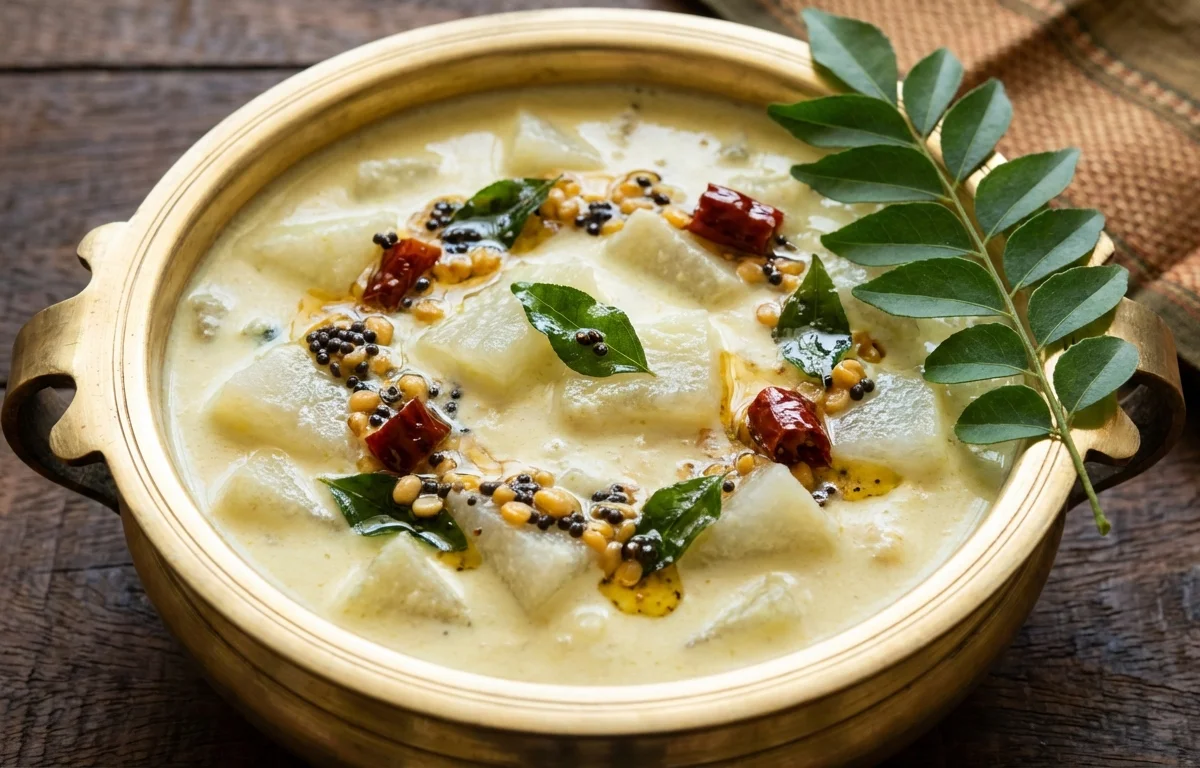
A soothing Tamil-style yogurt curry with a gentle tang, light coconut spice paste, and a fragrant tempering of mustard and curry leaves. It is comforting, easy to digest, and made to be served with hot rice.
For 4 servings
- prep · ~15 min
Soak and prepare the grinding ingredients.
1.Soak the chana dal in water for 15 minutes.2.Chop the green chili and ginger.3.Grate the coconut if not already prepared.TIPA short soak helps the dal grind smoother without adding too much water. - boil · ~10 min
Cook the ash gourd.
Add the ash gourd to a pan with enough water to just cover it and a pinch of turmeric powder. Cook until tender but still holding its shape, about 8 to 10 minutes. Drain any excess water if needed.
TIPDo not overcook the ash gourd or it can turn mushy in the curry. - mix · ~4 min
Grind the coconut paste.
Drain the soaked chana dal and grind it with coconut, cumin seeds, green chili, and ginger to a smooth paste using a little water as needed.
- mix · ~3 min
Whisk the yogurt mixture.
In a bowl, whisk the yogurt with water, rice flour, and salt until smooth and lump-free. Stir in the ground coconut paste well.
TIPWhisking well keeps the yogurt from splitting later. - simmer · ~7 min
Heat the kulambu gently.
Add the yogurt mixture and cooked ash gourd to a pan. Cook over low heat, stirring often, until the curry is hot and lightly frothy. Do not let it boil.
TIPKeep the heat low once the yogurt is in the pan; a hard boil can make it curdle. - temper · ~1 min
Make the tempering.
1.Heat oil in a small pan over medium heat.2.Add mustard seeds and let them splutter.3.Add fenugreek seeds, dried red chili, and curry leaves.4.Cook for a few seconds until fragrant.TIPFenugreek burns quickly, so add it only after the mustard seeds crackle. - assemble · ~1 min
Pour the tempering over the curry.
Immediately pour the hot tempering over the mor kulambu and stir gently to combine.
- garnish
Garnish with coriander leaves.
- serve
Serve the mor kulambu warm with rice.
What to keep in mind.
7 tips from the recipe — small details that make a real difference to the final dish.
- 1Use slightly sour yogurt for the classic tang, but whisk it completely smooth before heating.
- 2Cook the ash gourd only until translucent and tender; it should hold neat cubes in the curry.
- 3Grind the coconut-chana dal paste with minimal water so the kulambu stays creamy, not thin.
- 4Keep the flame low after adding the yogurt mixture and stir often to prevent curdling.
- 5Stop heating as soon as the curry turns hot and lightly frothy; do not let it reach a rolling boil.
- 6Add fenugreek only after the mustard splutters, since even a few extra seconds can make it bitter.
- 7If making ahead, reheat very gently on low heat and avoid boiling during the second warming too.
Adapt it for your goals.
Jain
Skip the ginger and use a little extra cumin and green chili in the paste for a Jain-friendly version with similar warmth.
low oilLow-oil
Reduce the tempering oil slightly and use a small tadka pan; you still get the mustard-curry leaf aroma with less fat.
vegetable swapVegetable-swap
Replace ash gourd with okra or white pumpkin-style vegetables for a familiar South Indian variation with a different texture.
spicierSpicier
Add one extra green chili to the coconut paste for a sharper heat that still suits the yogurt base.
Why this is on our healthy list.
Cooling yogurt base
The yogurt-based gravy is traditionally considered soothing and lighter than many heavier coconut curries.
Hydrating vegetable content
Ash gourd adds gentle bulk and moisture, making the dish comforting while keeping the curry light.
Digestive spice support
Cumin, ginger, curry leaves, and fenugreek bring flavor along with ingredients commonly used to support digestion.
Frequently asked questions
It usually happens when the yogurt is heated too fast or allowed to boil. Keep the flame low, whisk the yogurt well, and stop once the curry is hot and lightly frothy.