Mushroom Yakhni
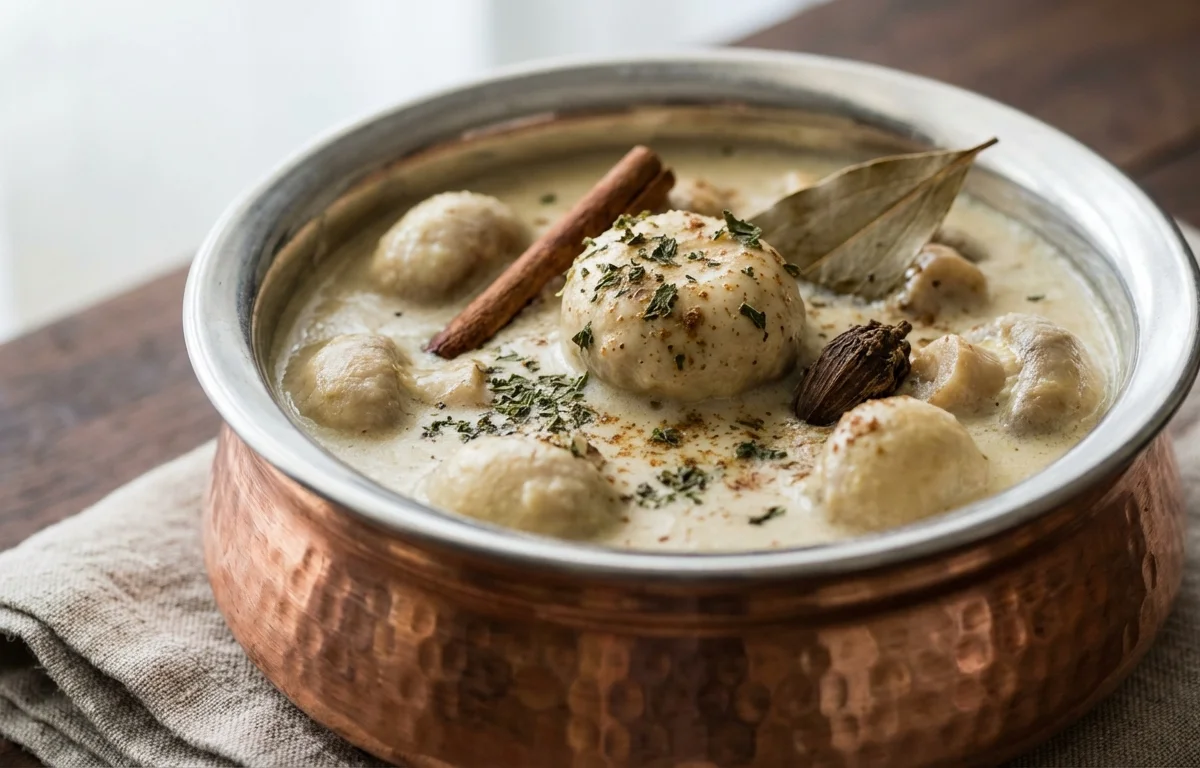
Tender button mushrooms simmered in a creamy, aromatic yogurt-based gravy. This Kashmiri-style curry gets its delicate flavor from whole spices like cinnamon, cardamom, and fennel, with no onion or garlic. A comforting dish that pairs beautifully with steamed rice.
For 4 servings
- prep · ~2 min
Prepare the yogurt base.
1.In a bowl, whisk 1.5 cups thick yogurt with 0.5 cup water until completely smooth.2.Stir in 1 tsp fennel powder and 1 tsp dry ginger powder. Set aside at room temperature.TIPEnsure yogurt is at room temperature and whisk well to prevent curdling when added to heat. - saute · ~5 min
Wilt the mushrooms.
1.Heat 1 tbsp ghee in a heavy-bottomed pan over medium heat.2.Add 400g halved mushrooms and sauté for 3-4 minutes until they release water and turn golden.3.Remove mushrooms and set aside on a plate. - temper · ~1 min
Bloom the whole spices.
1.In the same pan, heat the remaining 1 tbsp ghee over medium-low heat.2.Add 2-inch cinnamon stick, 4 crushed green cardamom pods, 4 cloves, and 1 bay leaf.3.Sauté for 30-40 seconds until fragrant.TIPKeep the heat low to medium-low so the spices release their aroma without burning. - simmer · ~19 min
Simmer the yogurt gravy.
Reduce heat to the lowest setting. Slowly pour in the whisked yogurt-spice mixture, stirring continuously in one direction for 1-2 minutes. Add the sautéed mushrooms and 0.5 tsp salt. Bring to a gentle simmer and cook uncovered for 15-18 minutes, stirring occasionally, until the gravy thickens slightly and oil specks appear on the surface.
TIPNever let the gravy boil vigorously. A gentle simmer keeps the yogurt from splitting. - garnish · ~2 min
Finish and garnish.
Turn off the heat. Let the curry rest for 2 minutes, then transfer to a serving bowl. Sprinkle 2 tbsp chopped coriander leaves on top.
- serve
Serve hot with steamed rice or naan.
What to keep in mind.
6 tips from the recipe — small details that make a real difference to the final dish.
- 1Use thick, full-fat yogurt at room temperature to prevent curdling when simmering.
- 2Sauté mushrooms until golden brown for deeper umami flavor before adding to the gravy.
- 3Stir the yogurt mixture in one direction continuously while adding it to the hot ghee to keep the emulsion stable.
- 4Keep the heat on the lowest setting during the final simmer to avoid splitting the yogurt.
- 5Let the curry rest for 2 minutes after cooking to allow the flavors to meld before serving.
- 6Make ahead: the yakhni tastes even better the next day; store in the fridge and reheat gently.
Adapt it for your goals.
Vegan
Replace yogurt with cashew cream (soaked cashews blended with water) and ghee with coconut oil. This yields a similarly creamy, nutty gravy that is fully plant-based.
low fatLow-fat
Use low-fat yogurt and swap ghee for avocado oil. Reduce ghee in step 2 to 1 tsp and pan-fry mushrooms in a non-stick pan with minimal oil.
protein boostProtein boost
Add 200g paneer cubes along with the mushrooms for extra protein. Paneer's mild flavor complements the delicate spice profile.
Why this is on our healthy list.
Rich in Probiotics
The yogurt-based gravy provides live cultures that support gut health and digestion.
Anti-Inflammatory Spices
Cinnamon, cardamom, cloves, ginger, and fennel contain antioxidants that help reduce inflammation.
Good Source of B-Vitamins
Mushrooms offer B vitamins like riboflavin and niacin, which aid energy metabolism.
Low-Calorie Base
Mushrooms are naturally low in calories and high in water content, making the dish filling without being heavy.
Frequently asked questions
The pan was likely too hot or the yogurt was cold. Always use room-temperature yogurt and reduce heat to the lowest setting before adding it.