Nadan Fish Fingers
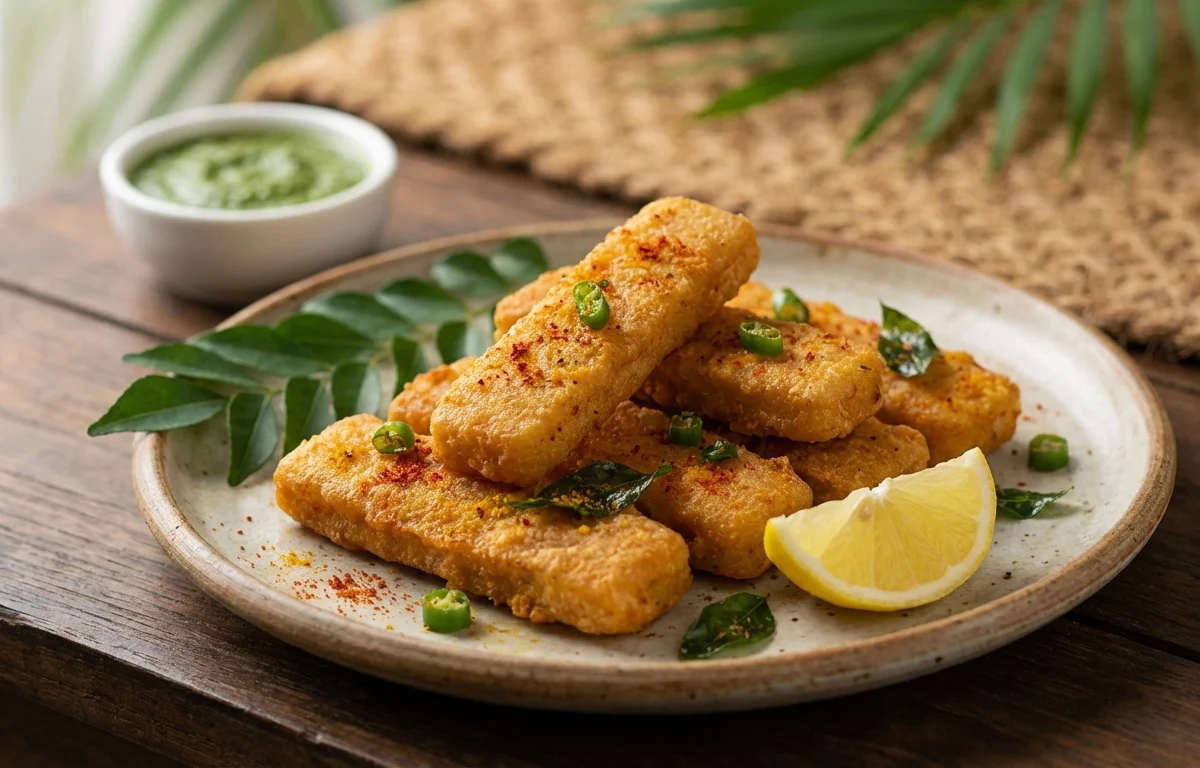
Crispy fish fingers with a Kerala-style spice coating, soft and flaky inside with a gentle heat from chili, pepper, and ginger-garlic. They make a great snack or side with lime and onion.
For 12 servings
- prep · ~7 min
Cut and season the fish.
1.Pat the fish fillet dry and cut into 12 even finger-length strips.2.Place the fish in a bowl with ginger-garlic paste, red chili powder, black pepper, turmeric powder, garam masala, lemon juice, and salt.3.Rub the masala gently over each piece until well coated.TIPDry fish holds the coating better and splutters less in hot oil. - rest · ~15 min
Rest the fish.
Cover and let the fish rest for 15 minutes so the masala lightly penetrates and the strips firm up for coating.
- prep · ~3 min
Set up the coating bowls.
1.Beat the egg in a shallow bowl until smooth.2.Spread the all-purpose flour on a plate.3.Place the bread crumbs in another shallow plate. - assemble · ~7 min
Coat the fish fingers.
1.Dip each fish strip lightly in the flour and shake off the extra.2.Dip it into the beaten egg so the surface is fully covered.3.Roll it in the bread crumbs and press gently so the crumbs stick well.4.Coat all the fish strips the same way and keep them on a plate.TIPPress the crumbs lightly instead of heavily packing them, so the coating turns crisp and not thick. - fry · ~10 min
Fry the fish fingers.
1.Heat oil in a deep pan over medium heat until a few bread crumbs sizzle right away.2.Slide in a few coated fish fingers without crowding the pan.3.Fry until golden and crisp, turning once, about 3 to 4 minutes total.4.Lift them out and let the extra oil drip back into the pan.5.Fry the remaining batches the same way.TIPKeep the heat at medium so the coating browns evenly before the fish overcooks. - serve
Serve the Nadan Fish Fingers hot.
What to keep in mind.
7 tips from the recipe — small details that make a real difference to the final dish.
- 1Use a firm fish like seer fish or basa so the strips hold their shape while frying.
- 2After crumbing, chill the fish fingers for 10-15 minutes to help the coating stay put in oil.
- 3Shake off excess flour well; a thin flour layer gives a lighter, crisper crust.
- 4Fry in small batches so the oil temperature does not drop and the crumbs stay crunchy.
- 5The fish is done when the coating is deep golden and the center flakes easily with a fork.
- 6Serve immediately with onion slices and a squeeze of lime for the classic Kerala-style finish.
- 7Leftovers re-crisp best in a hot oven or air fryer, not the microwave.
Adapt it for your goals.
Low-oil
Air-fry or bake the crumbed fish fingers with a light oil spray for a lighter version that still gets crisp edges.
extra spicyExtra-spicy
Increase chili powder and black pepper slightly for a sharper Kerala-style heat that pairs well with lime and onions.
gluten freeGluten-free
Replace all-purpose flour and bread crumbs with rice flour and gluten-free crumbs for a similar crunch without wheat.
egg freeEgg-free
Use a thin slurry of rice flour or maida with water instead of egg to help the crumbs stick.
Why this is on our healthy list.
Good Source of Protein
The fish and egg make this snack filling and supportive of muscle maintenance and satiety.
Contains Warming Spices
Ginger, garlic, black pepper, turmeric, and chili add flavor depth along with beneficial plant compounds.
Lighter Than Heavy Batters
A crumb coating over fish keeps the center flaky and protein-rich rather than turning the dish into mostly batter.
Frequently asked questions
Use a firm, low-bone fillet that can be cut into neat strips, such as seer fish, king fish, tilapia, or basa.