
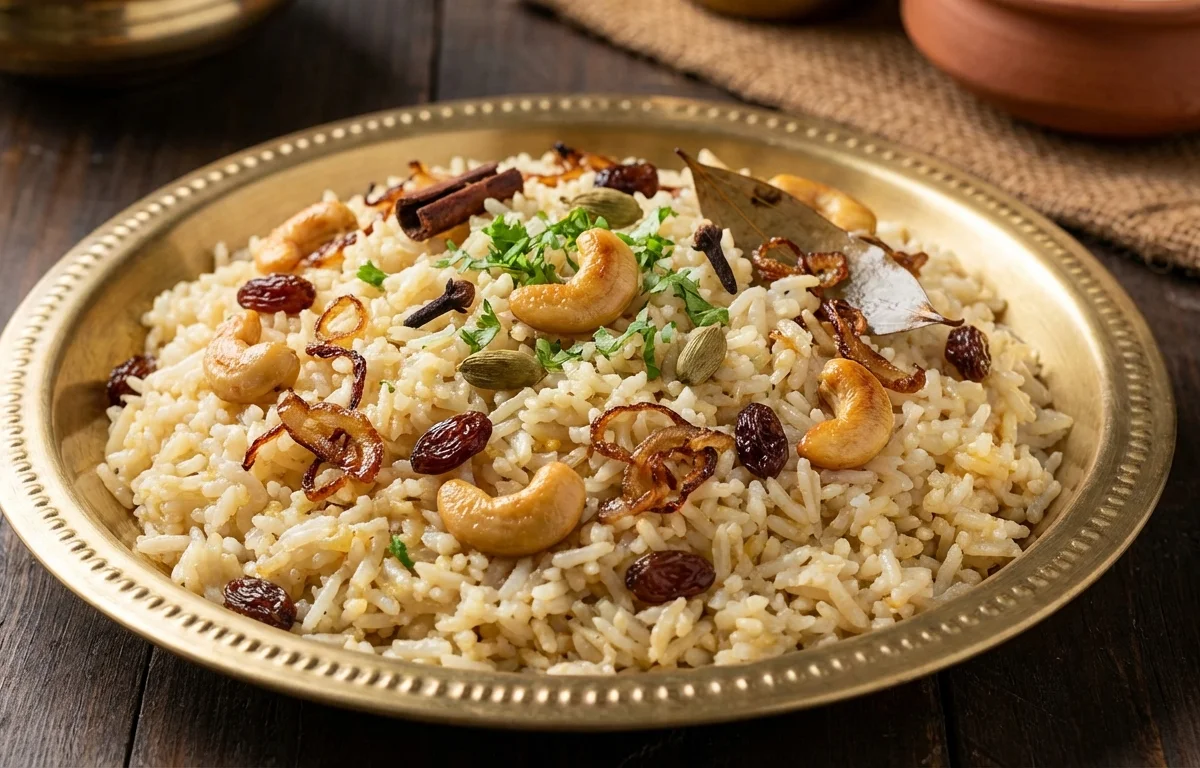
Neychoru
Fragrant Kerala-style rice cooked in aromatic ghee with whole spices, caramelized onions, and cashews. This simple yet luxurious dish pairs beautifully with spicy curries and gravies, with each grain of basmati rice coated in rich, nutty ghee. A staple at Malabar wedding feasts and special occasions.
For 4 servings
- prep · ~20 min
Wash and soak the basmati rice.
Rinse the rice in several changes of water until the water runs clear. Soak the rice in fresh water for 20 minutes, then drain well and set aside.
TIPSoaking helps the grains elongate and stay separate during cooking. - fry · ~3 min
Fry the cashews and raisins.
1.Heat 2 tbsp ghee in a heavy-bottomed pot over medium heat.2.Add cashews and fry until golden brown (1-2 min). Remove with a slotted spoon and set aside.3.Add raisins to the same ghee and fry until they puff up (30 sec). Remove and set aside with the cashews.TIPKeep the heat at medium — ghee burns quickly at high temperatures. - saute · ~9 min
Caramelize the onions in ghee.
1.Add sliced onions to the same ghee and sauté over medium heat.2.Cook until the onions turn deep golden brown and crisp, stirring occasionally (8-10 min).3.Set aside a tablespoon of the fried onions for garnish.TIPPatience here is key — deeply caramelized onions are the backbone of neychoru's flavor. - saute · ~1 min
Bloom the whole spices and aromatics.
1.Add cardamom, cloves, cinnamon, bay leaf, and star anise to the onions. Stir for 30 seconds until fragrant.2.Add slit green chilies and julienned ginger. Sauté for another 30 seconds. - saute · ~3 min
Toast the drained rice.
Add the drained rice to the pot and gently stir to coat each grain with the spiced ghee. Sauté for 2-3 minutes until the rice turns slightly translucent and releases a nutty aroma.
TIPGentle folding — rough stirring breaks the grains. - boil · ~2 min
Add water and bring to a boil.
Pour in 2.25 cups of water and add the salt. Stir once gently. Increase the heat to high and bring the water to a rolling boil.
- simmer · ~14 min
Cover and cook on low heat until done.
Once boiling, reduce the heat to the lowest setting. Cover with a tight-fitting lid and let the rice steam undisturbed for 12-15 minutes until all the water is absorbed.
TIPDo not open the lid during cooking — the steam is what finishes the rice. - rest · ~5 min
Rest the rice off the heat.
Turn off the heat and let the pot sit covered for 5 minutes. This allows the grains to firm up and any remaining moisture to redistribute evenly.
- assemble · ~1 min
Fluff and fold in the fried garnishes.
Remove the lid. Use a fork to gently fluff the rice, separating the grains. Fold in the reserved fried cashews, raisins, and most of the caramelized onions.
TIPA fork keeps the grains long and separate — never use a spoon to stir. - garnish · ~1 min
Garnish and serve hot.
Transfer the neychoru to a serving platter. Sprinkle the reserved fried onions and chopped coriander leaves on top. Serve immediately while steaming hot.
What to keep in mind.
6 tips from the recipe — small details that make a real difference to the final dish.
- 1Soak the basmati rice for exactly 20 minutes — not longer, or the grains may turn mushy.
- 2Fry cashews and raisins on medium heat; ghee burns easily at high temperatures.
- 3Caramelize onions slowly until deep golden brown — this builds the dish's signature sweet-savory base.
- 4Do not open the lid during the 12-15 minute steaming phase; trapped steam ensures fluffy, separate grains.
- 5After cooking, let the pot rest off heat for 5 minutes so the grains firm up and moisture redistributes.
- 6Use a fork to fluff the rice gently — a spoon or spatula will break the delicate grains.
Adapt it for your goals.
Vegan
Replace ghee with coconut oil or a neutral vegetable oil. The rice will have a lighter, subtly different aroma but will still be fragrant and satisfying for plant-based diets.
low oilLow-oil
Reduce ghee to 1 tablespoon and skip frying cashews and raisins; instead, add them raw at the end for crunch. This cuts fat while keeping the spice aroma.
protein boostProtein-boost
Add 1/2 cup of cooked, shredded chicken or paneer cubes along with the fried onions at the end for a more substantial one-pot meal.
Why this is on our healthy list.
Wholesome Fats from Ghee
Ghee provides healthy saturated fats and fat-soluble vitamins, and its high smoke point makes it ideal for gentle frying without forming harmful compounds.
Antioxidants from Whole Spices
Cardamom, cloves, cinnamon, and star anise are rich in antioxidants and anti-inflammatory compounds that may support digestion and immunity.
Energizing Carbohydrates
Basmati rice offers complex carbohydrates for sustained energy, and soaking reduces cooking time, which can help preserve the rice's natural nutrients.
Mineral Boost from Nuts and Raisins
Cashews contribute magnesium and zinc, while raisins provide iron and potassium — both add texture and a touch of natural sweetness.
Frequently asked questions
Yes, but the texture will be less fluffy and fragrant. Basmati's long, separate grains are ideal for neychoru. If substituting, reduce water slightly and adjust cooking time.



.webp)
.webp)