Nol Tenga
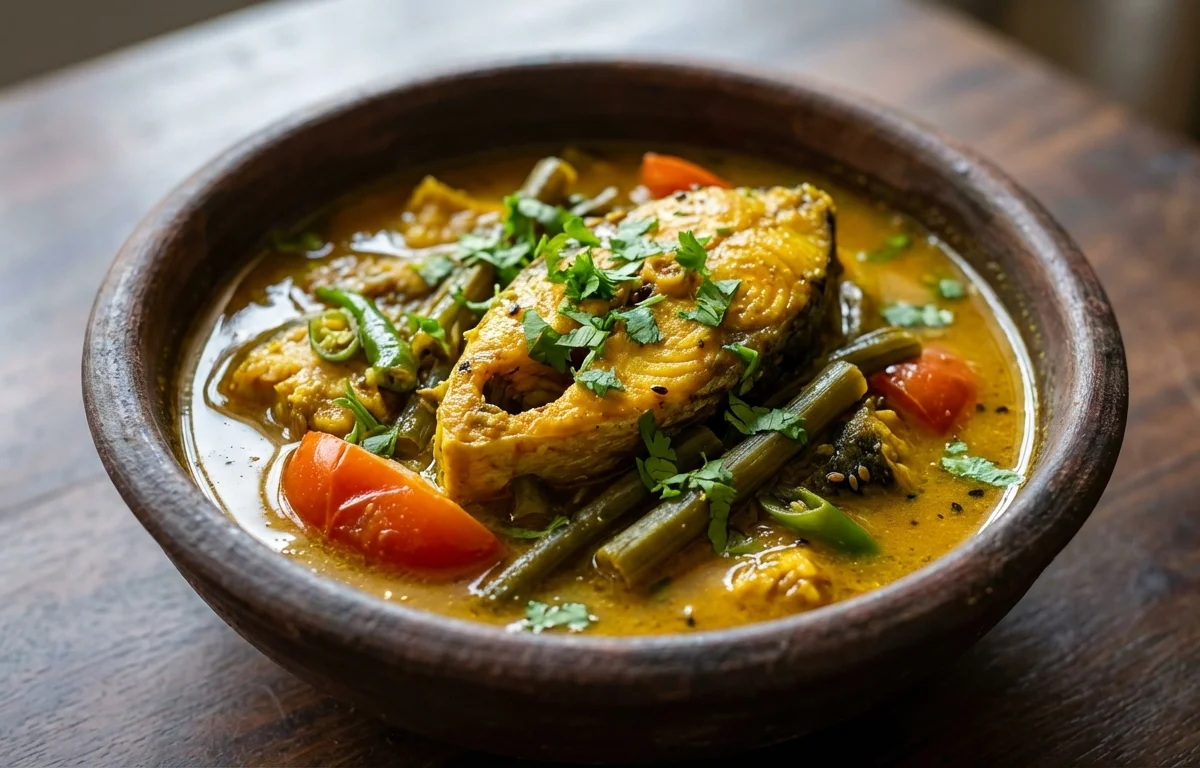
This light Assamese fish curry brings together tender fish, bottle gourd, tomatoes, and a gentle tang from lemon for a simple, homestyle dish that tastes clean, fresh, and comforting with plain rice.
For 4 servings
- prep · ~10 min
Season the fish pieces.
Rub the fish with turmeric powder and a small pinch of the salt. Set aside for 10 minutes while you prepare the other ingredients.
- fry · ~4 min
Lightly fry the fish.
1.Heat mustard oil in a pan until it just starts to smoke lightly, then lower the heat.2.Add the fish pieces in a single layer.3.Fry both sides lightly until sealed and pale golden, about 2 minutes per side.4.Remove the fish to a plate without overcooking.TIPKeep the fish only lightly fried here so it stays tender when simmered in the curry. - saute · ~6 min
Cook the tomato and ginger base.
1.In the same pan, keep 1 to 2 teaspoons of oil.2.Add crushed ginger and sauté for 30 seconds.3.Add chopped tomato and cook until soft and pulpy, about 4 to 5 minutes.4.Add the remaining salt and mix well. - simmer · ~10 min
Cook the bottle gourd.
1.Add the bottle gourd and slit green chilies to the pan.2.Stir for 1 minute so the gourd gets coated in the tomato mixture.3.Pour in the water and bring to a gentle simmer.4.Cover and cook until the bottle gourd is just tender, about 8 to 10 minutes. - simmer · ~6 min
Simmer the fish in the curry.
Slide the fried fish into the pan and simmer gently for 5 to 6 minutes, until the fish is cooked through and the broth tastes lightly tangy and savory.
TIPUse gentle heat and avoid stirring too much so the fish pieces do not break. - garnish
Finish with lemon juice and cilantro.
Turn off the heat, stir in the lemon juice, and scatter the chopped cilantro on top.
- serve
Serve hot with plain rice.
What to keep in mind.
7 tips from the recipe — small details that make a real difference to the final dish.
- 1Heat the mustard oil until just smoking to tame its raw sharpness before frying the fish.
- 2Do only a light first fry on the fish; it will finish cooking in the broth and stay tender.
- 3Cut the bottle gourd into even batons so it turns soft at the same time without going mushy.
- 4Simmer the curry gently after adding fish; a hard boil can break delicate river fish pieces.
- 5Add the lemon juice only after turning off the heat so the sourness stays bright and fresh.
- 6If your tomatoes are very tart, reduce the lemon slightly to keep the curry balanced and clean-tasting.
- 7This curry tastes best fresh, but you can make the tomato-gourd base ahead and add fish just before serving.
Adapt it for your goals.
Low-oil
Skip the full fry and sear the fish very briefly in less oil, or poach it directly in the simmering broth for a lighter everyday version.
more tangyMore-tangy
Increase tomato slightly or add a little extra lemon at the end if you prefer a sharper tenga profile with plain rice.
boneless fishBoneless-fish
Use firm boneless fish pieces for easier eating, especially if serving children or anyone not used to river fish bones.
mildMild
Reduce the green chilies or leave them whole for aroma only, keeping the curry soothing and gentle.
Why this is on our healthy list.
Lean Protein from Fish
Fish makes the curry filling and nourishing while keeping the dish light compared with richer gravies.
Hydrating Vegetable Base
Bottle gourd has a high water content, which suits this brothy curry and keeps the meal light and easy to pair with rice.
Tomato and Ginger Goodness
Tomatoes and ginger add plant compounds, freshness, and depth without relying on cream or heavy masalas.
Lightly Spiced Comfort Food
With minimal oil and simple seasoning, this dish delivers flavor without the heaviness of richer fried or creamy curries.
Frequently asked questions
Fresh river fish is traditional, but any firm fish that holds together in a light simmer works well. Choose medium pieces so they cook evenly.