Omita aru Koni Anja
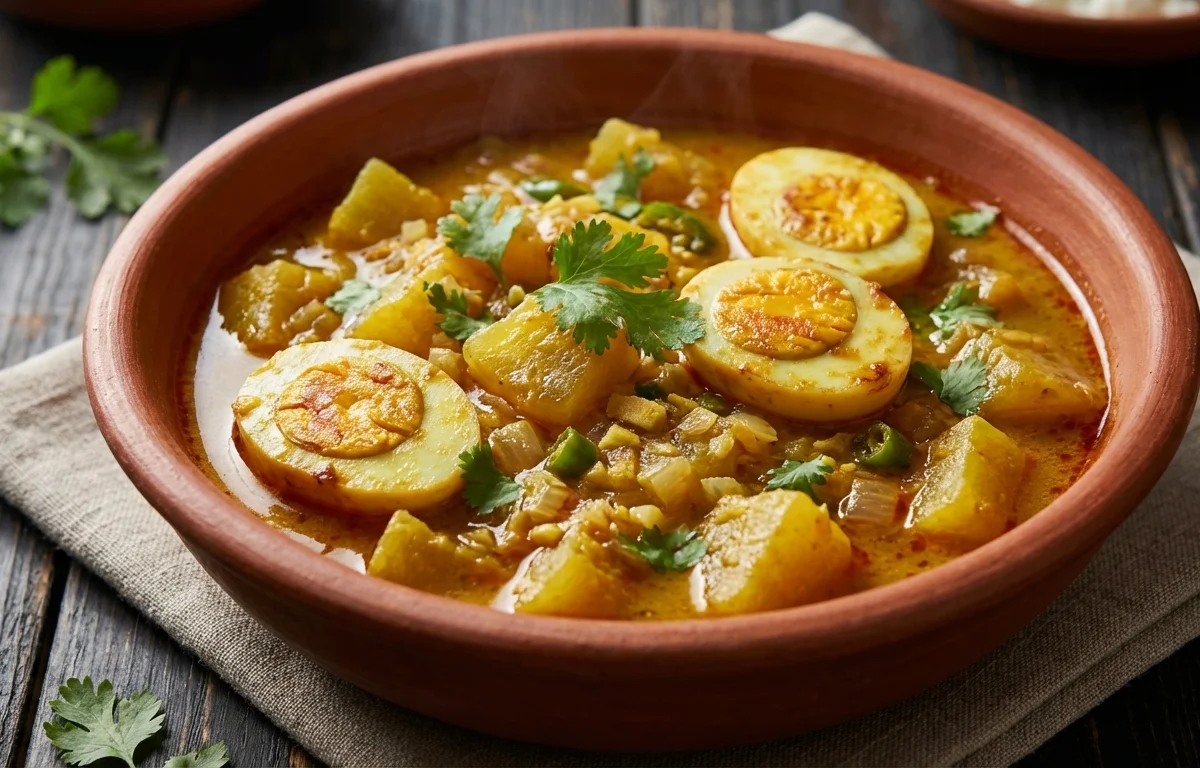
A homestyle Assamese curry made with tender green papaya and baby shrimp simmered with gentle spices. Light, comforting, and slightly earthy, it tastes wonderful with a small bowl of warm rice.
For 4 servings
- prep · ~15 min
Prepare the papaya and shrimp.
1.Peel the green papaya, remove the seeds, and cut it into small cubes.2.Peel and cube the potato.3.Clean the baby shrimp well and keep them drained.4.Chop the onion, crush the garlic and ginger, and slit the green chilies. - saute · ~3 min
Cook the shrimp lightly.
Heat 1 tbsp mustard oil in a pan over medium heat. Add the baby shrimp with a pinch of turmeric powder and cook for 2 to 3 minutes until they just turn opaque. Remove and keep aside.
TIPDo not overcook the shrimp at this stage or they can turn chewy later. - temper · ~5 min
Make the base for the curry.
1.Heat the remaining 1 tbsp mustard oil in the same pan.2.Add panch phoron and let it sizzle for a few seconds.3.Add the chopped onion and cook until soft and lightly golden.4.Add the crushed garlic and ginger and cook until fragrant. - saute · ~4 min
Add the vegetables and spices.
Add the green papaya, potato, green chilies, red chili powder, remaining turmeric powder, and salt. Mix well and cook for 3 to 4 minutes so the vegetables get coated in the spices.
- simmer · ~15 min
Simmer until tender.
Pour in the water and bring it to a gentle boil. Cover and cook on low heat for 12 to 15 minutes until the papaya and potato are tender.
TIPKeep the curry light and slightly brothy, which is typical for this dish. - simmer · ~4 min
Finish with the shrimp.
Add the cooked baby shrimp back to the pan and simmer uncovered for 3 to 4 minutes so the flavors come together. Check the salt and adjust only if needed.
- garnish
Garnish with coriander leaves.
- serve
Serve hot with rice.
What to keep in mind.
7 tips from the recipe — small details that make a real difference to the final dish.
- 1Cut the papaya and potato into similar small cubes so both turn tender at the same time.
- 2Drain the baby shrimp well before frying, or they will release water and dull the mustard oil aroma.
- 3Let the panch phoron sizzle only a few seconds; if it darkens too much, the broth can taste bitter.
- 4Cook the shrimp just until opaque in the first sauté, then finish them briefly at the end to keep them tender.
- 5Keep the curry slightly brothy rather than thick, as this Assamese anja is meant to be light with rice.
- 6If the papaya is older and firmer, add a splash more water and simmer a few extra minutes before returning the shrimp.
- 7This curry tastes even better after a short rest, once the papaya absorbs the ginger, garlic, and mustard oil.
Adapt it for your goals.
Low-oil
Use 1 tablespoon mustard oil total and a splash of water while sautéing the onion for a lighter everyday version.
spicierSpicier
Add an extra slit green chili or a little more red chili powder if you want more heat without changing the dish's character.
no potatoNo-potato
Skip the potato for a lighter, more papaya-forward curry with a thinner, cleaner broth.
fish basedFish-based
Replace baby shrimp with small pieces of river fish for a similar homestyle Assamese curry with a different texture.
Why this is on our healthy list.
Lean Seafood Protein
Baby shrimp add satisfying protein to the curry, making the light broth and vegetables more filling.
Vegetable-Rich Comfort Dish
Green papaya, potato, onion, garlic, ginger, and chilies make this a wholesome curry built around whole ingredients.
Digestive Spice Base
Ginger, garlic, and panch phoron bring traditional aromatic spices that make the curry flavorful without heavy richness.
Frequently asked questions
Yes, thaw them fully, rinse if needed, and drain very well before sautéing so the shrimp cook quickly and do not water down the pan.