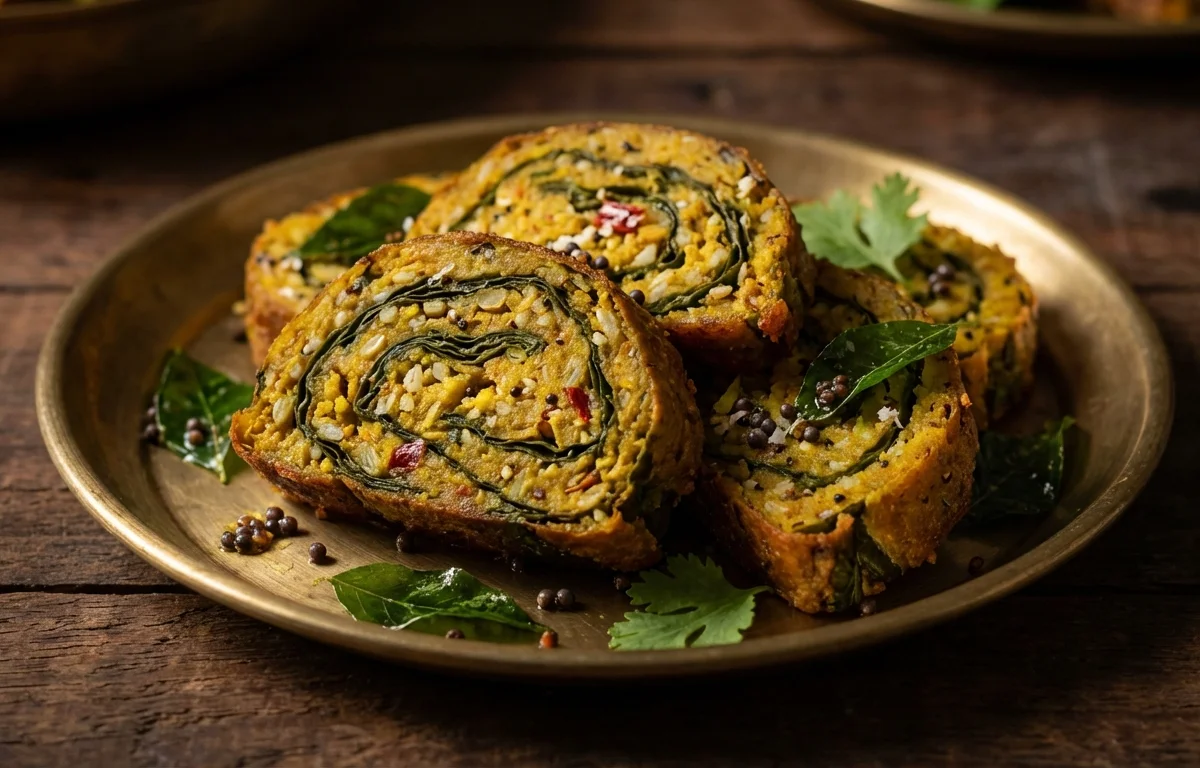
Pathrode Fry
Pathrode Fry is a coastal Karnataka favorite made by steaming colocasia leaves layered with a spiced rice and lentil paste, then slicing and pan-frying until crisp at the edges and soft inside.
For 8 servings
- prep · ~360 min
Soak the rice and lentils.
Wash the rice, toor dal, and chana dal well. Soak them together in enough water for 6 hours, then drain fully before grinding.
- prep · ~10 min
Prepare the leaves.
1.Wash the colocasia leaves well and pat them dry.2.Trim the thick stem and gently shave any very thick veins so the leaves fold easily.3.Keep the largest leaf aside for the base and sort the rest by size.TIPHandle the leaves carefully so they do not tear while spreading the paste. - mix · ~8 min
Grind the spiced batter.
1.Add the soaked rice, toor dal, chana dal, coconut, tamarind paste, jaggery, red chili powder, turmeric powder, asafoetida, and salt to a grinder.2.Add a little water for grinding and make a thick, slightly coarse paste.3.Taste and adjust the balance so it is spicy, lightly sweet, and tangy.TIPKeep the batter thick so it spreads well and holds the leaf layers together. - assemble · ~12 min
Layer the leaves and batter.
1.Place one large leaf shiny side down on a flat surface.2.Spread a thin, even layer of batter over it.3.Place another leaf on top in the opposite direction and spread more batter.4.Repeat with the remaining leaves and batter to build a neat stack. - assemble · ~5 min
Fold and roll the pathrode.
1.Fold the sides inward over the layered leaves.2.Roll tightly from the base into a firm log.3.Smear a little batter over the seam to help seal it.TIPRoll tightly so the slices hold their shape after steaming. - steam · ~25 min
Steam the roll until firm.
Place the roll in a steamer and steam over medium heat until cooked through and firm to the touch. Cool it completely before slicing.
- rest · ~15 min
Cool the steamed roll.
Let the pathrode rest until it is cool enough to handle. This helps it set properly and gives cleaner slices.
- prep · ~3 min
Slice the pathrode.
Cut the steamed roll into 8 even slices.
- fry · ~10 min
Pan-fry the slices.
1.Heat oil in a wide pan over medium heat.2.Arrange the slices in a single layer and cook until the bottom turns crisp and golden.3.Flip gently and fry the other side until crisp at the edges.TIPDo not overcrowd the pan, or the slices will steam instead of crisping. - serve
Serve hot.
Serve the Pathrode Fry hot as a snack or side dish while the outside is crisp and the center stays soft.
What to keep in mind.
7 tips from the recipe — small details that make a real difference to the final dish.
- 1If the colocasia leaves are very mature, shave the thick veins well so the roll does not crack while folding.
- 2Grind the batter slightly coarse, not silky smooth; that texture gives classic pathrode bite after steaming.
- 3Keep the batter on the tangy side, since tamarind helps balance the earthiness of taro leaves.
- 4Cool the steamed roll fully before slicing, or the rounds can crumble in the pan.
- 5Use a flat spatula to flip the slices gently so the layered leaves stay intact.
- 6Pan-fry on medium heat only; high heat browns the outside before the inside warms through.
- 7You can steam the roll a day ahead and refrigerate it, then slice and fry just before serving.
Adapt it for your goals.
Low-oil
Steam as usual, then shallow-fry with minimal oil on a well-seasoned pan or brush slices and air-fry for a lighter finish.
extra spicyExtra-spicy
Increase red chili powder slightly for a hotter coastal-style bite that stands up well to the sweet jaggery and coconut.
no coconutNo-coconut
Skip the coconut if needed and use a little less water while grinding; the flavor will be less rich but still traditional in structure.
steamed onlySteamed-only
Serve the steamed slices without pan-frying for a softer, less oily version that works well as a breakfast or tiffin item.
Why this is on our healthy list.
Good Mix of Grains and Lentils
Rice, toor dal, and chana dal together provide sustaining carbohydrates and plant-based protein in one dish.
Leafy Green Benefit
Colocasia leaves add leafy vegetable value and more variety than a plain rice-based snack.
Fiber From Dal and Leaves
The lentils and taro leaves contribute fiber, which can make the dish more filling than refined snacks.
Naturally Vegetarian
This dish is fully vegetarian and gets richness from coconut and lentils rather than meat.
Frequently asked questions
Usually the roll was not cooled enough, the batter was too thin, or the leaves were not rolled tightly. Let it set fully before slicing.