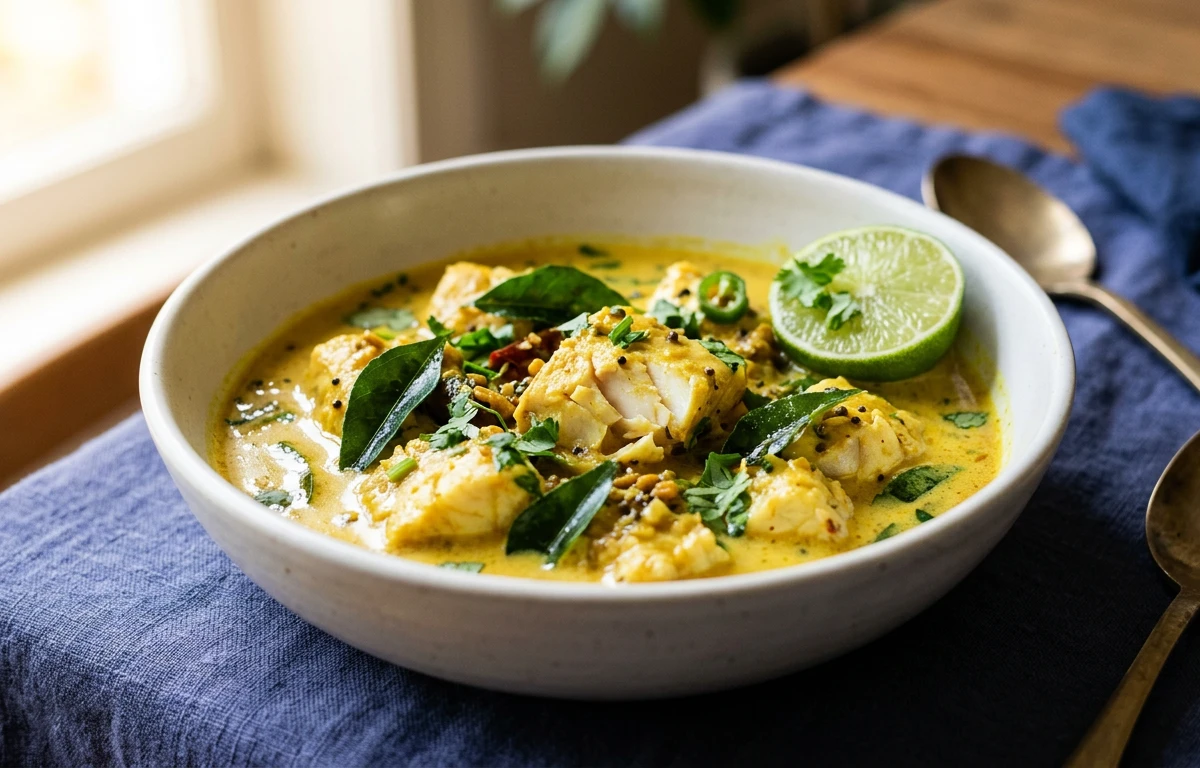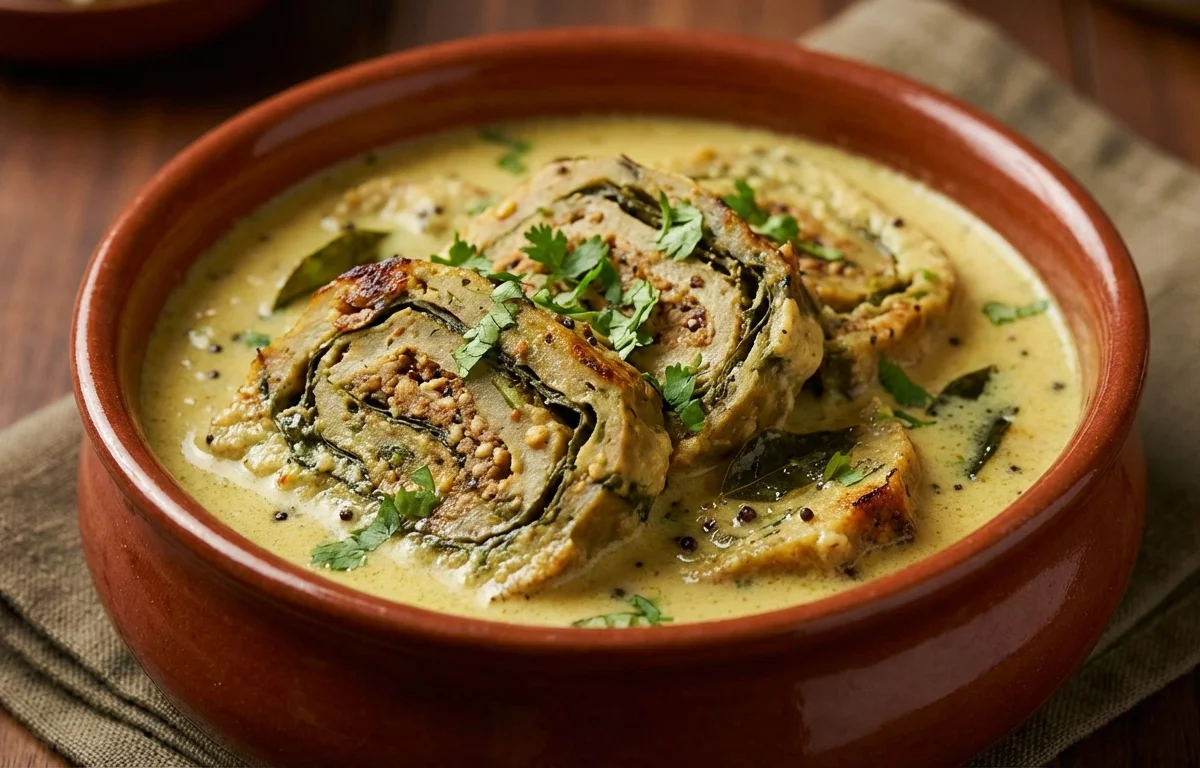
Patrode Ghashi
Tender steamed colocasia leaf rolls simmered in a fragrant coconut gravy. This Konkani delicacy transforms the humble patrode into a rich, tangy curry seasoned with tamarind and aromatic spices.
For 4 servings
- prep
Prepare the colocasia leaves.
1.Wash leaves thoroughly and pat dry.2.Remove thick stems and veins from the back of each leaf with a sharp knife.3.Keep leaves aside without overlapping. - mix
Make the spiced paste for spreading.
1.Grind soaked rice, soaked toor dal, tamarind, jaggery, red chili powder, turmeric, asafoetida, and salt to a thick, smooth paste.2.Add water only if needed — the paste must be spreadable, not runny.TIPThe paste should coat the back of a spoon without dripping. - assemble
Layer and roll the patrode.
1.Place the largest leaf vein-side up on a flat surface.2.Spread a thin, even layer of paste over the entire leaf.3.Place a smaller leaf on top, vein-side up, and spread more paste.4.Repeat with 3-4 leaves, finishing with paste on top.5.Fold the sides inward and roll tightly from the stem end to tip, like a cigar.6.Repeat to make 2 rolls.TIPRoll firmly but gently — loose rolls will fall apart during steaming. - steam · ~20 min
Steam the patrode rolls.
1.Place rolls in a greased steamer basket, seam side down.2.Steam over medium heat for 15-20 minutes until firm and cooked through.3.Let them cool slightly, then slice into ½-inch thick rounds.TIPA toothpick inserted should come out clean when done. - saute · ~6 min
Roast the masala ingredients.
1.Heat 2 tsp coconut oil in a small pan over medium heat.2.Add coriander seeds, cumin seeds, fenugreek seeds, and dried red chilies.3.Roast until fragrant and seeds darken slightly (1-2 minutes).4.Add grated coconut and roast until golden brown (3-4 minutes).5.Remove from heat and cool completely.TIPDo not rush — properly roasted coconut gives the curry its depth. - mix
Grind the coconut masala.
1.Transfer the cooled roasted mixture to a grinder.2.Add ½ cup water and grind to a very smooth, fine paste.3.Set aside. - simmer · ~5 min
Cook the curry.
1.Transfer the ground masala paste to a pan.2.Add ½ cup water and bring to a gentle simmer over medium heat.3.Stir occasionally and cook for 5 minutes until the raw smell disappears.4.Season with remaining salt.TIPKeep the flame low to prevent the coconut-based gravy from scorching. - simmer · ~7 min
Add the sliced patrode to the gravy.
1.Gently slide the sliced patrode rounds into the simmering gravy.2.Cook for 5-7 minutes, letting the rolls absorb the flavors.3.Stir very gently to prevent breaking the slices.TIPHandle the patrode slices delicately — they are tender after steaming. - temper · ~2 min
Make the tempering.
1.Heat 1 tsp coconut oil in a small pan until shimmering.2.Add mustard seeds and let them splutter.3.Add curry leaves and fry until fragrant (30 seconds).4.Pour the tempering over the curry and mix gently.TIPSwirl the pan after adding curry leaves — it releases more aroma. - serve
Serve hot with steamed rice.
Ladle into bowls and serve immediately. Patrode Ghashi tastes best with plain rice and a drizzle of coconut oil.
What to keep in mind.
7 tips from the recipe — small details that make a real difference to the final dish.
- 1Choose only tender, medium-sized colocasia leaves — older leaves are fibrous and won't roll smoothly.
- 2Soak the rice and toor dal for the full time listed; under-soaked grains won't grind into a smooth paste.
- 3Spread the paste thinly on each leaf — too thick a layer makes the roll dense and hard to cook through.
- 4Steam the rolls on an oiled tray or banana leaf to prevent sticking without adding extra moisture.
- 5Let the steamed rolls cool completely before slicing; warm rolls crumble easily.
- 6Roast the coconut until deep golden brown, not just pale — this is the key to a rich, nutty gravy.
- 7Add the tamarind and jaggery to the paste, not the gravy, so the filling stays tangy-sweet and distinct.
Adapt it for your goals.
Steamed Snack (Patrode)
Skip the gravy entirely and serve the steamed, sliced patrode rolls as a snack with coconut chutney or a drizzle of lemon juice.
Gluten FreeGluten-Free
This recipe uses rice and toor dal instead of wheat flour, making it naturally gluten-free — just double-check asafoetida brands for gluten-containing additives.
VeganVegan
The dish is already vegan as written (no dairy or animal products), relying on coconut for richness.
Spicier VersionSpicier Version
Add 2-3 green chilies to the paste and 1-2 extra dried red chilies while roasting the masala for a fiery kick.
Why this is on our healthy list.
Rich in Dietary Fiber
Colocasia (taro) leaves and toor dal provide fiber that supports digestion and helps maintain steady energy levels.
Plant-Based Protein
The combination of rice and toor dal in the filling offers a complete protein source suitable for vegetarian diets.
Contains Antioxidants
Turmeric, curry leaves, and tamarind are rich in compounds that help combat oxidative stress in the body.
Healthy Fats from Coconut
Fresh coconut and coconut oil provide medium-chain triglycerides (MCTs), which are easily metabolized for quick energy.
Frequently asked questions
Fresh leaves are best for rolling. Frozen leaves are too delicate and tear easily — they work better if you're making a stir-fry, not patrode.