
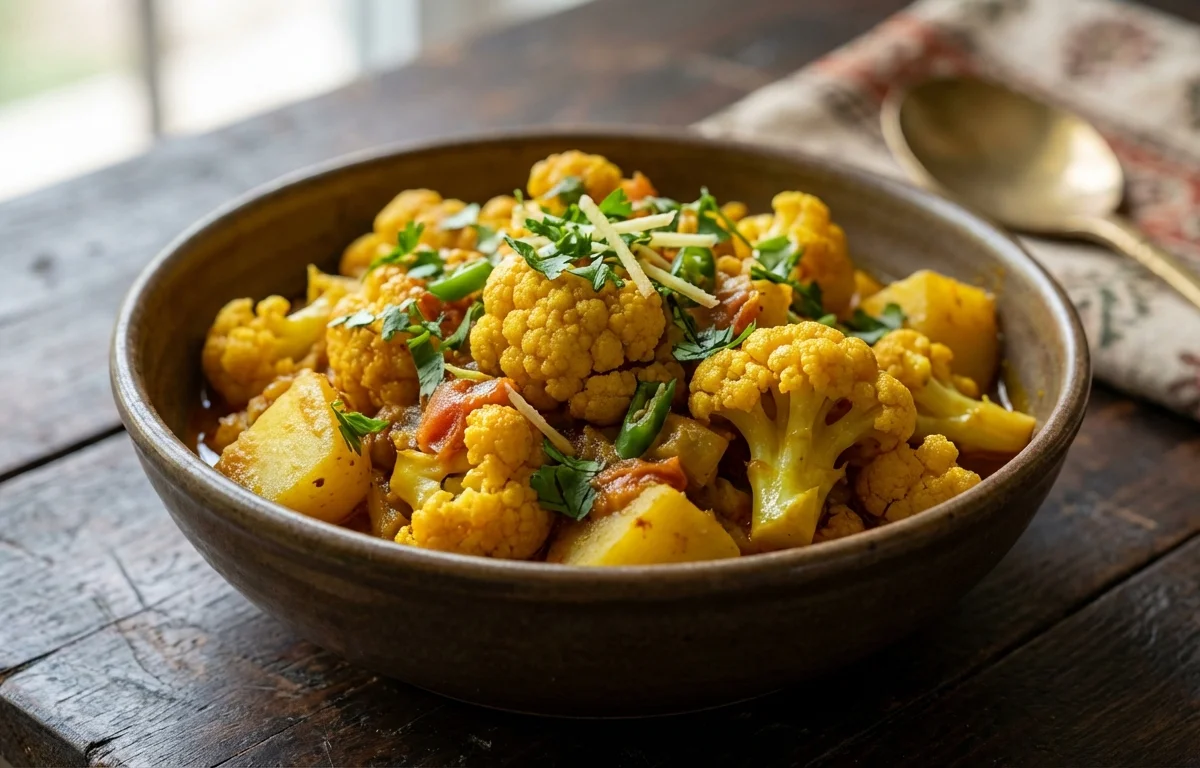
Phulkobi Bhaji
A simple, comforting Bengali-style cauliflower stir-fry where tender florets are cooked with potatoes in a light tempering of nigella seeds and green chilies. The natural sweetness of cauliflower shines through with minimal spices, making it a perfect everyday side for steamed rice and dal.
For 4 servings
- prep · ~10 min
Prep the cauliflower and potatoes.
1.Wash the cauliflower and cut into medium florets about 1.5 inches wide.2.Peel the potato and cube into 1-inch pieces. Keep both vegetables in a bowl of water to prevent discoloration.TIPCut florets into uniform size so they cook evenly. Soaking in salted water also helps remove any hidden insects. - temper · ~3 min
Temper the mustard oil and spices.
1.Heat mustard oil in a kadai over medium heat until it reaches its smoking point and the raw smell disappears.2.Once the oil is lightly smoking, turn the heat down to low and add nigella seeds.3.Let the nigella seeds crackle for about 10 seconds, then add the slit green chilies.TIPHeating mustard oil to its smoking point is essential to remove its raw pungency and make it mellow. - saute · ~5 min
Sauté the vegetables with turmeric and salt.
1.Drain the cauliflower and potatoes, then add them to the kadai.2.Sprinkle in turmeric powder, salt, and sugar.3.Stir well to coat all the florets and potato pieces with the oil and spices.4.Sauté on medium heat for about 5 minutes, stirring occasionally, until the edges start to look slightly glazed. - simmer · ~13 min
Cover and steam-cook until tender.
Reduce the heat to low. Splash 3 tablespoons of water around the edges of the kadai. Cover tightly with a lid and let it cook in its own steam for 12-15 minutes. Open the lid once halfway to give it a gentle stir to prevent sticking.
TIPAvoid adding too much water — cauliflower releases its own moisture. A tight-fitting lid is key for even steaming. - saute · ~3 min
Dry out excess moisture.
Remove the lid. If there is any remaining water in the pan, increase the heat to medium and sauté for another 2-3 minutes until the moisture evaporates completely and the edges of the cauliflower begin to caramelize slightly.
- garnish
Finish with fresh coriander and serve.
Turn off the heat. Sprinkle freshly chopped coriander leaves over the top. Serve hot in a katori alongside steamed rice and dal.
What to keep in mind.
6 tips from the recipe — small details that make a real difference to the final dish.
- 1Cut cauliflower and potatoes into uniform 1-inch pieces for even cooking.
- 2Always heat mustard oil until it reaches its smoking point to remove raw pungency.
- 3Use a tight-fitting lid during steaming to trap steam and cook vegetables evenly.
- 4Resist adding too much water—cauliflower releases moisture naturally as it cooks.
- 5Sauté the vegetables uncovered at the end to evaporate excess liquid and develop light caramelization.
- 6For best texture, avoid overcooking the cauliflower; it should be tender but still hold its shape.
Adapt it for your goals.
Low-oil
Replace mustard oil with a light spray of cooking oil and use a non-stick pan; steam-cook with a little more water. Ideal for those watching their fat intake.
veganVegan
This recipe is already vegan as written—no dairy or animal products are used.
with peasWith peas
Add 1/2 cup of fresh or frozen green peas along with the potatoes for a pop of color, sweetness, and extra nutrition.
spicierSpicier
Increase the green chilies to 5-6 or add a pinch of red chili flakes with the turmeric for more heat.
Why this is on our healthy list.
Rich in Vitamin C
Cauliflower is an excellent source of immune-supporting vitamin C, which is preserved by the quick steam-cooking method.
Good Source of Fiber
Both cauliflower and potatoes provide dietary fiber that aids digestion and promotes a feeling of fullness.
Low in Calories
This stir-fry is naturally low in calories while being satisfying, making it a great addition to a balanced meal.
Contains Antioxidants
Turmeric and nigella seeds offer anti-inflammatory compounds that support overall wellness.
Frequently asked questions
Yes, but you will lose the characteristic pungent-nutty flavor of mustard oil. If using neutral oil, consider adding a pinch of mustard powder to mimic some depth.

-curry.webp)
.webp)