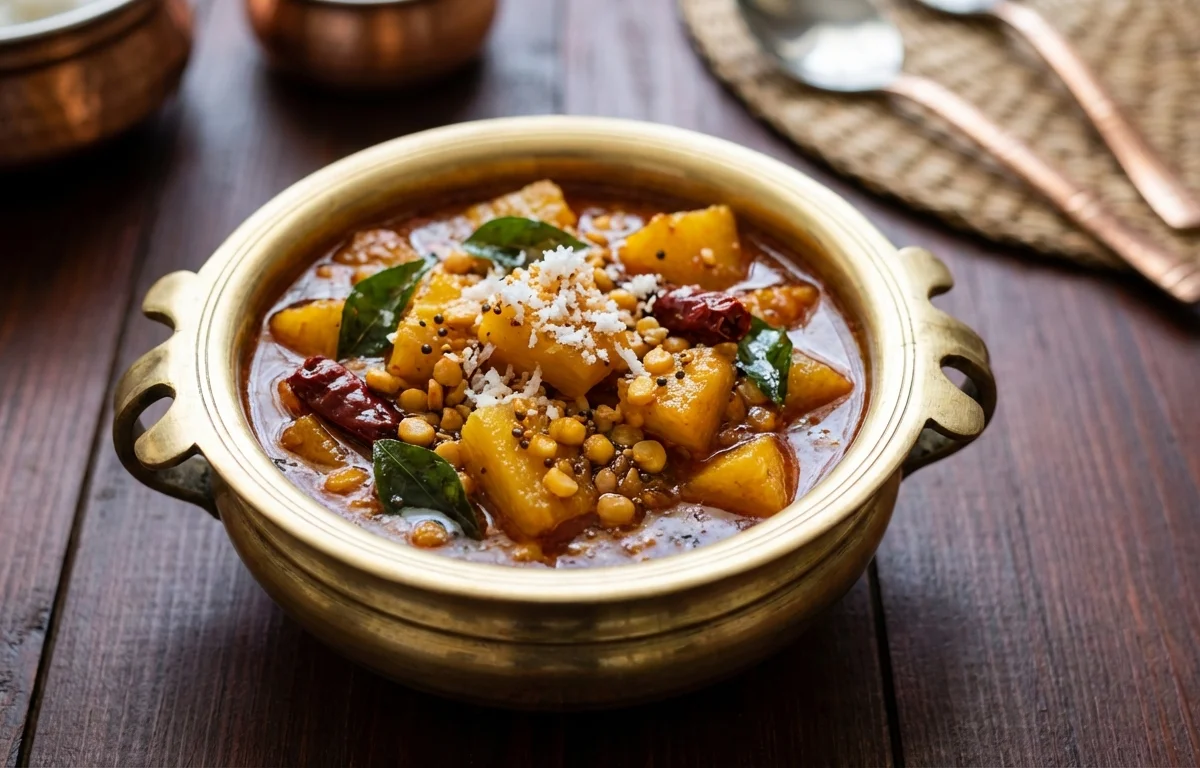
Pineapple Gojju
A sweet, tangy, and gently spiced Karnataka-style pineapple curry that balances jaggery, tamarind, and a simple tempering. It makes a lovely small bowl alongside rice, dosa, or a South Indian meal.
For 4 servings
- prep · ~15 min
Prepare the pineapple and tamarind.
1.Peel, core, and cut the pineapple into small even cubes.2.Soak tamarind in a little warm water for 10 minutes.3.Squeeze and strain the tamarind to get a smooth extract. - boil · ~10 min
Cook the pineapple.
Add pineapple, water, turmeric powder, and salt to a pan. Bring to a boil, then cook until the pineapple turns tender but still holds its shape.
TIPDo not overcook the pineapple or it will lose its fresh bite. - simmer · ~8 min
Add the sweet and tangy flavors.
1.Pour in the tamarind extract and stir well.2.Add jaggery, sambar powder, and red chili powder.3.Simmer until the jaggery melts and the gojju thickens lightly (6-8 min).TIPTaste at the end and adjust the balance so it is clearly sweet, tangy, and lightly spicy. - temper · ~2 min
Make the tempering.
1.Heat oil in a small pan over medium heat.2.Add mustard seeds and let them splutter.3.Add urad dal and cook until lightly golden.4.Add dried red chili, curry leaves, and asafoetida and cook for a few seconds.TIPKeep the heat moderate so the spices bloom without burning. - assemble · ~1 min
Finish the gojju.
Pour the hot tempering over the simmering pineapple mixture and stir. Cook for 1 more minute so the flavors come together.
- serve
Serve warm or at room temperature.
What to keep in mind.
7 tips from the recipe — small details that make a real difference to the final dish.
- 1Cut the pineapple into small, even cubes so it softens uniformly without turning mushy.
- 2Strain the tamarind extract well; any fibers or seeds can make the gojju unpleasantly gritty.
- 3Cook the pineapple only until tender with a slight bite, since it will soften a bit more after tamarind is added.
- 4Simmer after adding jaggery and tamarind until the liquid lightly coats the spoon; gojju should be spoonable, not watery.
- 5Add the tempering while it is still sizzling hot to capture the aroma of curry leaves, mustard, and asafoetida.
- 6Taste only at the end of simmering, then adjust with a little extra jaggery or tamarind to balance sweet and tangy notes.
- 7This dish keeps well for a day in the fridge and often tastes even better once the sweet-sour flavors settle.
Adapt it for your goals.
Low-jaggery
Reduce the jaggery for a tarter gojju that pairs especially well with rich South Indian meals.
spicierSpicier
Increase red chili powder or add one extra dried red chili in the tempering for a sharper heat.
coconutCoconut
Stir in a little fresh grated coconut near the end for a softer, more rounded Karnataka-style finish.
jainJain
Skip the asafoetida if needed and check your sambar powder ingredients; the dish still keeps its sweet-tangy character.
Why this is on our healthy list.
Fruit-Based Side Dish
Pineapple brings natural sweetness and fruit acidity, making this a lighter accompaniment than many richer gravies.
Digestive Spice Support
Tamarind, asafoetida, curry leaves, and mustard seeds are traditional ingredients often used to add depth and aid digestibility in meals.
Moderate Oil Use
The recipe uses only a small tempering of oil, giving aroma and flavor without making the dish heavy.
Frequently asked questions
Yes, but choose unsweetened pineapple if possible and reduce the jaggery slightly at first, since canned fruit is often sweeter and softer.