Pineapple Menaskai
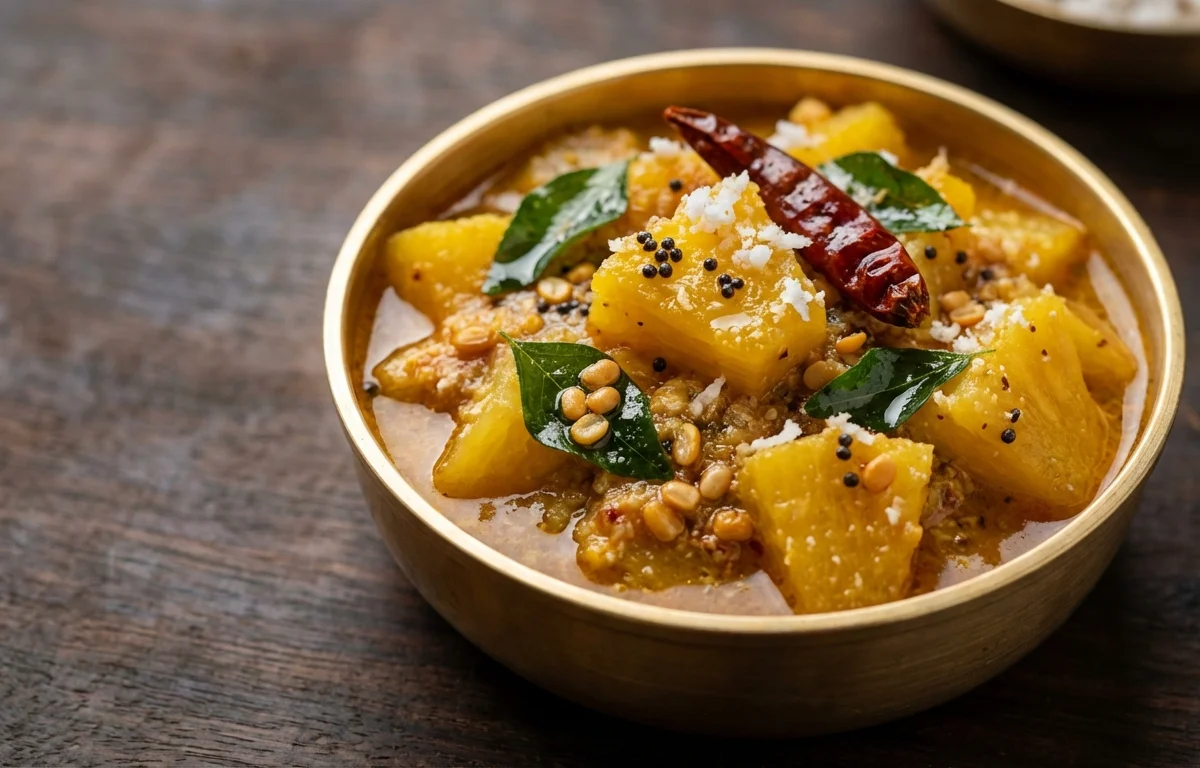
A sweet, tangy and gently spiced Udupi-style pineapple curry with fresh coconut, red chilies and tamarind. It balances fruitiness, heat and jaggery beautifully, making it a lovely small katori side with rice.
For 4 servings
- prep · ~15 min
Soak the tamarind and prepare the pineapple.
1.Soak tamarind in a few tablespoons of warm water for 15 minutes.2.Peel, core and cube the pineapple into small bite-size pieces.3.Squeeze the soaked tamarind well and keep the extract ready. - saute · ~4 min
Roast the spices for the masala.
1.Heat a small pan over medium-low heat.2.Add coriander seeds, urad dal, dried red chili and fenugreek seeds.3.Roast until the dal turns light golden and the spices smell fragrant.4.Take off the heat and let the mixture cool slightly.TIPKeep the heat low while roasting fenugreek so it does not turn bitter. - mix · ~3 min
Grind the masala.
Blend the roasted spices with grated coconut and a little water to a smooth, thick paste.
- boil · ~8 min
Cook the pineapple.
Add pineapple and water to a pan and bring to a boil. Cook until the fruit softens slightly but still holds its shape.
- simmer · ~10 min
Add the masala, tamarind and jaggery.
1.Stir the ground coconut masala into the cooked pineapple.2.Add the tamarind extract, jaggery and salt.3.Mix well and simmer on low heat until the curry thickens and the raw coconut smell disappears.TIPStir often after adding the coconut paste so it cooks evenly and does not catch at the bottom. - temper · ~1 min
Make the tempering.
1.Heat coconut oil in a small pan.2.Add mustard seeds and let them splutter.3.Add curry leaves and fry for a few seconds. - assemble · ~1 min
Pour the tempering over the menaskai.
Add the hot tempering to the curry and mix gently. Simmer for 1 minute more so the flavors come together.
- serve
Serve hot or warm.
Serve Pineapple Menaskai in small katoris alongside rice and other Udupi-style dishes.
What to keep in mind.
7 tips from the recipe — small details that make a real difference to the final dish.
- 1Choose a ripe but firm pineapple so the cubes stay intact while simmering.
- 2Roast the fenugreek only briefly; even slight over-browning can make the menaskai taste bitter.
- 3Grind the coconut masala very smooth for the classic Udupi-style body and even coating.
- 4Cook the pineapple just until slightly tender; mushy fruit will disappear into the gravy.
- 5After adding the coconut paste, keep the heat low and stir often to prevent catching.
- 6Let the curry rest 10 to 15 minutes before serving so the sweet, sour and spicy notes settle.
- 7This tastes even better the next day; refrigerate and reheat gently without hard boiling.
Adapt it for your goals.
Low-spice
Reduce the dried red chilies for a milder menaskai that still keeps the sweet-tangy Udupi character.
jainJain
This recipe is already close to Jain-friendly since it has no onion or garlic; just ensure your jaggery and ingredients meet your household preferences.
mixed fruitMixed-fruit
Add a little ripe mango with the pineapple for a softer, fruitier version often enjoyed when mangoes are in season.
festival styleFestival-style
Use a touch more jaggery for a slightly sweeter temple-style side dish to pair with plain rice and dal.
Why this is on our healthy list.
Fruit-Based Side Dish
Pineapple brings natural sweetness and fruit acidity, making this curry feel light yet flavorful alongside rice.
Plant-Based Fats from Coconut
Fresh coconut adds richness, satiety and body, so the dish tastes full without dairy.
Spice-Driven Flavor
Red chilies, coriander, fenugreek and curry leaves build strong flavor, reducing the need for heavy fats or rich cream.
Frequently asked questions
Yes, but use pineapple packed in juice rather than syrup, and reduce the jaggery because canned fruit is often sweeter than fresh.