
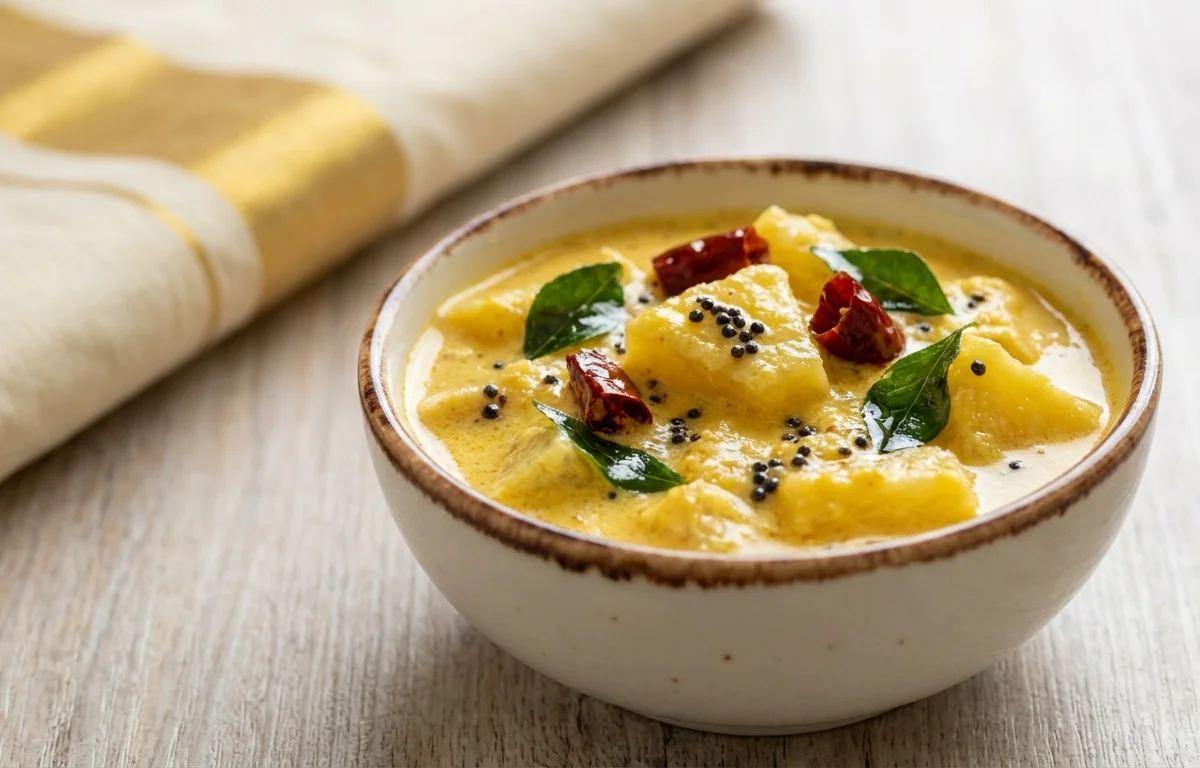
Pineapple Pachadi
A sweet, tangy, and mildly spiced Kerala-style curry made with ripe pineapple cooked in a yogurt-coconut base. This festive dish from God's Own Country balances fruity sweetness with the heat of green chilies and the aroma of mustard seeds and curry leaves, making it a refreshing companion to rice and sambar.
For 4 servings
- prep
Prepare the pineapple.
Peel, core, and cut the pineapple into small bite-sized cubes. Ensure the fruit is ripe but still firm so it holds its shape during cooking.
- simmer · ~10 min
Cook the pineapple.
1.Add cubed pineapple to a heavy-bottomed pan with turmeric powder, red chili powder, salt, and ½ cup water.2.Bring to a gentle simmer over medium heat.3.Cook uncovered until pineapple softens and water reduces by half, about 8-10 minutes.4.Remove from heat and let it cool slightly.TIPThe pineapple should be tender but not mushy. A slight bite is ideal. - mix · ~2 min
Grind the coconut paste.
1.In a mixer grinder, add grated coconut, green chilies, and cumin seeds.2.Add 2-3 tablespoons of water and grind to a smooth, thick paste.3.Set aside until the pineapple cools down. - mix · ~3 min
Combine coconut paste and yogurt with the pineapple.
1.Once the cooked pineapple is warm (not hot), add the ground coconut paste and stir well.2.Let it cook on low heat for 2 minutes, stirring gently.3.Turn off the heat. Wait 1 minute, then stir in the whisked yogurt until fully incorporated.4.Taste and adjust salt. Keep the pachadi warm, not boiling.TIPNever add yogurt to a boiling mixture — it will curdle. Let the pineapple cool until just warm before adding yogurt. - temper · ~2 min
Make the tempering.
1.Heat coconut oil in a small tempering pan over medium heat.2.Add mustard seeds and let them splutter.3.Add fenugreek seeds and fry for 10 seconds until golden.4.Add dried red chilies and curry leaves. Fry until leaves turn crisp and fragrant, about 20 seconds.5.Immediately pour the tempering over the pachadi.TIPPour the tempering only when you're ready to serve — the crackle of fresh tadka makes this dish special. - serve
Mix the tempering in gently and serve.
Gently fold the tempering into the pachadi just before serving. Serve at room temperature or slightly chilled as a side with steamed rice and sambar.
What to keep in mind.
7 tips from the recipe — small details that make a real difference to the final dish.
- 1Use ripe but firm pineapple so the cubes hold their shape during cooking.
- 2Grind the coconut paste with just enough water to make a smooth, thick mixture.
- 3Always let the cooked pineapple cool until just warm before stirring in the yogurt to prevent curdling.
- 4Do not skip the fenugreek seeds in the tempering — they add a signature Kerala-style bitterness.
- 5Pour the tempering over the pachadi only when you're ready to serve for the best aroma.
- 6Serve the pachadi at room temperature for the most balanced flavor profile.
- 7If making ahead, add the yogurt just before serving to avoid a watery texture.
Adapt it for your goals.
Vegan
Replace the yogurt with thick plant-based yogurt (like coconut or cashew yogurt) for a fully vegan version. The taste will be slightly different but still creamy and tangy.
Low SpiceLow-Spice
For a milder pachadi, reduce the green chilies to one and skip the dried red chilies in the tempering. Great for kids or sensitive palates.
High ProteinHigh-Protein
Add a handful of cooked, drained chickpeas along with the coconut paste for extra protein and texture. It turns the pachadi into a more substantial side dish.
Fruit SwapFruit Swap
Replace pineapple with firm ripe mango or apple. Adjust cooking time as mango softens faster and apple may need a pinch more sugar to balance tartness.
Why this is on our healthy list.
Digestive Aid from Yogurt
The live cultures in yogurt support gut health and improve digestion, especially when paired with fiber-rich pineapple and spices like cumin and fenugreek.
Rich in Antioxidants
Pineapple contains bromelain and vitamin C, while turmeric and curry leaves provide anti-inflammatory and antioxidant compounds that help protect cells.
Good Source of Healthy Fats
Coconut and coconut oil supply medium-chain triglycerides (MCTs) that provide quick energy and support brain function.
Low in Added Sugar
This dish relies on the natural sweetness of ripe pineapple, making it a healthier choice compared to sweetened curries.
Frequently asked questions
Yes, but drain it well and reduce the added water to about 2 tablespoons, as canned pineapple is already soft and juicy. The texture will be less firm.



.webp)
.webp)