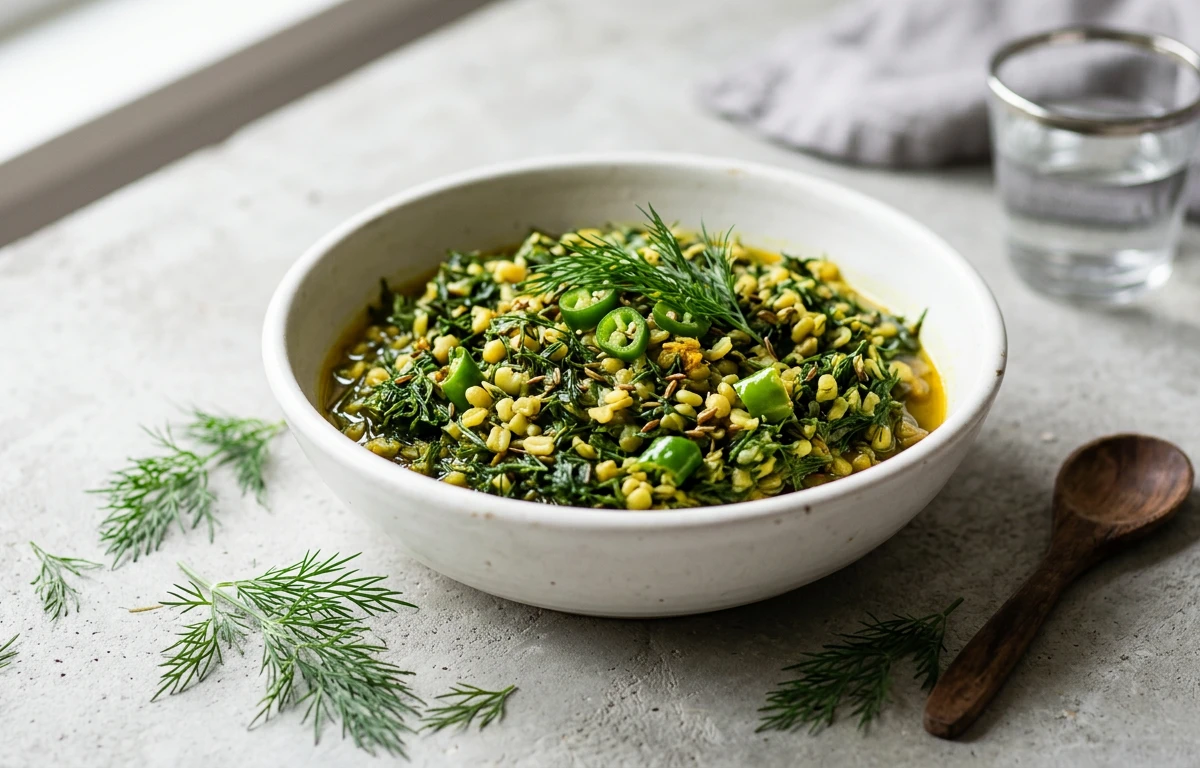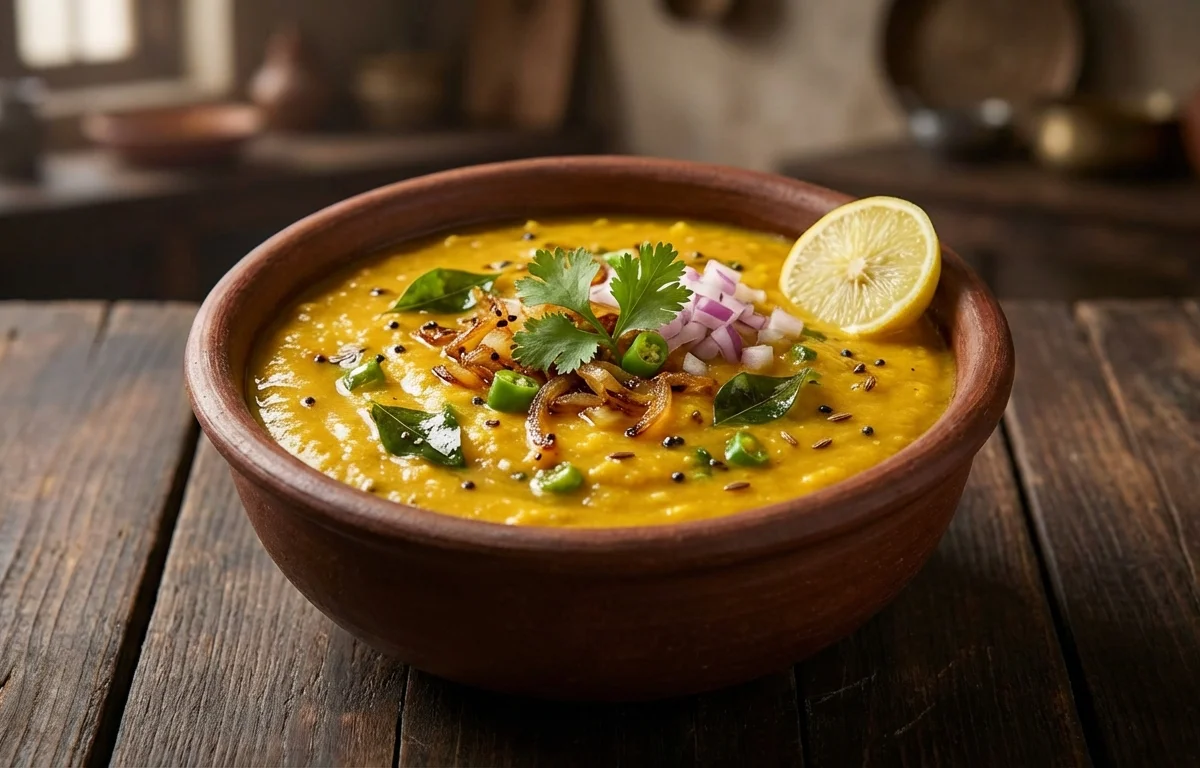
Pithla
A rustic Maharashtrian gram flour curry with a silky texture and bold tempering of mustard, cumin, garlic, and green chili. It comes together quickly and tastes best hot with bhakri or plain rice.
For 4 servings
- mix · ~3 min
Mix the chickpea flour slurry.
1.Add chickpea flour to a bowl.2.Pour in 2 cups water little by little and whisk until smooth.3.Make sure there are no lumps before you start cooking.TIPA smooth slurry gives pithla its soft texture. If needed, strain it once before adding to the pan. - temper · ~2 min
Make the tempering.
1.Heat oil in a pan over medium heat.2.Add mustard seeds and let them splutter.3.Add cumin seeds, asafoetida, and turmeric powder.4.Add garlic and green chili, then cook for 30 seconds.TIPKeep the heat medium so the garlic and spices do not burn. - saute · ~5 min
Cook the onion.
Add onion and sauté until soft and lightly golden. This gives the pithla a fuller, homestyle flavor without making it heavy.
- simmer · ~7 min
Cook the pithla until thick and glossy.
1.Lower the heat and pour in the chickpea flour slurry while stirring constantly.2.Add the remaining 1 cup water and salt.3.Cook on low to medium heat, stirring often, until the mixture thickens and turns smooth.4.Let it simmer for 4 to 5 minutes until the raw taste of chickpea flour is gone.TIPStir continuously after adding the slurry, or the flour can catch at the bottom and form lumps. - garnish · ~1 min
Finish with cilantro and lemon juice.
Turn off the heat and stir in cilantro and lemon juice for a fresh, bright finish.
- serve
Serve the pithla hot.
What to keep in mind.
7 tips from the recipe — small details that make a real difference to the final dish.
- 1Whisk the besan with water gradually; a pourable, lump-free slurry is the key to silky pithla.
- 2Add the slurry only after the onions soften, so the onion sweetness balances besan's earthy taste.
- 3Keep stirring as soon as the slurry hits the pan, especially around the base, to prevent catching and lumps.
- 4Simmer until the raw besan smell disappears and the pithla looks glossy rather than dull.
- 5If it thickens too much as it sits, loosen it with a splash of hot water and whisk briefly on the stove.
- 6Stir in lemon juice off the heat so the bright finish stays fresh and doesn't turn harsh.
- 7Pithla is best eaten immediately with bhakri or rice, since it continues to thicken as it cools.
Adapt it for your goals.
No-onion
Skip the onion for a simpler village-style version with a cleaner besan and garlic flavor.
jainJain
Omit onion and garlic; increase green chili and hing for aroma while keeping the dish satvik-friendly.
spicierSpicier
Add extra slit green chilies or a pinch of red chili powder in the tempering for a hotter, more assertive pithla.
garlickyGarlicky
Use a few more crushed garlic cloves if you want a stronger, rustic Maharashtrian-style tempering.
Why this is on our healthy list.
Plant-Based Protein
Chickpea flour adds satisfying plant protein, making this simple curry more filling than a thin gravy.
Good Fiber Content
Besan and onion contribute fiber, which helps make the dish hearty when served with bhakri or rice.
Digestive Spice Support
Cumin, asafoetida, garlic, and ginger-free tempering spices are traditionally used to make legume-based dishes feel easier to digest.
Vitamin-Rich Finish
Cilantro, green chili, and lemon juice bring freshness along with beneficial plant compounds and natural brightness.
Frequently asked questions
Usually the besan slurry was not whisked smooth first, or it was added too quickly without constant stirring. Make a lump-free slurry and stir continuously as it cooks.



.webp)