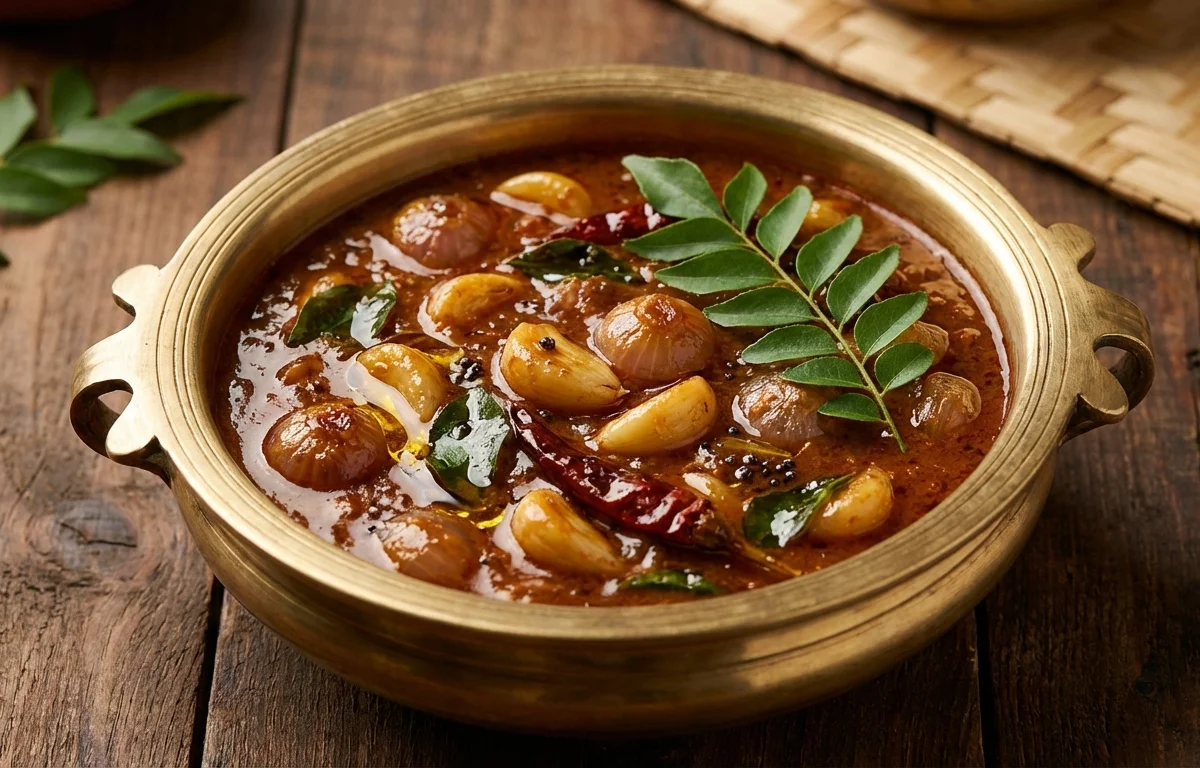
Poondu Kuzhambu
A bold Tamil-style garlic tamarind gravy with a deep, tangy taste and gentle heat. Whole garlic cloves turn soft and sweet as they simmer, making this kuzhambu perfect with hot rice and a little ghee.
For 4 servings
- prep · ~10 min
Soak the tamarind and get the ingredients ready.
1.Soak tamarind in warm water for 10 minutes.2.Squeeze and extract the pulp well, then strain it.3.Peel the garlic cloves and shallots.4.Chop the tomato finely. - temper · ~2 min
Make the tempering.
1.Heat sesame oil in a kadai over medium heat.2.Add mustard seeds and let them splutter.3.Add fenugreek seeds, dried red chili, curry leaves, and asafoetida.4.Cook for a few seconds until fragrant.TIPKeep the heat moderate once fenugreek goes in so it does not turn bitter. - saute · ~7 min
Cook the shallots, garlic, and tomato.
1.Add the shallots and cook until lightly softened, 2 to 3 minutes.2.Add the garlic cloves and sauté until glossy and lightly golden at the edges.3.Add the chopped tomato and cook until soft and pulpy. - simmer · ~5 min
Add the tamarind base and spices.
Pour in the tamarind extract and remaining water. Add sambar powder, turmeric powder, jaggery, and salt. Mix well and bring the kuzhambu to a steady simmer.
- simmer · ~15 min
Simmer until the kuzhambu thickens slightly.
Cook uncovered for 12 to 15 minutes, stirring now and then, until the raw tamarind smell fades, the garlic turns soft, and the gravy reduces to a slightly thick, glossy consistency.
TIPThe kuzhambu tastes best when it is tangy but balanced, so do not reduce it too much. - rest · ~10 min
Let the kuzhambu rest for 10 minutes.
- serve
Serve hot with rice.
What to keep in mind.
6 tips from the recipe — small details that make a real difference to the final dish.
- 1Keep the heat low after adding fenugreek seeds; even slight over-browning will make the kuzhambu bitter.
- 2Sauté the whole garlic until just lightly golden at the edges so it stays intact while turning soft in the gravy.
- 3Simmer uncovered until the raw tamarind smell disappears; that is the clearest sign the kuzhambu is cooked properly.
- 4Let it rest for at least 10 minutes before serving so the garlic, tamarind, and spice flavours meld fully.
- 5If the gravy thickens too much on standing, loosen it with a splash of hot water rather than boiling it down again.
- 6This kuzhambu often tastes even better the next day, so it is a great make-ahead dish for rice lunches.
Adapt it for your goals.
Jain
Skip the garlic and shallots, and use extra tomato plus a little more curry leaves for a tangy, satvik-style tamarind gravy.
spicierSpicier
Add an extra dried red chili or a little more sambar powder if you want a sharper, hotter kuzhambu with rice.
shallot freeShallot-free
Make it with only garlic for a more classic garlic-forward version and a slightly cleaner, sharper tamarind taste.
vegetable addedVegetable-added
Add a few pieces of brinjal while simmering for a heartier kuzhambu that pairs especially well with plain rice.
Why this is on our healthy list.
Garlic-rich dish
This kuzhambu uses plenty of whole garlic cloves, adding strong savory character along with garlic's naturally beneficial plant compounds.
Digestive spice base
Fenugreek, asafoetida, curry leaves, and tamarind are traditional ingredients often used in South Indian cooking for their digestive-friendly qualities.
Moderate oil gravy
The dish gets body and flavour from a small amount of sesame oil rather than relying on cream, coconut milk, or heavy fat.
Frequently asked questions
Yes. Dilute it well with water first and add gradually, because paste can be more concentrated and may make the kuzhambu too sharp.