
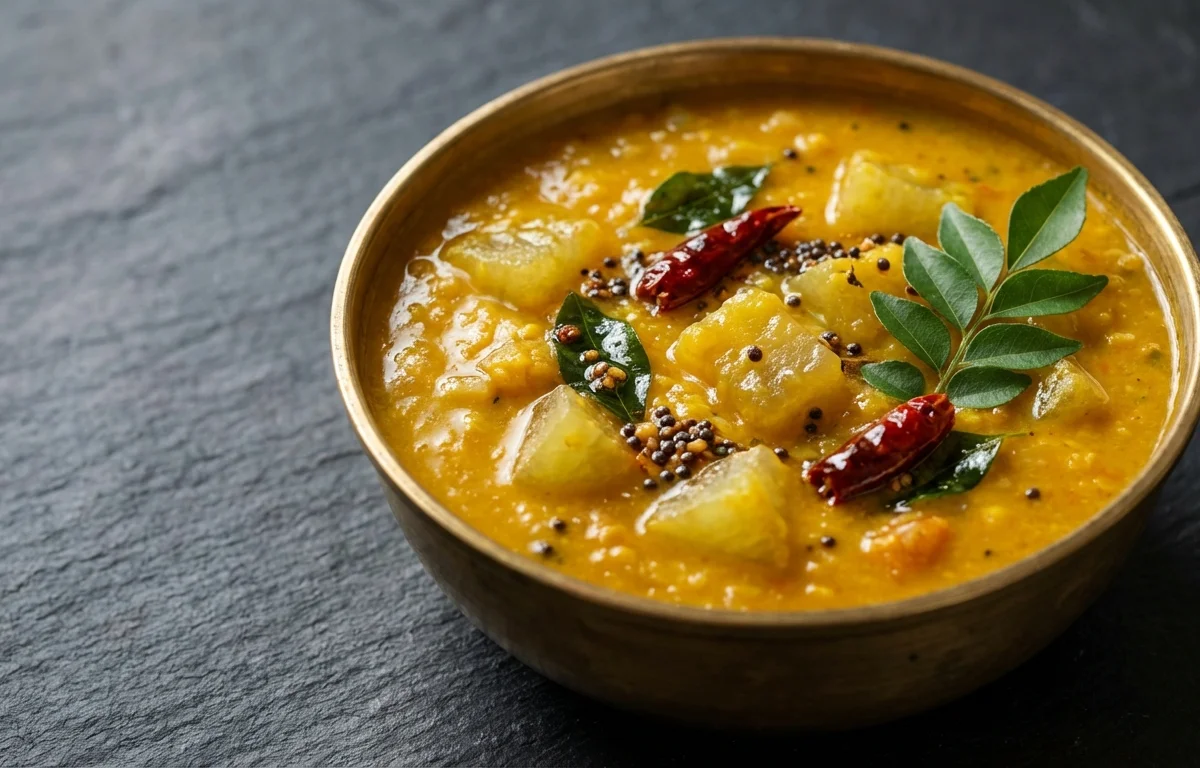
Puli Koddel
A tangy, coconut-rich curry from the Konkan coast, Puli Koddel brings together roasted spices, fresh coconut, and a bold tamarind kick. Unlike regular dal, the lentils are boiled separately while the spice paste and tamarind extract simmer into a dark, glossy gravy. Finished with a fragrant coconut oil tempering, this dish delivers deep, layered flavors that pair perfectly with hot steamed rice or dosa.
For 4 servings
- prep · ~15 min
Soak the tamarind and cook the dal.
1.Soak the tamarind in 0.5 cup warm water for 15 minutes. Squeeze well, extract thick pulp and discard fibers.2.Pressure cook rinsed toor dal with 2 cups water and turmeric for 3-4 whistles until soft. Mash lightly.TIPCook the dal until completely soft and falling apart — it should blend smoothly into the gravy. - roast · ~6 min
Roast the spices and coconut.
1.Heat a heavy-bottomed pan over medium heat. Add coriander seeds and cumin seeds. Dry roast until fragrant (1-2 min).2.Add fenugreek seeds and dried red chilies. Roast until chilies darken slightly (30 sec).3.Add grated coconut and roast, stirring continuously, until golden brown and aromatic (3-4 min). Remove from heat and let cool.TIPContinuous stirring prevents the coconut from burning — burnt coconut makes the curry bitter. - mix · ~2 min
Grind the roasted mixture into a smooth paste.
1.Transfer the cooled roasted mixture to a blender.2.Add 0.25 cup water and grind to a very smooth, thick paste. Set aside. - simmer · ~15 min
Simmer the curry base.
1.Pour the mashed dal into a deep pan. Add the ground coconut-spice paste and mix well.2.Add the extracted tamarind pulp, jaggery, and salt. Stir to combine.3.Add water to adjust consistency (about 0.5-1 cup) and bring to a gentle boil. Simmer on low heat for 12-15 minutes, stirring occasionally.TIPThe curry thickens as it simmers — aim for a pourable but not watery consistency, like melted chocolate. - temper · ~2 min
Make the coconut oil tempering.
1.Heat coconut oil in a small pan over medium heat.2.Add mustard seeds and let them splutter (30 sec).3.Add broken dry red chili, curry leaves, and asafoetida. Fry until leaves turn crisp (15-20 sec).4.Immediately pour the sizzling tempering over the simmering curry and mix in.TIPPour the tempering while the curry is still bubbling — the sizzle blooms the spices into the gravy. - simmer · ~5 min
Finish and rest the curry.
Turn off the heat and let the Puli Koddel rest for 5 minutes. The flavors meld as it cools slightly. Mix once before serving.
TIPPuli Koddel tastes even better the next day — the tamarind deepens and the coconut paste thickens the curry beautifully. - serve
Serve hot with steamed rice or dosa.
What to keep in mind.
7 tips from the recipe — small details that make a real difference to the final dish.
- 1Soak the toor dal for at least 2 hours to ensure even and quick cooking.
- 2Use Byadgi or Kashmiri dried red chilies for a deep red color and mild heat.
- 3Roast the coconut until golden brown, not dark — burnt coconut will turn the curry bitter.
- 4Grind the roasted spice-coconut paste to a very smooth consistency for a silky gravy.
- 5Simmer the curry after adding tamarind for at least 12 minutes to let the sourness mellow.
- 6Pour the tempering while the curry is still hot off the stove for maximum aroma.
- 7Let the curry rest for 5 minutes before serving — the flavors meld and deepen.
Adapt it for your goals.
No-Onion No-Garlic (Satvik)
Omit onions and garlic entirely; this version is already satvik-friendly and aligns with temple-style cooking.
Higher ProteinHigher Protein
Replace half the toor dal with moong dal (split yellow gram) for a lighter, easier-to-digest curry with more protein.
Low OilLow-Oil
Reduce coconut oil in the tempering to 1 tsp and skip roasting coconut in oil; dry roast it instead to cut fat without losing flavor.
VeganVegan
This recipe is naturally vegan — no changes needed, just use vegan-friendly jaggery (check for bone char processing).
Why this is on our healthy list.
Rich in Plant Protein
Toor dal provides a solid dose of plant-based protein and fiber, aiding satiety and digestion.
Good Source of Iron
Fenugreek seeds, coriander seeds, and curry leaves all contribute iron, which supports healthy blood.
Supports Digestion
Asafoetida, cumin, and fenugreek are known in Ayurveda for their digestive and anti-bloating properties.
Antioxidant-Rich Spices
Turmeric and curry leaves contain antioxidants that help fight inflammation and oxidative stress.
Healthy Fats from Coconut
Fresh coconut and coconut oil supply medium-chain triglycerides (MCTs), a quick source of energy.
Frequently asked questions
Yes, but use unsweetened, thawed frozen grated coconut or fresh. Canned coconut cream is too thick and will alter the texture.



.webp)

.webp)