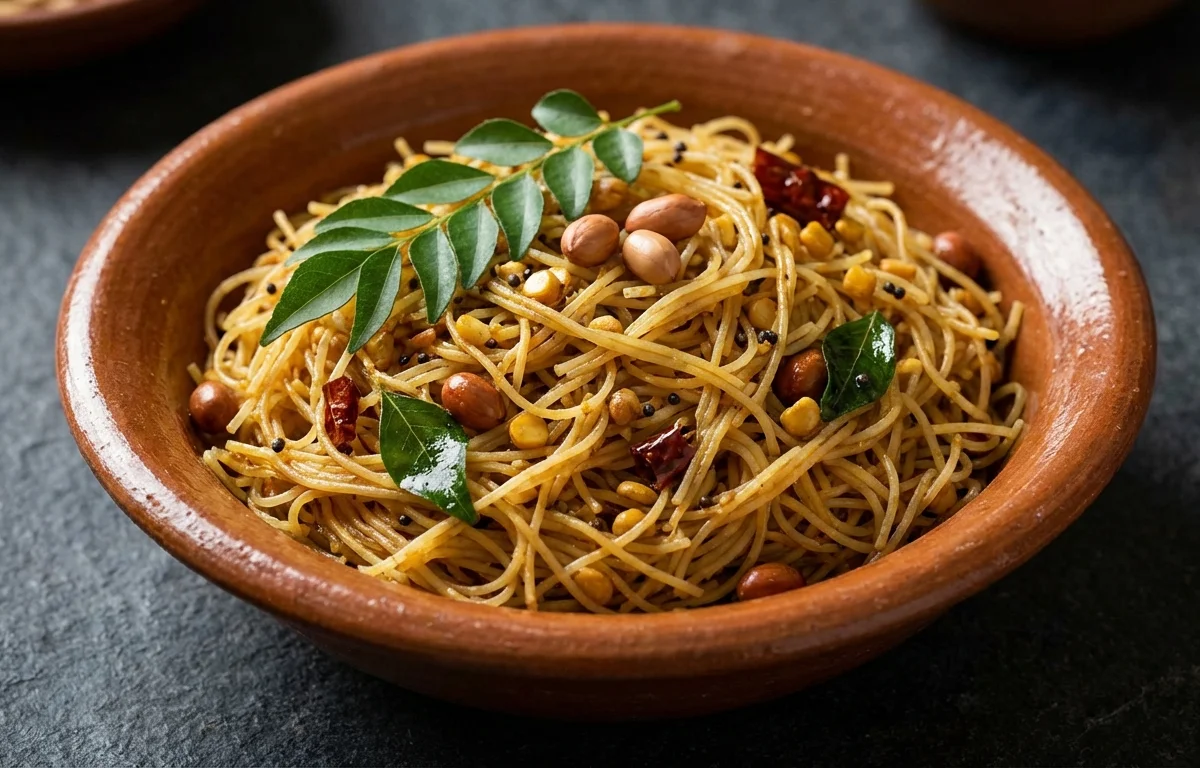
Puli Sevai
Tangy tamarind-seasoned rice noodles tossed with a fragrant South Indian tempering of mustard seeds, chana dal, peanuts, curry leaves, and a gentle hint of spice. Light, bright, and perfect as part of a comforting tiffin meal.
For 4 servings
- prep · ~15 min
Soak the tamarind.
Soak the tamarind in warm water for 15 minutes, then squeeze well and strain to get a smooth tamarind extract.
- boil · ~5 min
Boil the water for the sevai dough.
Bring 2 cups water to a boil with oil and half of the salt.
- mix · ~3 min
Make the sevai dough.
Lower the heat and add the rice flour all at once. Mix quickly until it comes together into a soft dough with no dry patches.
TIPMix while the water is hot so the flour cooks evenly and the pressed sevai stays smooth. - rest · ~5 min
Cool the dough slightly.
Cover and let the dough rest just until cool enough to handle comfortably.
- steam · ~10 min
Press and steam the sevai.
1.Grease the sevai press lightly and fill it with the warm dough.2.Press the dough into thin noodles over greased idli plates or a steamer plate.3.Steam until the sevai is cooked through and set.TIPDo not let the dough turn cold before pressing, or the sevai may break. - rest · ~5 min
Cool and loosen the sevai.
Let the steamed sevai cool for a few minutes, then gently loosen it with clean fingers so the strands stay separate.
- temper · ~5 min
Make the tempering.
1.Heat sesame oil in a wide pan over medium heat.2.Add mustard seeds and let them splutter.3.Add chana dal, urad dal, and peanuts; cook until lightly golden.4.Add dried red chili, green chili, curry leaves, asafoetida, and turmeric powder; cook briefly until fragrant.TIPKeep the heat medium so the dals turn crisp without burning. - simmer · ~6 min
Cook the tamarind mixture.
Pour in the tamarind extract, add the remaining salt and jaggery, and simmer until the raw smell goes away and the mixture thickens slightly.
- mix · ~3 min
Toss the sevai with the tamarind mixture.
Add the loosened sevai to the pan and toss gently until the strands are evenly coated and heated through.
- serve
Serve the puli sevai warm or at room temperature.
What to keep in mind.
7 tips from the recipe — small details that make a real difference to the final dish.
- 1Press the sevai while the dough is still warm; once it cools fully, the strands tend to crack and break.
- 2When mixing rice flour into boiling water, stir fast and scrape the sides so no dry pockets remain in the dough.
- 3Steam only until the strands look set and lose their raw flouriness; oversteaming can make the sevai gummy.
- 4Loosen the steamed sevai after a short cooling time, not while piping hot, so the strands separate cleanly.
- 5Simmer the tamarind extract until the raw smell disappears before adding sevai, or the final dish will taste harshly sour.
- 6Fry the chana dal, urad dal, and peanuts to a light golden color for crunch; if too dark, they can taste bitter.
- 7Let the tossed sevai rest for 5 to 10 minutes before serving so the tamarind seasoning absorbs evenly.
Adapt it for your goals.
Quick-version
Use ready-made plain sevai or rice noodles instead of homemade pressed sevai when you want the same puli flavor with less effort.
peanut freePeanut-free
Skip the peanuts for an allergy-friendly version; the chana dal and urad dal still give texture in the tempering.
spicierSpicier
Add an extra dried red chili or one more slit green chili if you like a sharper heat against the tangy tamarind.
jainJain
Omit asafoetida if needed and keep the rest of the seasoning simple for a Jain-friendly adaptation.
Why this is on our healthy list.
Light Rice-Based Meal
Rice flour sevai makes this a relatively light tiffin-style dish that feels easy to eat, especially when served in modest portions.
Plant-Based Protein and Crunch
Chana dal, urad dal, and peanuts add some plant protein along with texture, making the sevai more satisfying.
Spice and Herb Aromatics
Curry leaves, chilies, turmeric, and tamarind bring aromatic depth and traditional ingredients beyond just starch and oil.
Frequently asked questions
It usually means the dough has cooled too much or was too dry. Press it while still warm and make sure the rice flour was fully mixed into the hot water.