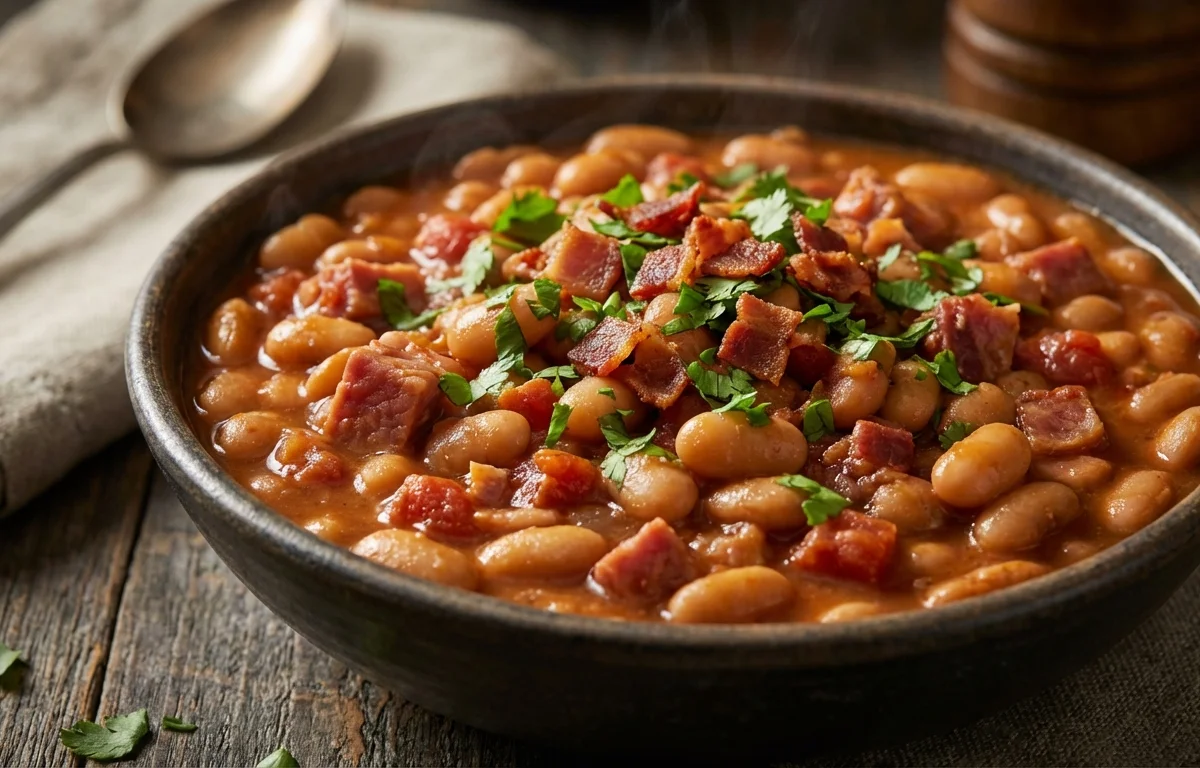
Santa Maria Style Beans
Hearty, sweet-and-savory beans simmered low and slow with bacon and a touch of chili. A classic Central California barbecue side that pairs perfectly with grilled tri-tip and fresh salsa.
For 8 servings
- prep
Soak the beans overnight.
Place dried pinquito beans in a large bowl and cover with 4 cups water. Let soak at room temperature for at least 8 hours or overnight. Drain and rinse before cooking.
TIPIf you forget to soak overnight, cover beans with boiling water and let sit 1 hour instead. - saute · ~7 min
Render the bacon.
In a large heavy-bottomed pot over medium heat, cook diced bacon until crisp and fat is rendered, about 5 to 7 minutes. Transfer bacon to a paper towel-lined plate, leaving the rendered fat in the pot.
- saute · ~6 min
Sauté the aromatics.
1.Add chopped onion to the bacon fat and cook until softened and translucent, about 4 to 5 minutes.2.Stir in minced garlic and cook until fragrant, about 30 seconds.3.Add ancho chili powder, smoked paprika, and dry mustard. Stir constantly for 30 seconds to bloom the spices. - simmer · ~70 min
Simmer the beans.
1.Add drained soaked beans, diced tomato, brown sugar, and remaining 2 cups water to the pot.2.Stir everything together and bring to a boil over high heat.3.Reduce heat to low, cover, and simmer gently for 60 to 75 minutes, stirring occasionally, until beans are tender.TIPAdd more water if the beans look dry during cooking. They should stay barely submerged. - simmer · ~5 min
Season and finish.
1.Once beans are tender, stir in the reserved crisp bacon.2.Season with salt and black pepper.3.Simmer uncovered for 5 more minutes to let the liquid reduce slightly, then remove from heat. - serve
Serve warm alongside grilled tri-tip and fresh salsa.
Ladle beans into a serving dish. They will thicken slightly as they cool.
What to keep in mind.
6 tips from the recipe — small details that make a real difference to the final dish.
- 1Pinquito beans are traditional, but small white beans or pinto beans work as a substitute if you can't find them.
- 2Don't salt the beans until the end—adding salt early can prevent them from becoming tender.
- 3For extra depth, use the bacon drippings to sauté the aromatics instead of discarding them.
- 4If the beans look dry during simmering, add hot water a quarter-cup at a time to keep them barely submerged.
- 5Let the beans rest for 10 minutes off the heat before serving so the sauce thickens and flavors meld.
- 6Make these beans a day ahead; they taste even better after refrigeration overnight as the flavors deepen.
Adapt it for your goals.
Vegetarian
Omit the bacon and use 2 tablespoons of olive oil to sauté the aromatics. Add 1/2 teaspoon of liquid smoke to restore the smoky depth.
spicySpicy
Add 1/2 teaspoon of cayenne pepper or a diced jalapeño with the onion for a punch of heat that complements the sweet brown sugar.
extra smokyExtra-smoky
Replace the regular bacon with double-smoked bacon and use smoked sea salt for a more intense campfire flavor.
Why this is on our healthy list.
Rich in Soluble Fiber
Pinquito beans are packed with soluble fiber, which helps support healthy digestion and steady blood sugar levels.
Low in Saturated Fat
When made with just a few slices of bacon, this dish delivers smoky flavor with a relatively low saturated fat content compared to other bean preparations.
Natural Source of Plant Protein
Each serving of pinquito beans provides a solid plant-based protein boost, making this side dish surprisingly satisfying.
Frequently asked questions
Yes, but reduce the cooking time drastically. Use 2 cans of rinsed small white beans and simmer just 20–30 minutes to marry the flavors.