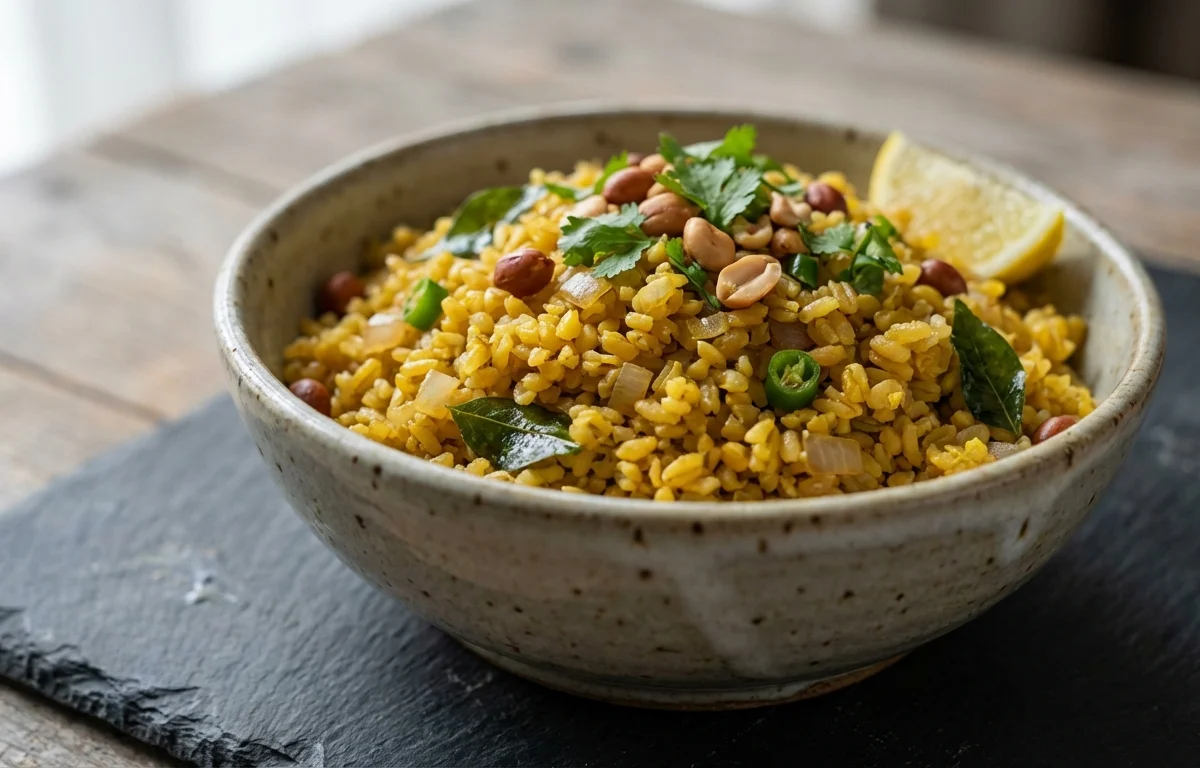
Sanza
A simple, comforting semolina dish from central India, Sanza is lightly spiced and cooked until soft yet fluffy. It makes a warm everyday breakfast or light meal, with peanuts and lemon adding lovely texture and brightness.
For 4 servings
- saute · ~4 min
Roast the semolina.
Heat a dry pan over low to medium heat and roast the semolina for 3 to 4 minutes until lightly aromatic, stirring often. Do not let it brown deeply. Transfer to a plate.
TIPKeep the heat gentle so the semolina toasts evenly and stays pale. - temper · ~2 min
Make the tempering.
1.Heat oil in the same pan over medium heat.2.Add mustard seeds and let them splutter.3.Add cumin seeds, green chili, curry leaves, and peanuts.4.Cook for 1 to 2 minutes until the peanuts smell nutty. - saute · ~4 min
Cook the onion.
Add the chopped onion and turmeric powder. Sauté for 3 to 4 minutes until the onion turns soft and lightly translucent.
- boil · ~3 min
Add water and salt.
Pour in the water and add salt. Bring it to a steady boil.
- mix · ~3 min
Stir in the semolina.
Lower the heat and add the roasted semolina slowly, stirring continuously to avoid lumps. Mix until the water is fully absorbed and the Sanza looks soft and fluffy.
TIPAdd the semolina in a thin stream while stirring so the texture stays smooth. - rest · ~2 min
Cover and rest for 2 minutes.
- garnish
Finish with coriander leaves and lemon juice.
Fluff the Sanza gently with a spoon, then mix in the coriander leaves and lemon juice.
- serve
Serve hot.
What to keep in mind.
7 tips from the recipe — small details that make a real difference to the final dish.
- 1Roast the coarse semolina only until it smells nutty; deep browning can make Sanza taste toasty rather than soft and comforting.
- 2Let the mustard seeds fully splutter before adding cumin, or the tempering will taste flat and the seeds may stay raw.
- 3Cook the peanuts in the tempering until fragrant so they stay crunchy even after the semolina absorbs the water.
- 4When adding semolina to the boiling water, pour in a thin steady stream and stir constantly to prevent small lumps.
- 5Stop cooking as soon as the mixture turns soft and fluffy; overcooking can make Sanza tight and pasty.
- 6Add lemon juice only after resting and fluffing, so the fresh citrus note stays bright instead of dulling in the heat.
- 7If reheating leftovers, sprinkle in a little hot water and cover for a minute to bring back the original soft texture.
Adapt it for your goals.
Vegetable-loaded
Add peas, grated carrot, or finely chopped capsicum with the onions for a heartier breakfast and extra texture.
low spiceLow-spice
Use one chili or skip it entirely for a gentler version that keeps the mustard-cumin-curry leaf flavor profile.
jainJain
Omit onion and rely on peanuts, curry leaves, cumin, and lemon for flavor while keeping the dish simple and sattvic-friendly.
ghee finishedGhee-finished
Replace part or all of the oil with ghee for a richer, more aromatic Sanza with a classic homestyle feel.
Why this is on our healthy list.
Steady, Filling Base
Semolina provides satisfying carbohydrates that make this a comforting breakfast or light meal.
Healthy Fats and Crunch
Peanuts add texture along with plant-based fats and some protein, making the dish more sustaining.
Herb and Spice Benefits
Curry leaves, cumin, mustard seeds, coriander, and turmeric bring flavor with beneficial plant compounds.
Fresh Citrus Finish
Lemon juice adds brightness and a fresh element that balances the warm, savory semolina.
Frequently asked questions
Lumps usually form when semolina is added too quickly. Add it in a thin stream to boiling water while stirring continuously.