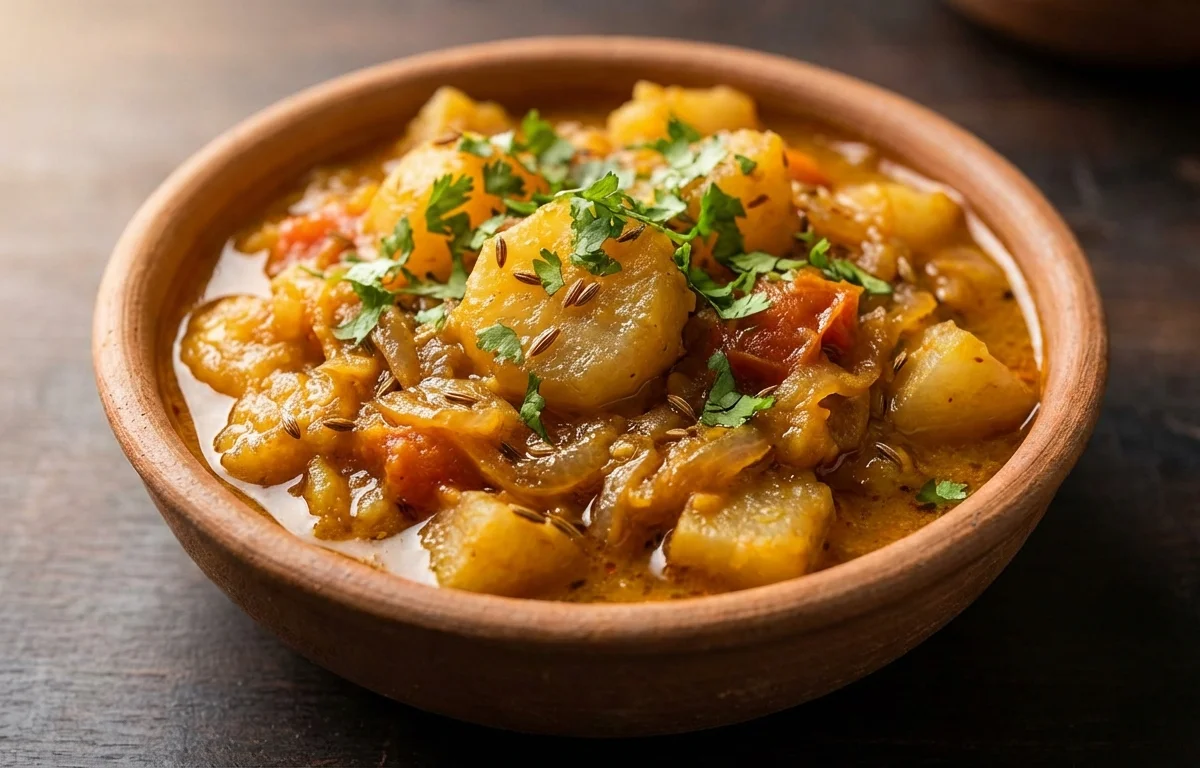
Shalgam Fry
Tender chunks of turnip cooked with everyday spices until just done — not mushy. A humble, lightly spiced North Indian dry sabzi that lets the earthy sweetness of shalgam shine through. Perfect as a side with dal and roti.
For 4 servings
- prep
Prep the turnips.
Peel the turnips and cut them into small bite-sized cubes. Keep the pieces uniform so they cook evenly. Wash and drain well.
TIPPick small to medium turnips — large ones can be woody and bitter. - temper · ~1 min
Make the tempering.
1.Heat oil in a heavy-bottomed kadhai or pan over medium heat.2.Add cumin seeds and let them crackle completely (15-20 sec).3.Add asafoetida and stir once just until fragrant (5 sec). - saute · ~3 min
Fry the turnips with spices.
1.Add the cubed turnips to the pan and stir well to coat with the tempering oil.2.Sprinkle turmeric powder, coriander powder, red chili powder, and salt.3.Toss everything together so the spices cover the turnips evenly.4.Sauté on medium-high heat for 2-3 minutes, stirring frequently.TIPLet the turnips pick up a light sear before covering — it builds flavor. - simmer · ~10 min
Cover and cook until tender.
1.Lower the heat to low. Cover the pan with a tight-fitting lid.2.Let the turnips cook in their own steam for 8-10 minutes.3.Check once halfway and give a gentle stir. Do not add water — the natural moisture is enough.TIPCook them until just fork-tender. You want a soft bite, not mush. - saute · ~3 min
Finish with dry-roasting.
Remove the lid, increase the heat to medium, and sauté for another 2-3 minutes. Let any remaining moisture dry up and the edges turn slightly golden.
- garnish
Add finishing touches and serve hot.
Turn off the heat. Sprinkle dry mango powder and chopped coriander leaves over the top. Toss once gently and transfer to a serving bowl.
TIPServe immediately with hot rotis or as a side with dal and steamed rice.
What to keep in mind.
7 tips from the recipe — small details that make a real difference to the final dish.
- 1Cut turnip cubes evenly — uniform size ensures every piece cooks to the same tenderness.
- 2Don't add water; the turnips release enough moisture to steam-cook perfectly.
- 3Let the turnips develop a light sear before covering; this enhances their earthy sweetness.
- 4Cook just until fork-tender — about 8–10 minutes — to avoid mushy sabzi.
- 5Use small to medium turnips; larger ones can be woody and bitter.
- 6Finish with a dry roast on high heat to evaporate excess moisture and get slightly golden edges.
- 7Sprinkle amchur (dry mango powder) off the heat so its tangy flavor stays bright.
Adapt it for your goals.
Oil-free
Dry-roast the cumin seeds in a non-stick pan, then add the turnips with a splash of water. Use non-stick cookware and skip the oil for a low-fat version suitable for restricted diets.
spicierSpicier
Add ½ tsp crushed dried red chilies or a slit green chili along with the cumin seeds for extra heat, perfect for those who love fiery North Indian sabzis.
with greensWith greens
Stir in a handful of chopped fresh fenugreek leaves (methi) at the end for a slightly bitter, aromatic twist that pairs beautifully with the sweet turnips.
protein boostProtein boost
Add ½ cup boiled chana (chickpeas) or paneer cubes along with the turnips for a more substantial side that works as a light main course.
Why this is on our healthy list.
Rich in Fiber
Turnips provide dietary fiber that supports digestion and promotes a feeling of fullness, making this dish a good addition to a balanced meal.
Low in Calories
With turnips as the base, this sabzi is naturally low in calories while being satisfying and flavorful, ideal for weight management.
Source of Vitamin C
Turnips contain vitamin C, which supports immune health and helps with iron absorption when paired with dal or other legumes.
Digestive Friendly
Asafoetida (hing) and cumin seeds are known in Indian cuisine for aiding digestion and reducing bloating, complementing the fiber in turnips.
Frequently asked questions
Yes, this method works well with radish (mooli), carrots, or even potatoes — adjust cooking time as they vary in texture and moisture.



.webp)