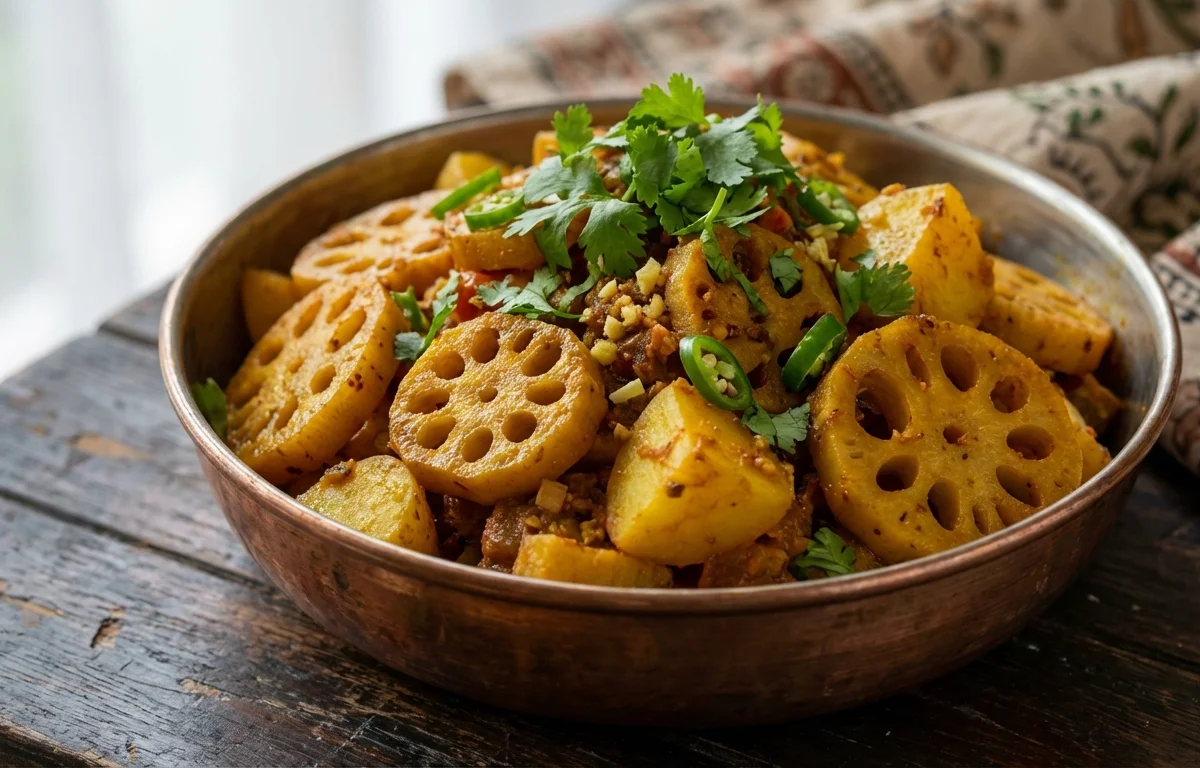
Sindhi Bhee Patata
A homestyle Sindhi vegetable dish where tender lotus stem and potatoes are cooked with onions, tomatoes, and everyday spices until the masala clings to every piece. It is comforting, lightly tangy, and perfect with roti or dal rice.
For 4 servings
- prep
Clean and cut the bhee and potatoes.
1.Peel the lotus stem well and wash it carefully to remove any trapped mud from the holes.2.Slice the lotus stem into thin rounds.3.Peel the potato and cut it into small cubes.4.Chop the onion and tomatoes, slit the green chilies, and grate the ginger. - boil · ~15 min
Boil the bhee and potatoes until just tender.
Add the lotus stem, potato, and water to a pan. Bring to a boil, then cook until both are just tender but still holding shape. Drain well and set aside.
TIPDo not overcook the lotus stem or it can turn soft and lose its pleasant bite. - saute · ~7 min
Cook the onion, ginger, and chilies.
1.Heat oil in a wide pan over medium heat.2.Add cumin seeds and let them sizzle for 20 to 30 seconds.3.Add onion and cook until lightly golden, 5 to 6 minutes.4.Add ginger and green chilies, then sauté for 1 minute. - saute · ~6 min
Make the masala base.
1.Add tomatoes and cook until soft and pulpy, 4 to 5 minutes.2.Add turmeric powder, red chili powder, coriander powder, dry mango powder, and salt.3.Mix well and cook for 1 minute so the spices lose their raw taste.TIPIf the masala looks dry before the tomatoes soften, sprinkle in 1 to 2 tablespoons of water. - saute · ~2 min
Add the bhee and potatoes.
Add the boiled lotus stem and potatoes to the pan. Toss gently so every piece gets coated with the masala without breaking the potatoes.
- simmer · ~10 min
Cook until the masala clings to the vegetables.
Cover and cook on low heat for 8 to 10 minutes, stirring once or twice, until the flavors come together and the dish turns semi-dry.
TIPUse a wide pan if possible so excess moisture cooks off faster and the masala coats the bhee nicely. - garnish
Garnish with cilantro.
- serve
Serve hot with roti or dal rice.
What to keep in mind.
7 tips from the recipe — small details that make a real difference to the final dish.
- 1Rinse the sliced lotus stem in several changes of water so no grit stays trapped in the holes.
- 2Boil the bhee and potatoes only until just tender; they should hold shape when tossed with the masala.
- 3Drain the boiled vegetables very well, or the final sabzi will turn wet instead of semi-dry.
- 4Use a wide pan for the final simmer so the tomato masala reduces and clings to each slice.
- 5Stir gently after adding the potatoes to avoid breaking them and making the dish mushy.
- 6Let the onions turn lightly golden before adding tomatoes; that sweetness balances the amchur tang.
- 7This sabzi tastes even better after 15 to 20 minutes of resting, when the lotus stem absorbs the masala.
Adapt it for your goals.
Low-oil
Use 1 tablespoon oil and a splash of water while sautéing the onion-tomato masala; good if you want a lighter everyday sabzi.
spicierSpicier
Add an extra green chili or a little more red chili powder for a hotter version that still keeps the tangy Sindhi-style profile.
no onion no garlicNo-onion-no-garlic
Skip the onion and cook the tomatoes a bit longer with cumin, ginger, and spices for a simpler fasting-style or satvik-friendly variation.
dry bhaji styleDry-bhaji style
Simmer uncovered for the last few minutes to make it drier, ideal for packing in lunchboxes or serving with phulka.
Why this is on our healthy list.
Vegetable-Focused Comfort Dish
Made mostly with lotus stem, potatoes, onion, and tomatoes, this sabzi offers a hearty way to include more cooked vegetables in a meal.
Digestive Spice Support
Cumin, ginger, coriander, and green chili add aroma and can make a simple vegetable dish feel lighter and more warming.
Moderate Oil Preparation
The recipe uses a small amount of oil for the whole pan, relying on boiling and simmering rather than heavy frying.
Frequently asked questions
It should be just tender when pierced, but still slightly crisp and able to hold its round shape after draining.