Sodyachi Bhaji
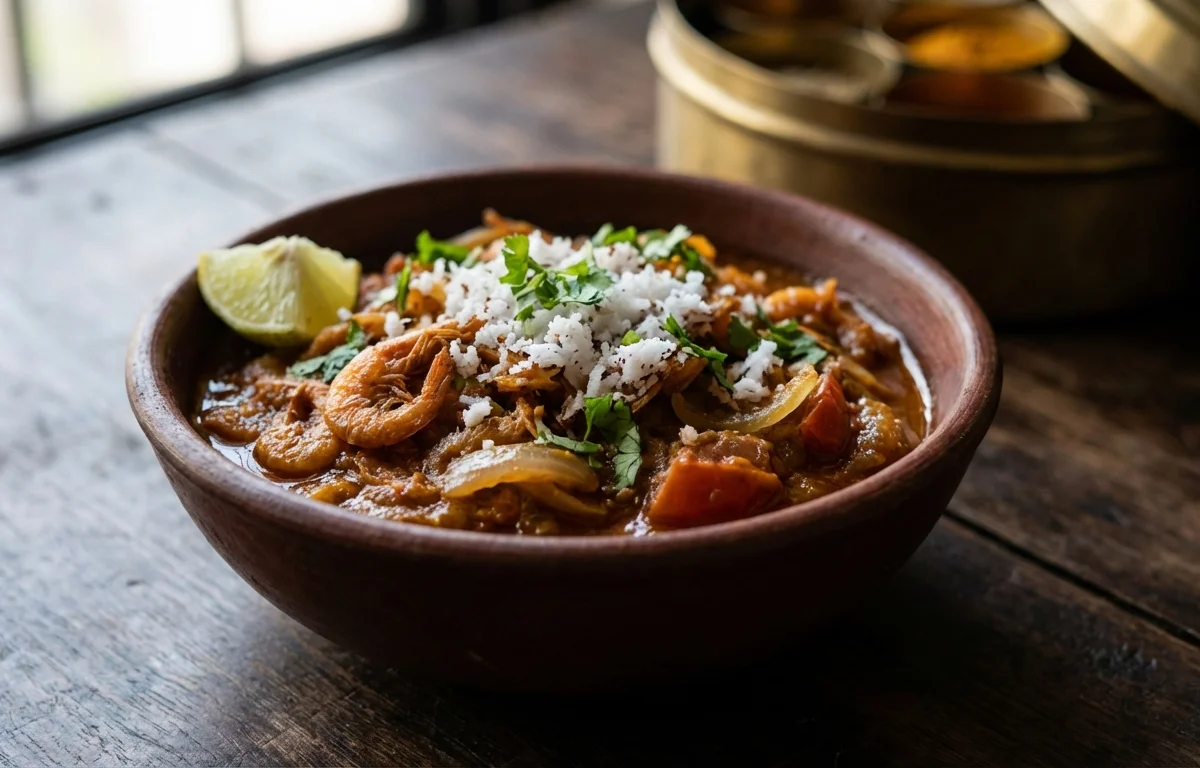
A homestyle Maharashtrian dried shrimp curry with onion, coconut, and warm spices. It cooks into a savory, slightly spicy bhaji that tastes especially good with bhakri or plain rice.
For 4 servings
- prep · ~15 min
Rinse and soak the dried shrimp.
1.Rinse the dried shrimp 2 to 3 times to remove grit and excess salt.2.Soak them in 1/2 cup water for 15 minutes.3.Drain the shrimp and keep the soaking water aside if it looks clean.TIPTaste one shrimp before adding extra salt later. Some batches are quite salty. - temper · ~1 min
Make the tempering.
1.Heat oil in a pan over medium heat.2.Add mustard seeds and let them splutter.3.Add cumin seeds and stir for a few seconds. - saute · ~10 min
Cook the onion mixture.
1.Add onion, green chili, garlic, and ginger.2.Cook until the onion turns soft and light golden, 5 to 6 minutes.3.Add tomato and cook until it softens, 3 to 4 minutes. - saute · ~2 min
Add the coconut and spices.
Stir in the grated coconut, turmeric powder, red chili powder, coriander powder, and garam masala. Cook for 2 minutes so the coconut smells nutty and the spices lose their raw edge.
- simmer · ~10 min
Cook the shrimp bhaji.
1.Add the soaked dried shrimp and mix well with the masala.2.Add kokum and the reserved soaking water if clean, or fresh water.3.Cover and cook on low heat until the shrimp softens and the bhaji turns semi-dry, 8 to 10 minutes.TIPKeep the heat low once the shrimp goes in. Fast cooking can make it chewy. - garnish
Add coriander leaves and check the seasoning.
- serve
Serve hot with bhakri or plain rice.
What to keep in mind.
7 tips from the recipe — small details that make a real difference to the final dish.
- 1Rinse the dried shrimp thoroughly and taste one after soaking so you can judge whether any extra salt is needed.
- 2If the soaking water looks clear and smells clean, use it in the bhaji for deeper seafood flavour; discard it if gritty.
- 3Cook the onions only to light golden, not dark brown, so the bhaji stays balanced and the shrimp flavour stands out.
- 4Saute the grated coconut until it smells nutty; this gives the masala body and removes any raw coconut taste.
- 5After adding the dried shrimp, keep the heat low and cook just until softened, or they can turn chewy.
- 6Aim for a semi-dry finish rather than a curry consistency, since this bhaji is best scooped with bhakri or mixed with rice.
- 7Let the bhaji rest for 5 minutes before serving so the kokum's tang and spices settle into the shrimp.
Adapt it for your goals.
Spicier
Add extra green chili or a little more red chili powder for a hotter coastal-style bhaji that pairs especially well with bhakri.
low oilLow-oil
Reduce the oil slightly and cook the onion mixture a bit longer on low heat; useful if you want a lighter everyday version.
gravy styleGravy-style
Add a little more water and simmer briefly for a looser version that is easier to serve with plain rice.
onion garlic freeOnion-garlic free
Skip onion and garlic, increase coconut and ginger, and keep kokum for tang if you want a simpler fasting-style flavour profile.
Why this is on our healthy list.
Protein-Rich Seafood Base
Dried shrimp adds concentrated seafood protein, making this bhaji filling even though it is served in a modest portion.
Aromatics With Digestive Warmth
Ginger, garlic, cumin, and mustard seeds bring strong flavour and are traditional ingredients often used to support easier digestion in rich dishes.
Natural Tang and Fiber
Kokum, onion, tomato, and fresh coconut add tang, texture, and plant components that round out the dish beyond just heat and salt.
Frequently asked questions
Usually very little, if any. Dried shrimp is naturally salty, so always taste the bhaji near the end before adding salt.



.webp)