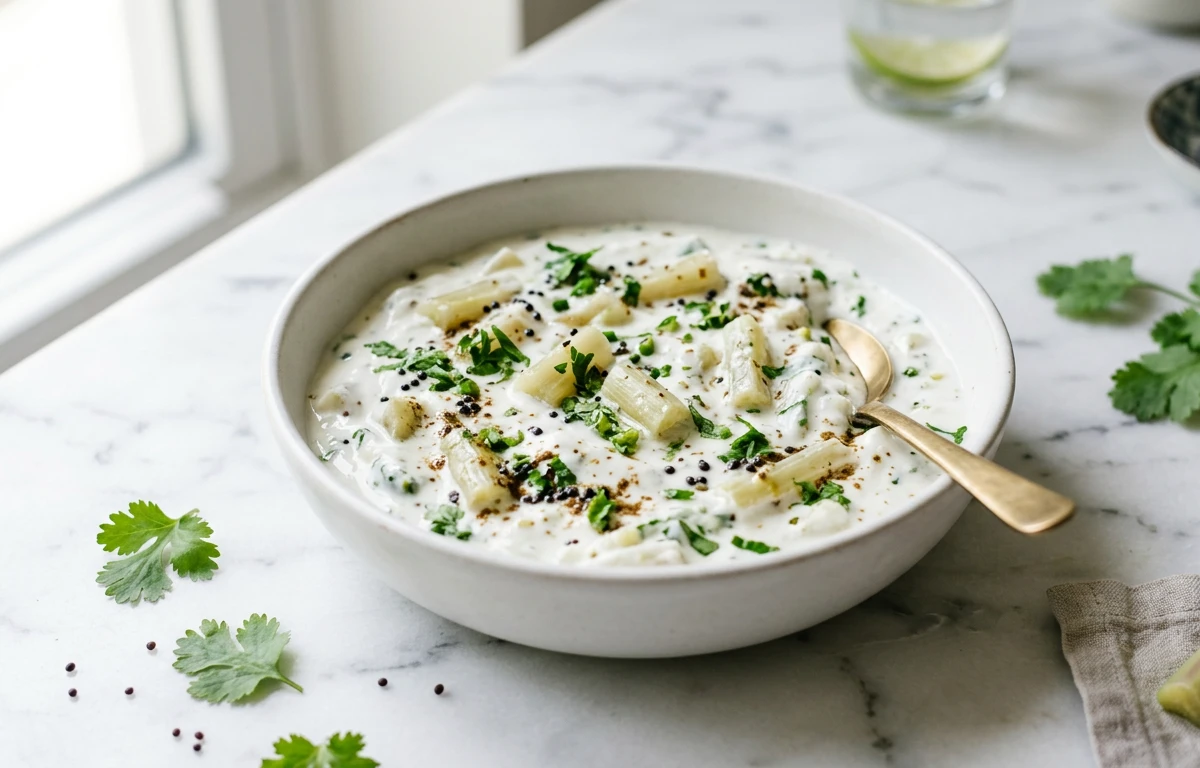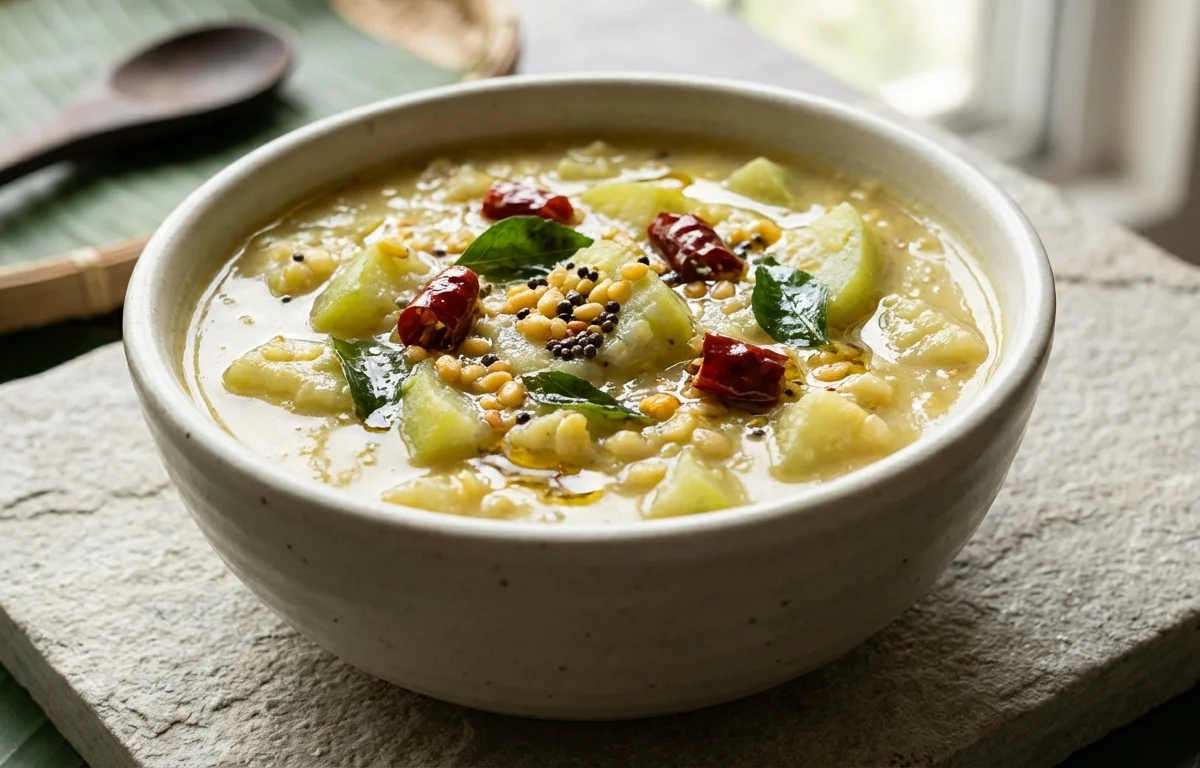
Sorakkai Kootu
A gentle South Indian bottle gourd and lentil stew with coconut, cumin, and a light tempering. It is soft, comforting, and easy to pair with rice, roti, or a simple sambar meal.
For 4 servings
- prep · ~10 min
Prepare the vegetables and coconut paste.
1.Peel the bottle gourd and cut it into small cubes.2.Wash the moong dal well.3.Grind the coconut with cumin seeds and a little water to a smooth paste. - pressure cook · ~12 min
Cook the dal and bottle gourd.
1.Add moong dal, bottle gourd, green chili, turmeric powder, salt, and water to a pressure cooker.2.Pressure cook for 2 whistles until the dal is soft and the bottle gourd is tender.3.Let the pressure drop naturally before opening.TIPDo not add too much water. Kootu should be soft and spoonable, not watery. - simmer · ~4 min
Mix in the coconut paste.
Add the ground coconut-cumin paste to the cooked dal and bottle gourd. Mix well and simmer gently for 3 to 4 minutes until the raw coconut smell fades and the kootu thickens slightly.
- temper · ~2 min
Make the tempering.
1.Heat coconut oil in a small pan over medium heat.2.Add mustard seeds and let them splutter.3.Add urad dal and cook until lightly golden.4.Add curry leaves and fry for a few seconds.TIPKeep the heat medium so the urad dal turns golden without burning. - assemble · ~1 min
Pour the tempering over the kootu.
Add the hot tempering to the simmering kootu and mix gently. Cook for 1 more minute so the flavors come together.
- serve
Serve hot.
What to keep in mind.
7 tips from the recipe — small details that make a real difference to the final dish.
- 1Cut the bottle gourd into small even cubes so it turns tender at the same time as the moong dal.
- 2If your bottle gourd releases a lot of water, reduce the added water slightly to keep the kootu spoonable, not thin.
- 3Simmer gently after adding the coconut paste; a hard boil can split the texture and dull the fresh coconut flavor.
- 4Grind the coconut and cumin very smooth so the kootu has a soft, silky finish instead of a grainy one.
- 5Let the pressure drop naturally before opening the cooker, or the bottle gourd can break down too much.
- 6Make the tempering just before serving for the brightest curry leaf aroma and a nutty bite from the urad dal.
- 7This kootu thickens as it sits; loosen leftovers with a splash of hot water and reheat on low.
Adapt it for your goals.
No-onion-no-garlic
This recipe already fits a simple no-onion, no-garlic style, making it ideal for light everyday meals and festival-style South Indian cooking.
spicierSpicier
Increase the green chilies or add one extra slit chili while pressure cooking for a sharper heat that still suits the mild bottle gourd.
thicker kootuThicker-kootu
Use slightly less water or simmer a bit longer after adding the coconut paste if you want a denser kootu to serve with roti.
veganVegan
The recipe is naturally vegan as written, with moong dal, bottle gourd, coconut, and coconut oil providing a fully plant-based dish.
Why this is on our healthy list.
Light Yet Filling
Bottle gourd and moong dal make this kootu gentle, soft, and satisfying without feeling heavy, which suits simple home-style meals.
Plant Protein From Dal
Moong dal adds plant-based protein and body, helping turn the mild vegetable into a more balanced main side dish.
Digestive Spice Support
Cumin, curry leaves, and ginger-free mild seasoning keep the dish fragrant while staying easygoing and comforting on the palate.
Moderate Healthy Fats
Fresh coconut and a small amount of coconut oil add richness and satiety, so the kootu tastes rounded without needing much fat.
Frequently asked questions
Yes. Cook the moong dal and bottle gourd covered in a pot until both are soft, then add the coconut-cumin paste and continue as directed.