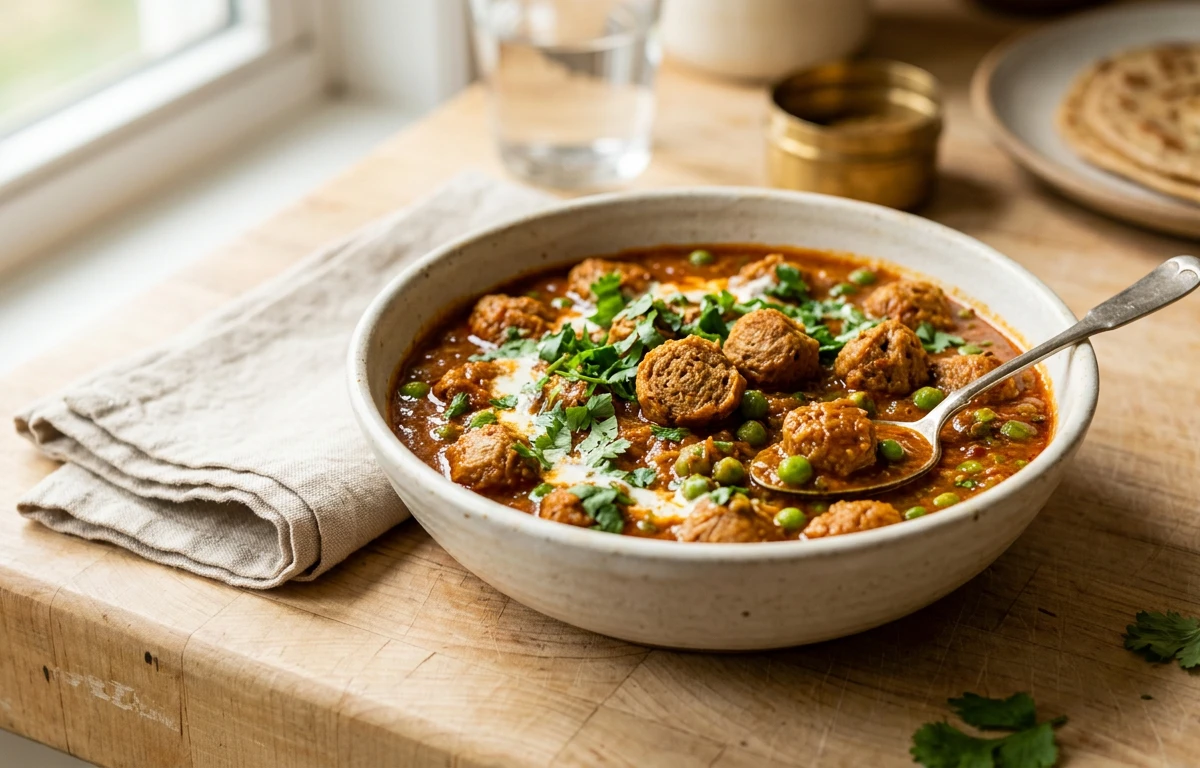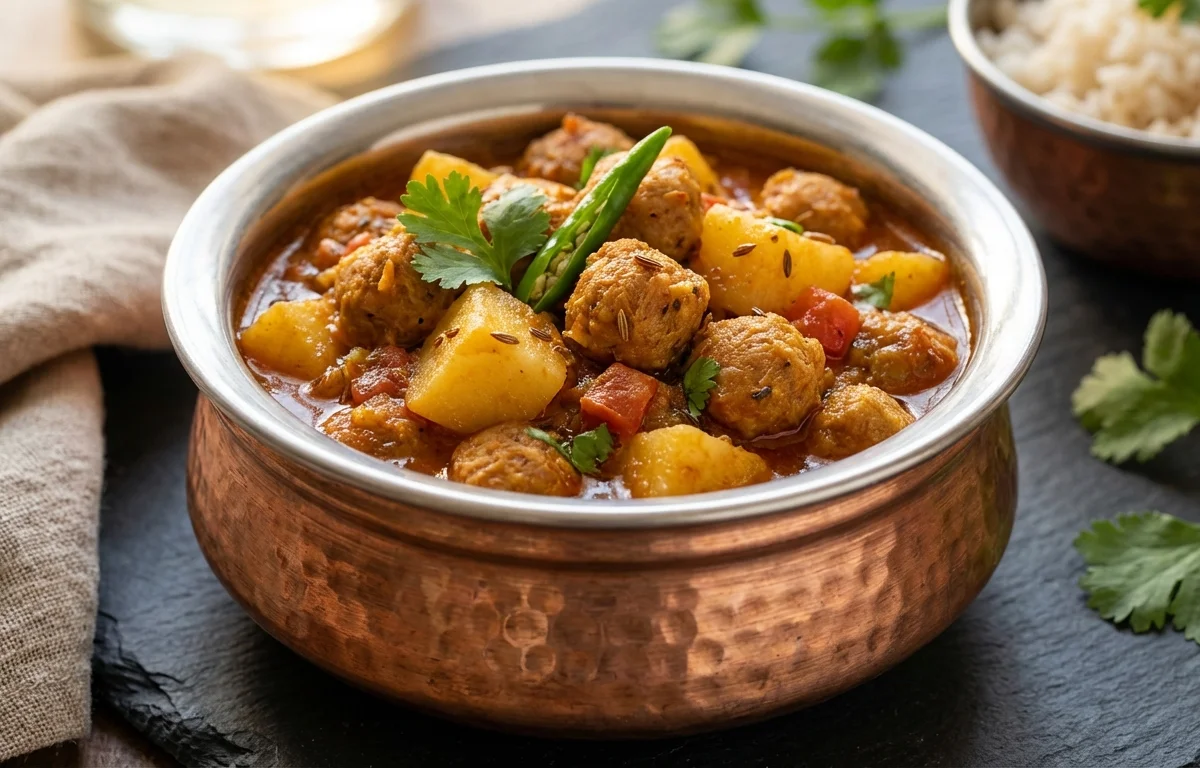
Soya Aloo Sabzi
Hearty soya chunks and tender potatoes simmered in a spiced onion-tomato gravy. A protein-packed North Indian dry curry that comes together in under 30 minutes, perfect with roti or paratha for a comforting weeknight meal.
For 4 servings
- prep · ~5 min
Soak and blanch the soya chunks.
1.Bring 4 cups of water to a boil in a saucepan.2.Add soya chunks and boil for 3 minutes.3.Drain and rinse under cold water.4.Squeeze out excess water and set aside.TIPDon't skip the squeeze — soya chunks retain water and can make the sabzi watery. Press firmly between your palms. - pressure cook · ~10 min
Pressure cook the potatoes.
1.Place cubed potatoes in the pressure cooker with 1/4 cup water.2.Cook on medium heat for 2 whistles.3.Let pressure release naturally, then drain any remaining water. - temper · ~1 min
Temper the cumin seeds.
1.Heat oil in a kadai over medium heat until it shimmers.2.Add cumin seeds and let them crackle and turn golden, about 30 seconds.TIPThe cumin should sizzle instantly on hitting the oil — otherwise your oil isn't hot enough. - saute · ~8 min
Sauté the onions and aromatics.
1.Add chopped onions and cook until golden brown, about 5-7 minutes.2.Add minced ginger, garlic, and slit green chilies. Sauté until the raw smell disappears, about 1 minute.TIPStir frequently and add a splash of water if onions start to stick or burn. - saute · ~11 min
Cook the tomato masala.
1.Add chopped tomatoes and cook until they soften completely, about 3 minutes.2.Add turmeric powder, red chili powder, coriander powder, and salt.3.Sauté the masala until oil separates from the sides, about 8-10 minutes.4.Add 3 tablespoons of water if the masala dries out too quickly.TIPThis bhunai step is the foundation of a good dry curry — the oil separating means the masala is fully cooked and the raw spice taste is gone. - saute · ~7 min
Add potatoes and soya chunks.
1.Add the boiled potato cubes to the masala and stir gently to coat.2.Add the squeezed soya chunks and mix well.3.Cook on medium-low heat for 5-7 minutes, stirring occasionally, until everything is well coated and heated through.TIPKeep the heat on medium-low so the bottom doesn't catch. The sabzi should be semi-dry with no free-floating liquid. - mix · ~1 min
Finish with garam masala and amchur.
1.Sprinkle garam masala and amchur powder over the sabzi.2.Mix well and cook for 1 more minute.3.Turn off the heat.TIPAmchur adds a subtle tang that brightens the dish — don't skip it, or use a squeeze of lemon juice if you're out. - garnish
Garnish with fresh coriander leaves and serve hot.
What to keep in mind.
7 tips from the recipe — small details that make a real difference to the final dish.
- 1Boil soya chunks for exactly 3 minutes; overboiling makes them mushy.
- 2Squeeze soya chunks thoroughly after rinsing to remove excess water.
- 3Pressure cook potatoes until just tender, not mushy, to hold shape in the sabzi.
- 4Cook the onion-tomato masala until oil visibly separates for deep flavor.
- 5Add amchur at the end for a bright tangy finish; lemon juice works as a substitute.
- 6Keep heat on medium-low when adding potatoes and soya to prevent burning.
- 7This sabzi stores well in the fridge for up to 3 days; flavors meld overnight.
Adapt it for your goals.
Low-oil
Reduce oil to 1 tablespoon and use a non-stick pan. Add 2 tablespoons of water during bhunai to prevent sticking. Ideal for those watching oil intake without losing flavor.
high proteinHigh-protein
Add 100g of cubed paneer along with the soya chunks for an extra protein boost. Gently fold to avoid breaking the paneer — perfect for post-workout meals.
veganVegan
The recipe is already vegan. Double-check that the garam masala and amchur have no non-vegan additives; use a squeeze of lemon instead of amchur if needed.
jainJain
Omit garlic and onion. Substitute with a pinch of asafoetida (hing) in the tempering and use finely chopped green chili and tomato for flavor. Suitable for Jain dietary practices.
Why this is on our healthy list.
High in Plant Protein
Soya chunks are a rich source of complete plant protein, making this dish excellent for muscle repair and satiety.
Good Source of Fiber
Potatoes with skin and soya chunks provide dietary fiber, supporting healthy digestion.
Low in Saturated Fat
Prepared with a modest amount of oil and no animal products, this curry is naturally low in saturated fat.
Rich in Antioxidants
Turmeric, cumin, and coriander are packed with anti-inflammatory compounds that may support overall wellness.
Frequently asked questions
No, you must blanch them first to soften and remove any raw bean-like taste. Skipping this step yields tough, rubbery chunks.



.webp)