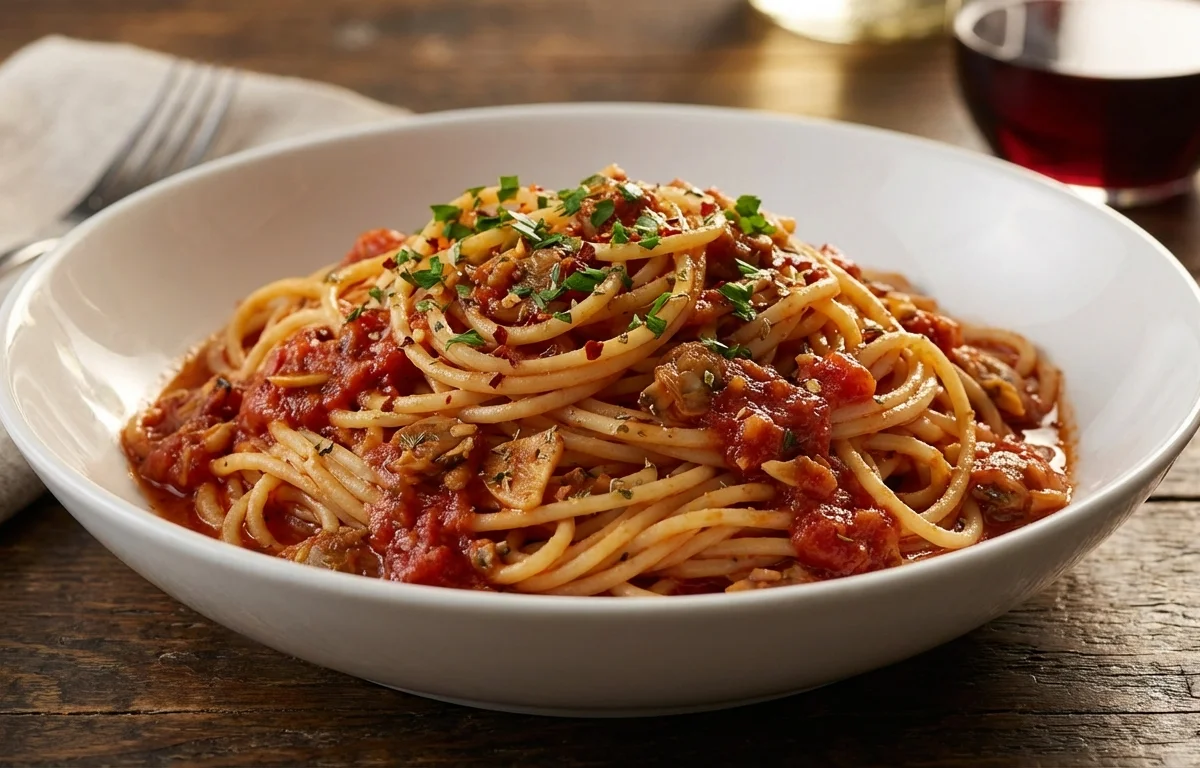
Spaghetti with Red Clam Sauce
Al dente spaghetti tossed in a bright, garlicky tomato sauce studded with tender clams. Fresh clams infuse the quick-cooking marinara with briny depth, while red pepper flakes add a gentle warmth. A restaurant-quality seafood pasta that comes together in under 40 minutes.
For 4 servings
- prep · ~5 min
Clean the clams.
1.Scrub clam shells under cold water to remove grit and sand.2.Discard any with cracked shells or that stay open when tapped. - prep · ~5 min
Prepare the tomato base.
1.Score a shallow X on the bottom of each tomato.2.Blanch in boiling water for 30 seconds, then plunge into ice water.3.Peel off the skins and crush tomatoes by hand in a bowl. - boil · ~10 min
Boil the spaghetti.
1.Bring a large pot of water to a rolling boil.2.Add 1 tablespoon salt, then add spaghetti.3.Cook until 2 minutes shy of al dente (about 1 minute less than package directions).4.Reserve ¼ cup pasta water, then drain.TIPUndercooking the pasta lets it finish absorbing the clam sauce without turning mushy. - saute · ~2 min
Sauté the garlic.
1.Heat olive oil in a large skillet over medium-low heat.2.Add sliced garlic and red pepper flakes.3.Cook, stirring gently, until garlic is fragrant and pale gold — about 2 minutes.TIPDon't let the garlic brown — it turns bitter and will overpower the delicate clam flavor. - simmer · ~10 min
Build the red sauce.
1.Pour crushed tomatoes into the skillet with the garlic.2.Add white wine and a pinch of salt.3.Bring to a gentle simmer and cook for 10 minutes, stirring occasionally, until slightly thickened. - steam · ~7 min
Steam the clams.
1.Nestle the clams into the sauce in a single layer.2.Cover the skillet tightly and cook over medium heat for 5–7 minutes.3.Uncover and check — all clams should be open. Discard any that remain shut.TIPDo not overcook the clams or they'll turn rubbery. The moment they pop open, they're ready. - mix · ~2 min
Toss spaghetti with the sauce.
1.Add the drained spaghetti and reserved pasta water to the skillet.2.Toss gently with tongs over low heat for 1–2 minutes.3.Let the pasta absorb the sauce until the spaghetti is perfectly al dente. - garnish
Garnish with fresh parsley and serve hot.
What to keep in mind.
6 tips from the recipe — small details that make a real difference to the final dish.
- 1Purge clams in cold salted water for 20 minutes to release any remaining sand before scrubbing.
- 2Reserve extra pasta water beyond ¼ cup; the starchy liquid helps emulsify the sauce if it tightens.
- 3Use a large enough skillet so clams sit in a single layer for even steaming and quick opening.
- 4Taste the sauce before adding pasta; if it tastes flat, a squeeze of lemon juice brightens the brininess.
- 5Make the sauce up to 2 days ahead; reheat gently, then steam clams and toss with freshly boiled pasta.
- 6If clams open before sauce thickens, remove them immediately to a bowl and return to the skillet at the end.
Adapt it for your goals.
Gluten-free
Swap spaghetti for gluten-free pasta made from rice or corn; cook it 1 minute past al dente since gluten-free pasta can become gummy if undercooked.
extra herbaceousExtra-herbaceous
Add 1 tablespoon of fresh chopped oregano or basil with the parsley for a more aromatic, Mediterranean-style finish.
white wine freeWhite wine-free
Replace dry white wine with equal part clam juice or vegetable broth for a non-alcoholic version that still provides briny depth.
spicy garlic loverSpicy garlic lover
Double the garlic and red pepper flakes, and add a minced Fresno or serrano chile with the garlic for a bolder, fiery kick.
Why this is on our healthy list.
Lean Protein Source
Littleneck clams provide high-quality, low-fat protein that supports muscle repair and satiety.
Rich in Iron
Clams are naturally high in heme iron, which aids oxygen transport and energy levels.
Low in Saturated Fat
This dish uses minimal olive oil and no butter, keeping saturated fat content modest.
Contains Vitamin B12
Clams are one of the best natural sources of vitamin B12, essential for nerve function and red blood cell formation.
Frequently asked questions
Discard any clam with a cracked shell or that remains open after tapping; a live clam should close tightly when gently squeezed.