
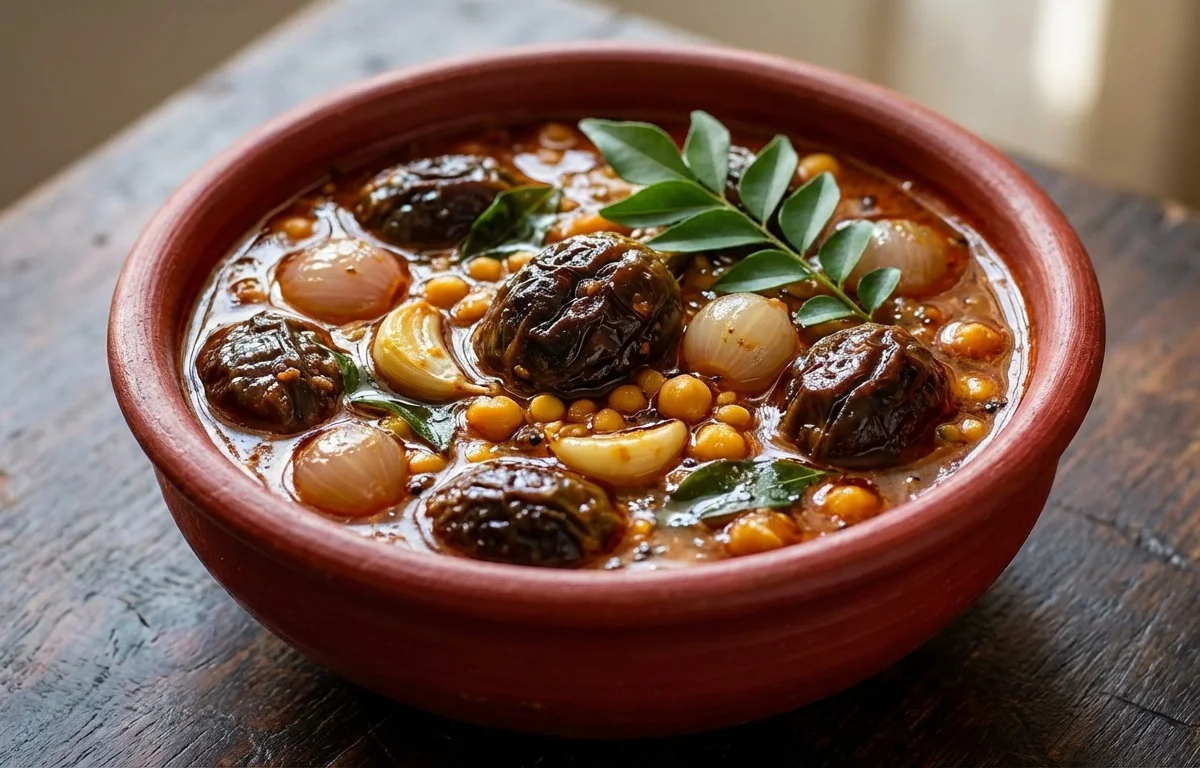
Sundakkai Vathal Kuzhambu
A deeply tangy and spicy Tamil-style tamarind curry studded with sun-dried turkey berries. Slow-simmered with roasted spices, garlic, and shallots, this rustic kuzhambu gets better with time — perfect spooned over hot rice with a drizzle of gingelly oil and a crisp papad on the side.
For 4 servings
- prep · ~15 min
Soak tamarind and prepare extract.
Soak the tamarind ball in 1 cup warm water for 15 minutes. Squeeze well to extract thick pulp. Strain and discard solids. Set the tamarind extract aside.
- prep · ~2 min
Rinse and dry the sundakkai vathal.
Rinse the dried turkey berries briefly in water to remove any dust. Drain completely and pat dry with a kitchen towel.
TIPMoisture on the vathal will cause splattering during frying — make sure they are completely dry. - fry · ~3 min
Fry the sundakkai vathal.
1.Heat 1 tablespoon gingelly oil in a pan over medium heat.2.Add the sundakkai vathal and fry until they turn dark brown and crisp (2-3 minutes).3.Remove with a slotted spoon and set aside on a paper towel.TIPDo not burn the vathal — they turn bitter if over-fried. A deep brown shade is perfect. - temper · ~2 min
Make the tempering.
1.Heat the remaining 2 tablespoons gingelly oil in a clay pot over medium heat.2.Add mustard seeds and let them splutter (30 seconds).3.Add cumin seeds, fenugreek seeds, and dried red chilies. Sauté until fragrant (20 seconds).4.Add asafoetida and curry leaves. Stir for 10 seconds until aromatic.TIPFenugreek seeds burn quickly — keep the heat at medium and stir continuously. - saute · ~9 min
Sauté shallots and garlic.
1.Add crushed garlic cloves and halved shallots to the tempering.2.Sauté until shallots turn translucent and edges begin to brown (4-5 minutes).3.Add chopped tomatoes and cook until they turn soft and mushy (3-4 minutes). - saute · ~1 min
Bloom the spice powders.
1.Lower the heat to low.2.Add sambar powder, turmeric powder, and red chili powder.3.Sauté for 1 minute until the raw smell disappears and oil separates slightly.TIPLow heat prevents the spice powders from burning and turning bitter. - simmer · ~12 min
Add tamarind extract and simmer.
1.Pour in the tamarind extract and 2 cups of water. Stir well.2.Add salt and jaggery. Mix to dissolve.3.Bring to a boil, then reduce heat to low and simmer uncovered for 10-12 minutes.4.The kuzhambu should reduce slightly and turn glossy with oil specks on the surface.TIPSimmer until the raw tamarind smell cooks off completely — the aroma should be tangy and cooked, not sharp. - simmer · ~7 min
Add fried vathal and finish cooking.
Gently drop the fried sundakkai vathal into the simmering kuzhambu. If using rice bran, mix it with 2 tablespoons water and stir into the gravy. Simmer for another 5-7 minutes until the vathal softens and absorbs the gravy.
TIPRice bran adds a rustic thickness traditional to village-style kuzhambu — omit for a thinner, clearer gravy. - rest · ~10 min
Rest the kuzhambu before serving.
Turn off the heat and let the kuzhambu rest for at least 10 minutes. The flavors deepen and the vathal continues to absorb the tangy gravy.
TIPSundakkai vathal kuzhambu tastes even better the next day — make extra and refrigerate. - serve
Serve with hot rice and a drizzle of gingelly oil.
Spoon the kuzhambu over steamed rice. Drizzle a teaspoon of raw gingelly oil on top and serve with papad, a dry vegetable stir-fry, or curd on the side.
TIPThe raw gingelly oil drizzle at the end is non-negotiable — it elevates the aroma and balances the tanginess.
What to keep in mind.
7 tips from the recipe — small details that make a real difference to the final dish.
- 1Dry the sundakkai vathal thoroughly after rinsing to prevent oil splatter during frying.
- 2Fry the vathal just until dark brown — over-frying makes them bitter.
- 3Stir fenugreek seeds continuously during tempering to avoid burning.
- 4Bloom spice powders on low heat only to keep them from turning bitter.
- 5Simmer until the raw tamarind smell is gone and the gravy is glossy with oil specks.
- 6Rest the kuzhambu for 10 minutes before serving so flavors deepen.
- 7This kuzhambu tastes even better the next day — make a double batch.
Adapt it for your goals.
Oil-free
Skip the gingelly oil and dry-roast the sundakkai vathal in a pan, then temper with mustard seeds and curry leaves in a little water. Use water to sauté the shallots and garlic. The result is a lighter, less rich kuzhambu suitable for low-oil diets.
high proteinHigh-protein
Add a handful of boiled chana dal or cooked horse gram after the tamarind water goes in, along with the fried vathal. This boosts protein content without overpowering the traditional tangy flavor.
Why this is on our healthy list.
Rich in Gut-Friendly Spices
Fenugreek, asafoetida, and turmeric are traditionally used in Tamil cooking for their digestive and anti-inflammatory properties.
Antioxidant-Packed Tamarind
Tamarind is a natural source of antioxidants and polyphenols, which help protect cells from oxidative stress.
Frequently asked questions
No, this recipe is designed specifically for sundakkai vathal (dried turkey berries). Fresh or frozen berries require different prep and cooking times.


