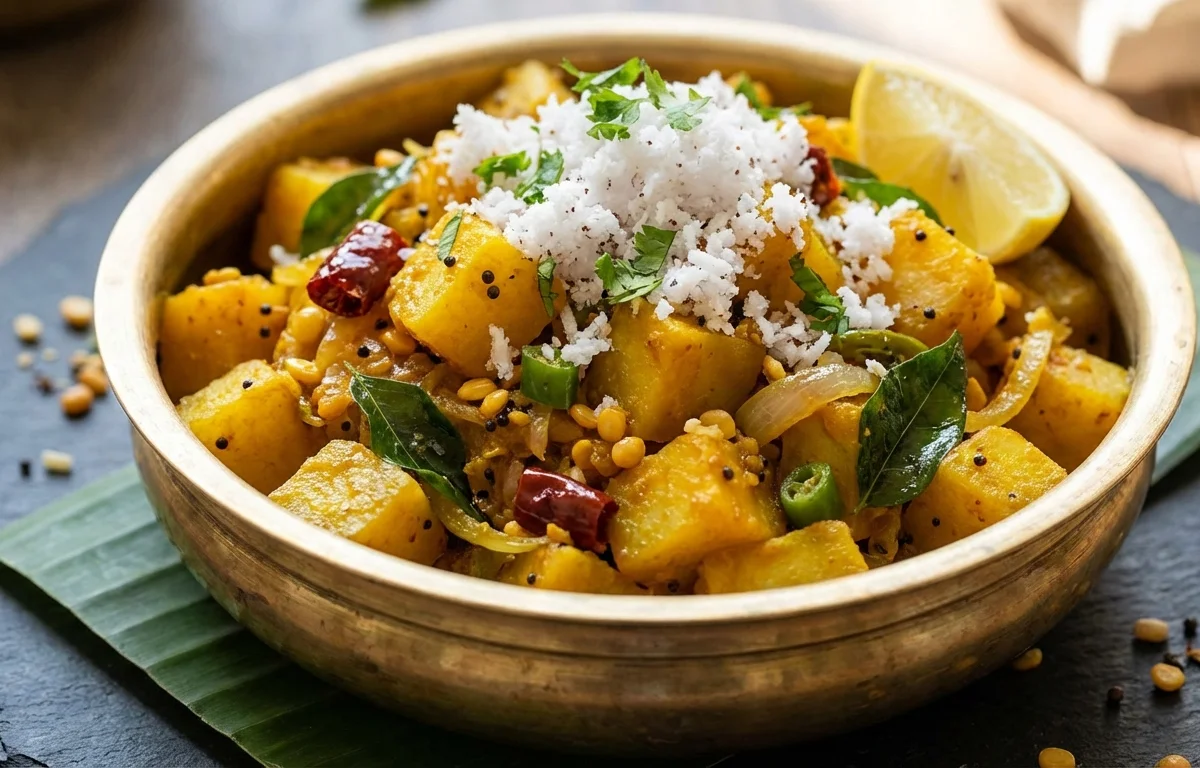
Suvarnagadde Palya
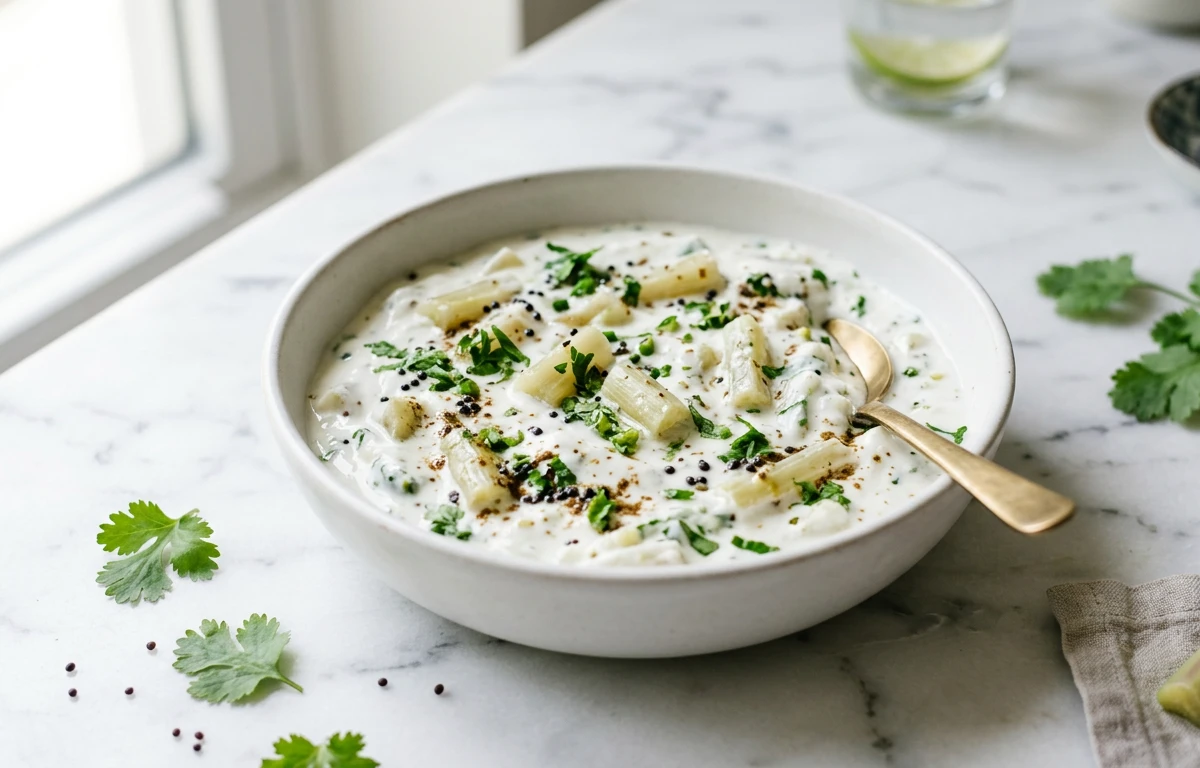
A simple Karnataka-style stir-fry made with tender elephant foot yam, tempered spices, and fresh coconut. It is earthy, lightly spiced, and pairs especially well with rice, rasam, or curd rice as part of a comforting meal.
For 4 servings
- prep
Peel and cut the yam.
Peel the elephant foot yam carefully and cut it into small even cubes so it cooks quickly and evenly.
- boil · ~12 min
Boil the yam until just tender.
1.Add the yam, water, salt, and turmeric powder to a pot.2.Bring to a boil over medium heat.3.Cook until the yam is tender but still holds its shape, about 10 to 12 minutes.4.Drain any remaining water well.TIPDo not overcook the yam or it will turn mushy when mixed with the tempering. - temper · ~3 min
Make the tempering.
1.Heat oil in a pan over medium heat.2.Add mustard seeds and let them splutter.3.Add urad dal and chana dal, then fry until lightly golden.4.Add dried red chili, curry leaves, asafoetida, and green chili and cook for a few seconds until fragrant.TIPKeep the heat medium so the dals turn golden without burning. - saute · ~4 min
Toss the yam with the tempering.
Add the boiled yam to the pan and mix gently so the cubes stay intact. Cook for 3 to 4 minutes, stirring now and then, until the flavors coat the yam well.
- garnish
Finish with coconut, coriander, and lemon juice.
Turn off the heat and mix in the grated coconut, chopped coriander leaves, and lemon juice. Toss gently and check the seasoning.
- serve
Serve the suvarnagadde palya warm.
What to keep in mind.
7 tips from the recipe — small details that make a real difference to the final dish.
- 1Wear gloves or oil your hands while peeling yam if it irritates your skin.
- 2Cut the yam into small even cubes so they boil through at the same time.
- 3Drain the boiled yam very well before adding to the tempering, or the palya can turn soggy.
- 4Let the mustard seeds fully splutter before adding the dals, so the tempering tastes rounded, not raw.
- 5Fry urad dal and chana dal only until light golden; darker roasting can make the palya taste bitter.
- 6Add coconut and lemon only after switching off the heat to keep the coconut sweet and the lemon bright.
- 7Leftovers keep well in the fridge for a day; reheat gently in a pan so the yam cubes stay intact.
Adapt it for your goals.
Low-oil
Use less oil and dry-roast the dals briefly before tempering; good if you want a lighter everyday palya.
no coconutNo-coconut
Skip the coconut for a simpler, drier version that keeps longer and pairs especially well with rasam rice.
spicierSpicier
Add one extra green chili or a few more broken red chili pieces for a sharper, hotter Karnataka-style finish.
jainJain
Replace elephant foot yam with diced raw banana or pumpkin and omit asafoetida if needed for a Jain-friendly adaptation.
Why this is on our healthy list.
Fiber-Rich Vegetable Side
Elephant foot yam is a hearty vegetable that adds fiber and bulk, making this palya satisfying alongside rice-based meals.
Moderate in Added Fat
The dish relies on boiling plus a small tempering, so it gets plenty of flavor without deep-frying the yam.
Includes Beneficial Plant Ingredients
Curry leaves, coriander, chilies, turmeric, and lemon bring a mix of aromatic plant compounds and freshness to the dish.
Coconut Adds Satiety
Fresh coconut contributes richness and texture, helping the simple stir-fry feel more complete and satisfying.
Frequently asked questions
It should be tender when pierced but still hold neat cubes. If it starts breaking at the edges, it is slightly overcooked.