Talawa Arbi
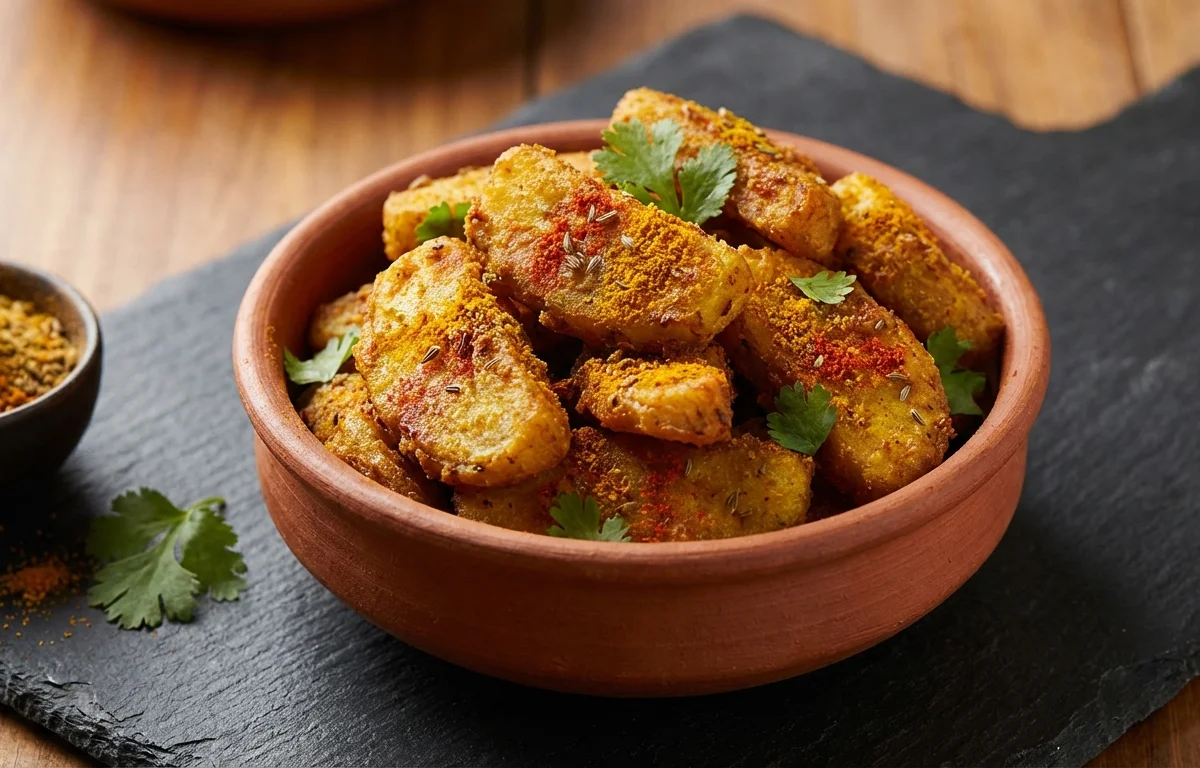
Boiled colocasia is lightly flattened, coated with simple spices, and pan fried until golden and crisp at the edges. This homestyle North Indian arbi dish is earthy, satisfying, and perfect with dal, roti, or a simple yogurt side.
For 4 servings
- boil · ~18 min
Boil the arbi until just tender.
1.Place the arbi in a pot and cover with water.2.Add the salt for boiling water.3.Bring to a boil and cook until the arbi is just tender but not falling apart, about 15-18 minutes.4.Drain well and let it cool until easy to handle.TIPDo not overcook the arbi or it will break while frying. - prep · ~5 min
Peel and flatten the arbi.
1.Peel the cooled arbi gently.2.Place each piece on a board.3.Press each one lightly with your palm or the back of a spoon to flatten slightly. - mix · ~2 min
Season the arbi.
Sprinkle the flattened arbi with the salt for seasoning, turmeric powder, red chili powder, coriander powder, dry mango powder, and carom seeds. Toss gently so the pieces stay intact and get coated well.
- fry · ~10 min
Pan fry the arbi until crisp.
1.Heat the oil in a wide pan over medium heat.2.Arrange the arbi in a single layer.3.Cook until the underside is golden and crisp, 4-5 minutes.4.Flip carefully and cook the other side until crisp and browned, 4-5 minutes more.TIPFry in a single layer and avoid moving the pieces too often for the best crust. - garnish
Finish with lemon juice and coriander leaves.
Turn off the heat, drizzle over the lemon juice, and scatter the coriander leaves on top.
- serve
Serve hot.
What to keep in mind.
7 tips from the recipe — small details that make a real difference to the final dish.
- 1Boil the arbi only until a knife slips in with slight resistance; overcooked pieces will crumble when flattened.
- 2Let the boiled arbi cool and dry a bit before peeling so the surface stays intact and fries up crisper.
- 3Flatten each piece gently to an even thickness so the edges crisp without the center turning mushy.
- 4After seasoning, rest the arbi for 5 minutes so the amchur, ajwain, and coriander powder cling better.
- 5Use a wide pan and keep the pieces in one layer; crowding traps steam and softens the crust.
- 6Add the lemon juice only after switching off the heat to keep the tang bright and prevent soggy arbi.
- 7Leftovers re-crisp best in a skillet or air fryer, not the microwave.
Adapt it for your goals.
Low-oil
Brush the flattened arbi lightly with oil and cook in an air fryer or on a cast-iron tawa for a similar crisp finish with less oil.
jainJain
Skip this version if avoiding root vegetables; choose the same spice profile on sliced raw banana or suran for a similar North Indian style.
extra spicyExtra-spicy
Increase the red chili powder and add a pinch of chaat masala at the end for a sharper, street-style kick.
no lemonNo-lemon
Use a little extra dry mango powder instead of lemon juice when you want tang without extra surface moisture.
Why this is on our healthy list.
Fiber-Rich Root Vegetable
Arbi is a starchy root that can make the dish satisfying and filling, especially when served with simple dal or yogurt.
Digestive Spice Support
Ajwain and coriander are traditional spices often used in Indian cooking to complement heavier, starchy foods like arbi.
Lower Oil Than Deep Frying
This recipe uses pan frying rather than deep frying, so the arbi gets crisp edges with comparatively less oil.
Fresh Herb and Citrus Finish
Coriander leaves and lemon juice add freshness and brightness, helping the dish taste lively without needing heavy sauces.
Frequently asked questions
Boil the arbi only until just tender, drain it well, cool it before peeling, and fry in a single layer without moving it too often.



.webp)