Tamatari Wangun
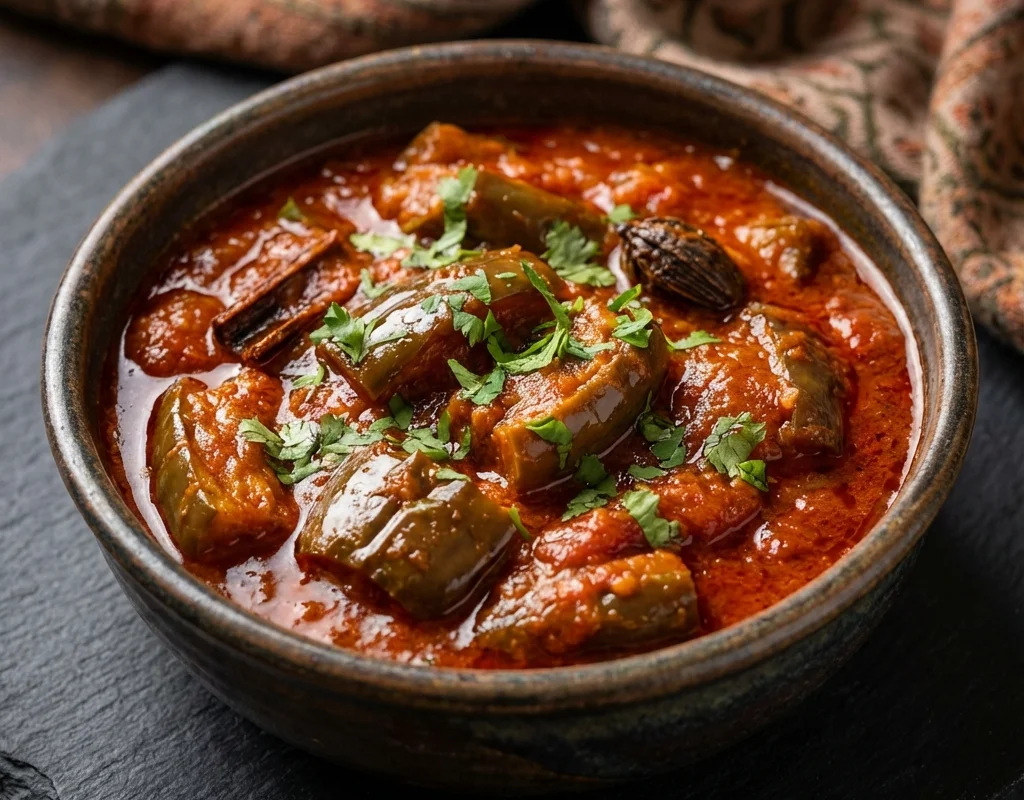
A homestyle Kashmiri-style eggplant curry where tender pieces of brinjal simmer in a lightly spiced tomato gravy. It is tangy, comforting, and perfect with steamed rice or plain roti as part of a simple meal.
For 4 servings
- prep · ~10 min
Prep the eggplant and tomatoes.
1.Wash the eggplant and cut it into thick wedges.2.Chop the tomatoes finely so they break down quickly in the pan.3.Keep the spices, salt, and water measured and ready. - fry · ~8 min
Shallow-fry the eggplant.
1.Heat mustard oil in a wide pan until hot, then lower the heat slightly.2.Add the eggplant pieces in a single layer.3.Cook, turning a few times, until lightly browned and partly tender on all sides.4.Remove the eggplant to a plate.TIPDo not overcrowd the pan or the eggplant will steam instead of browning. - temper · ~3 min
Make the spiced base.
1.In the same pan, keep about 1 tablespoon oil.2.Add cumin seeds and let them sizzle for a few seconds.3.Add asafoetida, then immediately add the chopped tomatoes.4.Stir in turmeric powder, red chili powder, fennel powder, dry ginger powder, and salt.TIPKeep the heat medium so the powdered spices do not burn. - saute · ~8 min
Cook the tomatoes until soft.
Cook the tomato and spice mixture, stirring often, until the tomatoes turn pulpy and the oil starts to separate at the edges.
- simmer · ~10 min
Simmer the eggplant in the gravy.
1.Pour in the water and mix well to form a light gravy.2.Add the fried eggplant pieces back to the pan.3.Cover and simmer on low heat until the eggplant is fully soft and the flavors come together. - garnish
Garnish with coriander leaves.
- serve
Serve hot.
Serve Tamatari Wangun hot with steamed rice or plain roti.
What to keep in mind.
7 tips from the recipe — small details that make a real difference to the final dish.
- 1Salt the cut eggplant only right before frying; if it sits too long, it can release water and splutter in the oil.
- 2Heat mustard oil until it just reaches a smoking point, then reduce the heat to tame its raw sharpness before frying the brinjal.
- 3Fry the eggplant in batches with space between wedges so the edges brown instead of turning soggy.
- 4Cook the tomato masala until oil separates at the sides; that is the cue that the gravy will taste rounded, not raw or sour.
- 5Keep the final gravy light, not too thick, so the softened eggplant can absorb the tomato and fennel flavors properly.
- 6Simmer gently after adding the fried eggplant and avoid over-stirring, or the wedges may break and cloud the gravy.
- 7This curry often tastes even better after a short rest, as the fennel and dry ginger settle into the tomato base.
Adapt it for your goals.
Low-oil
Pan-sear or roast the eggplant wedges instead of shallow-frying to reduce oil while keeping the same tomato-fennel gravy.
spicierSpicier
Increase the red chili slightly for a sharper heat if you prefer a more assertive curry with rice.
no onion no garlicNo-onion-no-garlic
This version already suits cooks avoiding onion and garlic, relying on hing, cumin, fennel, and dry ginger for depth.
soupier gravySoupier-gravy
Add a little extra water and simmer briefly if you want more thin gravy to spoon over steamed rice.
Why this is on our healthy list.
Vegetable-rich curry
Eggplant and tomatoes make this a plant-forward dish that adds fiber and everyday vegetable variety to the meal.
Digestive spice profile
Cumin, fennel, dry ginger, and asafoetida are traditional spices often used to make simple curries feel lighter and more aromatic.
Moderate ingredient list
With a short list of pantry spices and vegetables, the dish delivers strong flavor without relying on heavy cream or rich sauces.
Frequently asked questions
Frying first is important here because it browns the wedges, improves texture, and helps them stay intact when simmered in the tomato gravy.