Tawa Bhindi
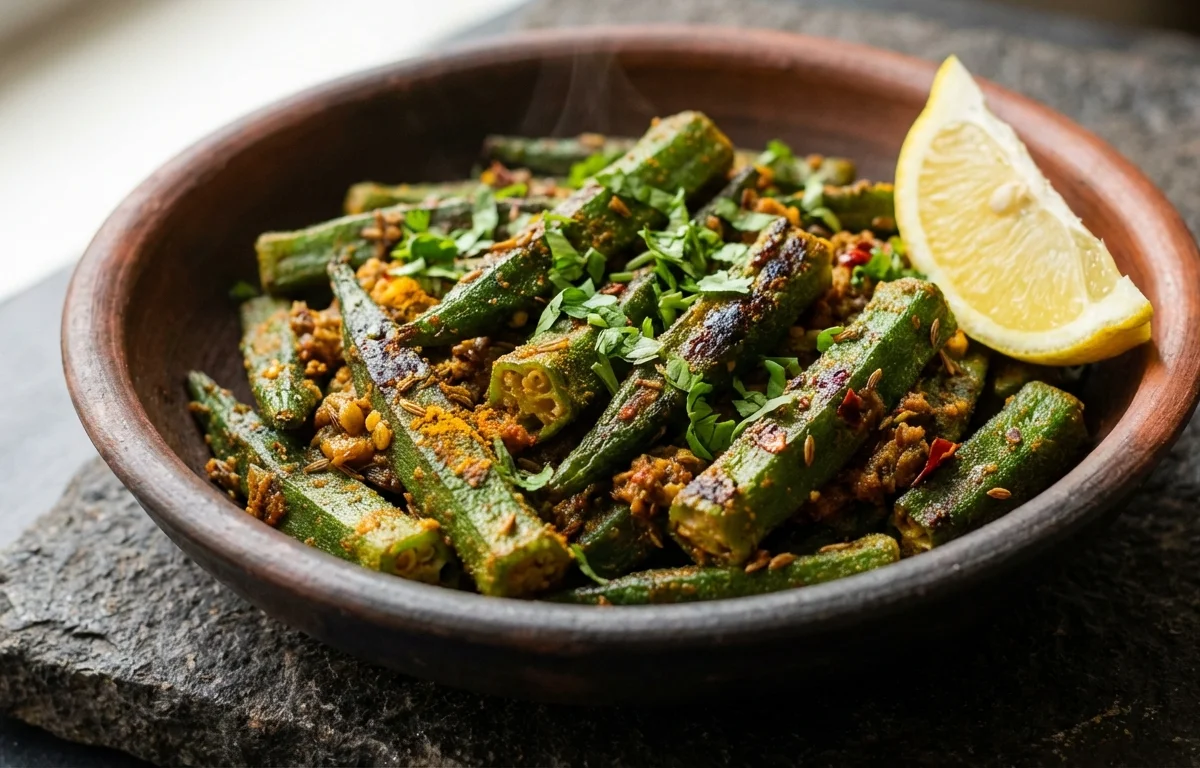
Tender okra cooked on a flat pan with onions, tomatoes, and everyday spices until lightly crisp at the edges. This homestyle Indian sabzi is simple, flavorful, and fits beautifully with roti or dal-rice meals.
For 4 servings
- prep · ~15 min
Prep the bhindi and vegetables.
1.Wash the bhindi and dry it completely with a kitchen towel.2.Trim the ends and slice the bhindi into medium rounds.3.Slice the onion, chop the tomato, slit the green chili, and chop the ginger.TIPDry bhindi well before slicing so it cooks up less sticky on the tawa. - saute · ~8 min
Cook the bhindi first.
1.Heat 1 tbsp oil on a wide tawa or heavy pan over medium heat.2.Add the sliced bhindi and spread it out in a single layer as much as possible.3.Cook, stirring gently now and then, until the bhindi loses its sliminess and gets light brown spots.TIPAvoid covering the pan here; steam makes the bhindi soft and sticky. - saute · ~7 min
Cook the onion and spice base.
1.Push the bhindi to one side of the tawa and add the remaining 1 tbsp oil.2.Add cumin seeds and let them sizzle for a few seconds.3.Add onion, green chili, and ginger, then cook until the onion turns soft and lightly golden.4.Add tomato and cook until it softens and blends into the masala. - mix · ~2 min
Add the ground spices and combine.
Sprinkle in turmeric powder, red chili powder, coriander powder, and salt. Mix the onion-tomato masala well, then fold it gently through the bhindi so the pieces stay intact.
- saute · ~4 min
Finish the tawa bhindi.
Cook for 3 to 4 minutes more on medium-low heat until the bhindi is tender and the masala clings nicely. Turn off the heat and mix in dry mango powder and garam masala.
- garnish
Garnish with coriander leaves.
- serve
Serve hot with roti or dal-rice.
What to keep in mind.
6 tips from the recipe — small details that make a real difference to the final dish.
- 1Dry the okra completely before cutting; even a little moisture makes it slimy on the tawa.
- 2Use a wide tawa or heavy pan so the bhindi sits in a loose layer and browns instead of steaming.
- 3Do not add salt at the start of cooking the bhindi; add it with the masala so the okra stays less sticky.
- 4Stir gently and not too often once the bhindi starts browning, or the slices can break and turn mushy.
- 5Add amchur and garam masala only after switching off the heat to keep their tang and aroma bright.
- 6If packing for lunch, cool the sabzi uncovered first so trapped steam does not soften the crisp edges.
Adapt it for your goals.
Low-oil
Use a well-seasoned or nonstick tawa and reduce the oil slightly; the bhindi still cooks well if spread out and stirred minimally.
no onion no garlicNo-onion-no-garlic
This recipe is already garlic-free; simply skip the onion and cook the tomatoes with ginger and spices for a lighter vrat-style feel.
spicierSpicier
Add an extra slit green chili or a little more red chili powder if you want the bhindi to pair better with plain dal and roti.
peanut crunchPeanut-crunch
Finish with a spoonful of crushed roasted peanuts for texture and a nutty note that works especially well with the amchur.
Why this is on our healthy list.
Fiber-Rich Vegetable Dish
Okra, onion, and tomato add dietary fiber, which makes this sabzi a satisfying side for everyday meals.
Plant Compounds from Spices
Ginger, cumin, turmeric, coriander, and chili bring aromatic plant compounds along with depth of flavor.
Moderate Oil Cooking
The dish uses a modest amount of oil for pan-cooking, helping the vegetables and spices shine without feeling too heavy.
Frequently asked questions
Wash it ahead, dry it very well, and cook it uncovered on a wide tawa before adding the onion-tomato masala.



.webp)