
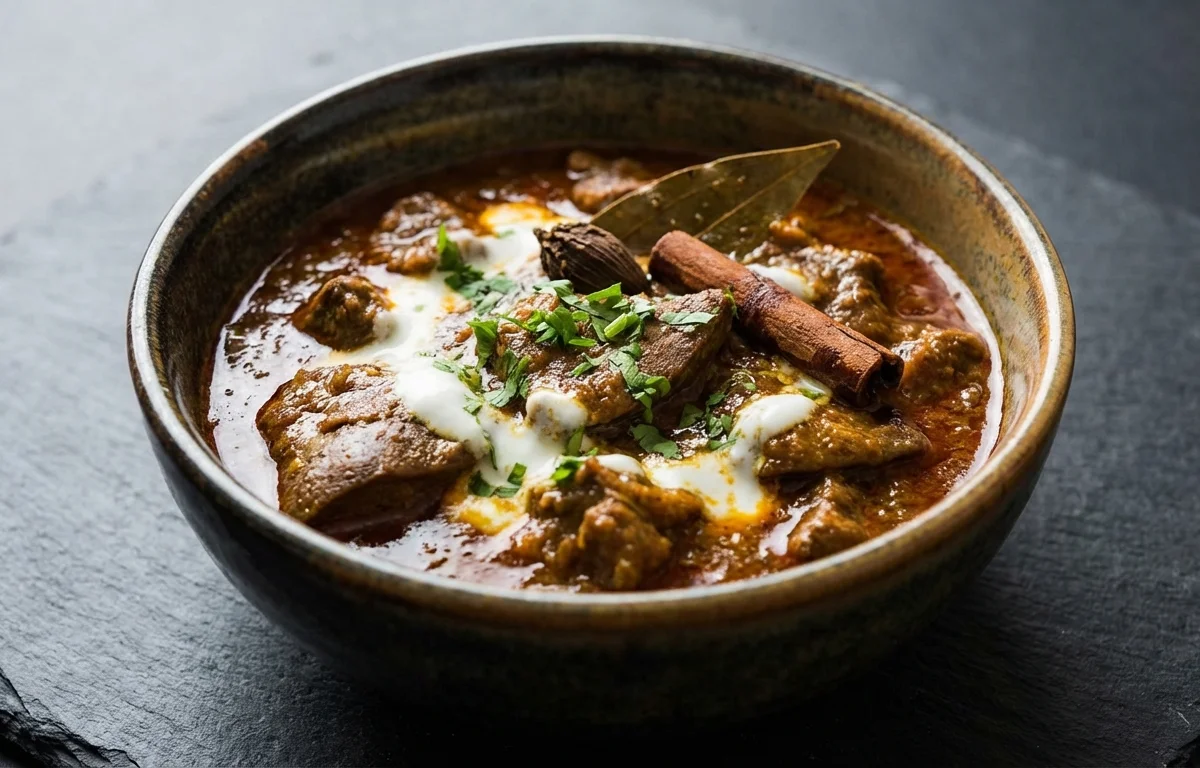
Tcharvan
A quintessential Kashmiri delicacy, Tcharvan features tender mutton liver pieces simmered in a fragrant, thin yogurt-based gravy. Authentically flavored with fennel, dry ginger, and signature Kashmiri red chilies, this dish offers a true taste of the valley's rich culinary heritage.
For 4 servings
- ~5 min
Prepare Liver and Yogurt Masala
1.Thoroughly clean the mutton liver, cut it into 1-inch cubes, and pat completely dry with paper towels. This is crucial for a good sear.2.In a medium bowl, whisk the curd until it is smooth and free of lumps. Add the Kashmiri red chili powder, fennel powder, dry ginger powder, and turmeric powder. Mix well to form a smooth, vibrant red paste. - ~6 min
Sear the Liver
1.Place a heavy-bottomed pan or kadai over high heat. Add the mustard oil and heat it until it reaches its smoking point and turns a pale yellow color. This step mellows its pungent flavor.2.Reduce the heat to medium-high. Carefully add the dried liver pieces to the hot oil, ensuring not to overcrowd the pan.3.Shallow-fry for 3-4 minutes, turning occasionally, until all sides are lightly browned. The inside should still be pink.4.Using a slotted spoon, remove the seared liver from the pan and set it aside. Do not overcook. - ~1 min
Temper Whole Spices
1.In the same oil, reduce the heat to low. Add the whole spices: cloves, slightly crushed green and black cardamom pods, and the cinnamon stick.2.Sauté for about 45 seconds until they release their aroma.3.Add the asafoetida and stir for another 10 seconds. - ~8 min
Cook the Yogurt Gravy
1.Keeping the heat on the lowest setting, slowly pour the prepared yogurt-spice mixture into the pan.2.Begin stirring immediately and continuously for 3-4 minutes. This is the most important step to prevent the yogurt from curdling.3.Once the mixture is stable, increase the heat to medium-low and cook for another 4-5 minutes, stirring occasionally, until the masala thickens and you see oil separating at the edges. - ~12 min
Simmer the Tcharvan
1.Return the seared liver pieces to the pan. Gently stir to coat them evenly with the gravy.2.Pour in 1.5 cups of water and add salt to taste. Stir well to combine.3.Bring the curry to a gentle boil, then reduce the heat to low. Cover the pan and let it simmer for 10-12 minutes. The liver should be cooked through but remain tender, and the gravy will be thin and aromatic. - ~5 min
Garnish and Serve
1.Turn off the heat. Drizzle the optional ghee over the curry for added richness and aroma.2.Let the Tcharvan rest, covered, for at least 5 minutes to allow the flavors to deepen.3.Serve hot, traditionally with steamed white rice.
What to keep in mind.
5 tips from the recipe — small details that make a real difference to the final dish.
- 1The key to tender Tcharvan is not to overcook the liver. The initial sear should be quick, and the final simmer just long enough to cook it through.
- 2Always use full-fat curd at room temperature and whisk it well to minimize the chances of it splitting when added to the hot pan.
- 3Heating mustard oil to its smoking point is a non-negotiable step in authentic Kashmiri cooking; it removes the raw, pungent taste.
- 4Patting the liver completely dry ensures it fries rather than steams, creating a better texture.
- 5The authentic gravy for Tcharvan is characteristically thin (known as 'shorba'). Avoid the temptation to thicken it with flour or cornstarch.
Adapt it for your goals.
Protein Swap
You can make this dish with chicken liver. Reduce the final simmering time to 6-8 minutes as chicken liver cooks faster.
Flavor EnhancementFlavor Enhancement
For a more fragrant aroma, add a pinch of saffron soaked in 2 tablespoons of warm water along with the main water in Step 5.
Spice AdjustmentSpice Adjustment
If you prefer a spicier curry, you can add 1/2 teaspoon of regular red chili powder along with the Kashmiri chili powder.
Why this is on our healthy list.
Rich in Iron
Mutton liver is one of the best dietary sources of heme iron, which is easily absorbed by the body. Iron is essential for forming hemoglobin, preventing anemia, and boosting energy levels.
Excellent Source of Vitamin A
Liver is exceptionally rich in Vitamin A, a crucial nutrient for vision, immune function, and cellular growth. A single serving can provide well over the recommended daily intake.
Aids Digestion
The spices used in Tcharvan, such as fennel (saunf), dry ginger (sonth), and asafoetida (hing), are well-known in traditional medicine for their digestive properties, helping to reduce bloating and improve gut health.
High-Quality Protein
As an organ meat, liver provides a complete protein profile, containing all the essential amino acids required for muscle repair, tissue growth, and overall body function.
Frequently asked questions
One serving of Tcharvan contains approximately 360-380 calories, primarily from the liver, mustard oil, and curd. This is an estimate and can vary based on the exact ingredients and fat content of the liver.


