
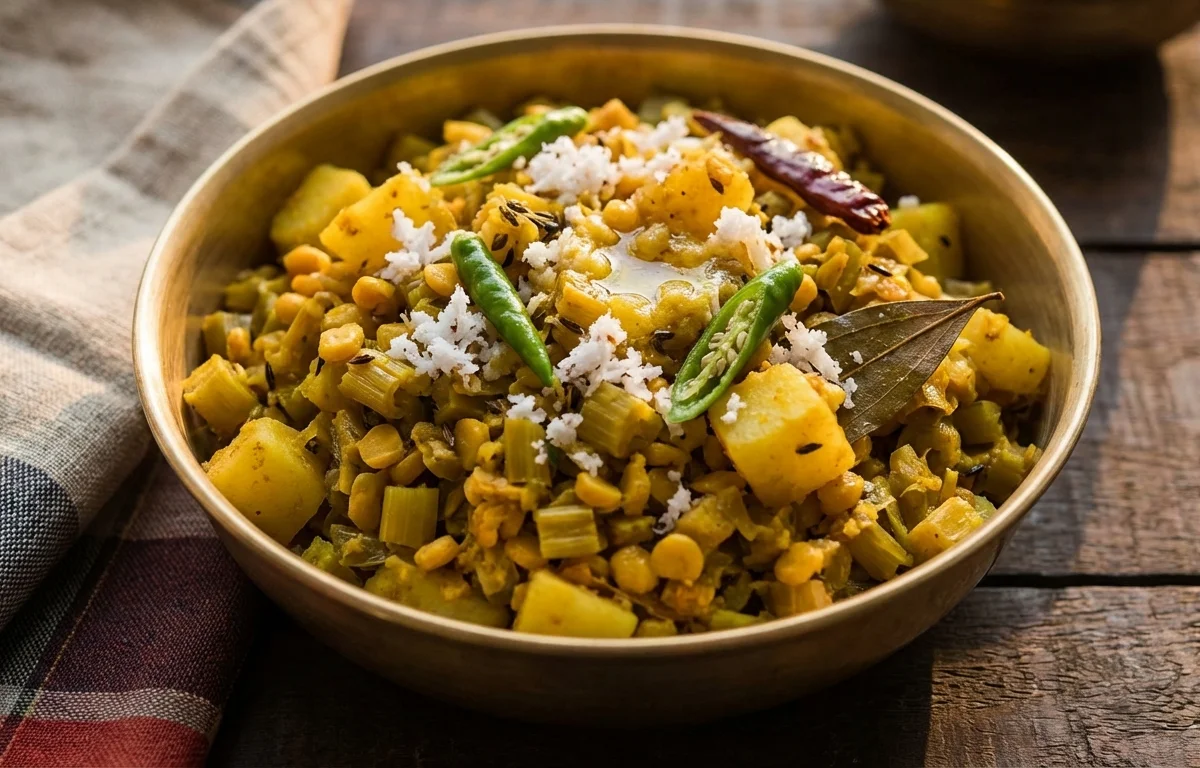
Thorer Ghonto
A classic Bengali preparation where tender banana stem is simmered with fragrant spices, grated coconut, and a hint of milk. This dry, mildly spiced curry brings out the delicate, earthy flavor of the stem, making it a perfect companion to steamed rice.
For 4 servings
- prep · ~10 min
Clean and dice the banana stem.
Peel the outer layers of the banana stem until you reach the tender white core. Slice the core into thin rounds, removing any fibrous strands that wrap around each slice. Chop the rounds into small dice and immediately transfer to a bowl of water to prevent discoloration.
- boil · ~8 min
Parboil the diced banana stem.
Drain the soaking water. In a pressure cooker, add the diced banana stem, 1 cup of fresh water, and a pinch of salt. Pressure cook for exactly 1 whistle on medium heat. Release pressure immediately to avoid overcooking. Drain the cooked stem and set aside.
- temper · ~2 min
Temper the oil with whole spices.
Heat mustard oil in a frying pan over medium heat until it reaches its smoking point and turns pale yellow. Lower the heat, add bay leaves, cumin seeds, and dried red chilies. Let the spices splutter and become aromatic.
- saute · ~3 min
Build the masala base.
1.Add the grated coconut to the pan and sauté for 2 minutes until lightly golden.2.Add ginger paste and slit green chilies, sautéing for another minute until the raw aroma fades. - simmer · ~5 min
Combine banana stem with the masala.
1.Add the parboiled banana stem dice to the pan along with turmeric powder, remaining salt, and sugar.2.Mix well to coat every piece with the masala and cook for 4-5 minutes, stirring occasionally. - simmer · ~3 min
Finish with milk and ghee.
Pour in the milk and stir to combine. Let it simmer gently until the milk is fully absorbed and the dish looks glossy. Drizzle ghee over the top, give a final gentle stir, and take it off the heat.
- garnish
Serve hot with steamed rice.
Transfer the Thorer Ghonto to a serving bowl. It is best enjoyed immediately with a generous helping of hot steamed rice and a wedge of lemon on the side.
What to keep in mind.
6 tips from the recipe — small details that make a real difference to the final dish.
- 1Remove all fibrous strands from each banana stem round for a tender, non-stringy texture.
- 2Pressure cook the banana stem for exactly one whistle to keep it firm but not mushy.
- 3Let the mustard oil reach its smoking point to mellow its sharpness and enhance aroma.
- 4Sauté the grated coconut until lightly golden to deepen the nutty flavor in the dish.
- 5Add the milk at the very end and simmer gently until absorbed for a glossy, cohesive finish.
- 6This dish tastes even better after resting for 10 minutes; the flavors meld beautifully.
Adapt it for your goals.
Vegan
Replace the milk with a splash of canned coconut milk and the ghee with an extra teaspoon of mustard or vegetable oil for a fully plant-based version.
higher proteinHigher-protein
Add 1/2 cup of cooked chana dal (Bengal gram) along with the banana stem for extra protein and a heartier texture.
low oilLow-oil
Reduce mustard oil to 1 tablespoon and omit the ghee; the moisture from the banana stem and milk will still meld the spices nicely.
no coconutNo-coconut
Skip the grated coconut and increase the ginger paste to 1.5 teaspoons; the dish will be lighter and more gingery.
Why this is on our healthy list.
Rich in Dietary Fiber
Banana stem delivers a good amount of natural fiber that supports digestion and helps regulate blood sugar levels.
Good Source of Potassium
The banana stem is naturally high in potassium, which aids in maintaining healthy blood pressure and muscle function.
Low in Calories
This dish is naturally light and low-calorie, making it a satisfying choice for weight management when paired with rice.
Contains Healthy Fats
Mustard oil and coconut provide beneficial unsaturated fats that support heart health when used in moderation.
Frequently asked questions
Banana stem is available at Indian, Southeast Asian, or Caribbean grocery stores. Look for firm, pale green stems without blemishes. The tender inner core is the edible part.



-curry.webp)
.webp)