Tomato Pachadi
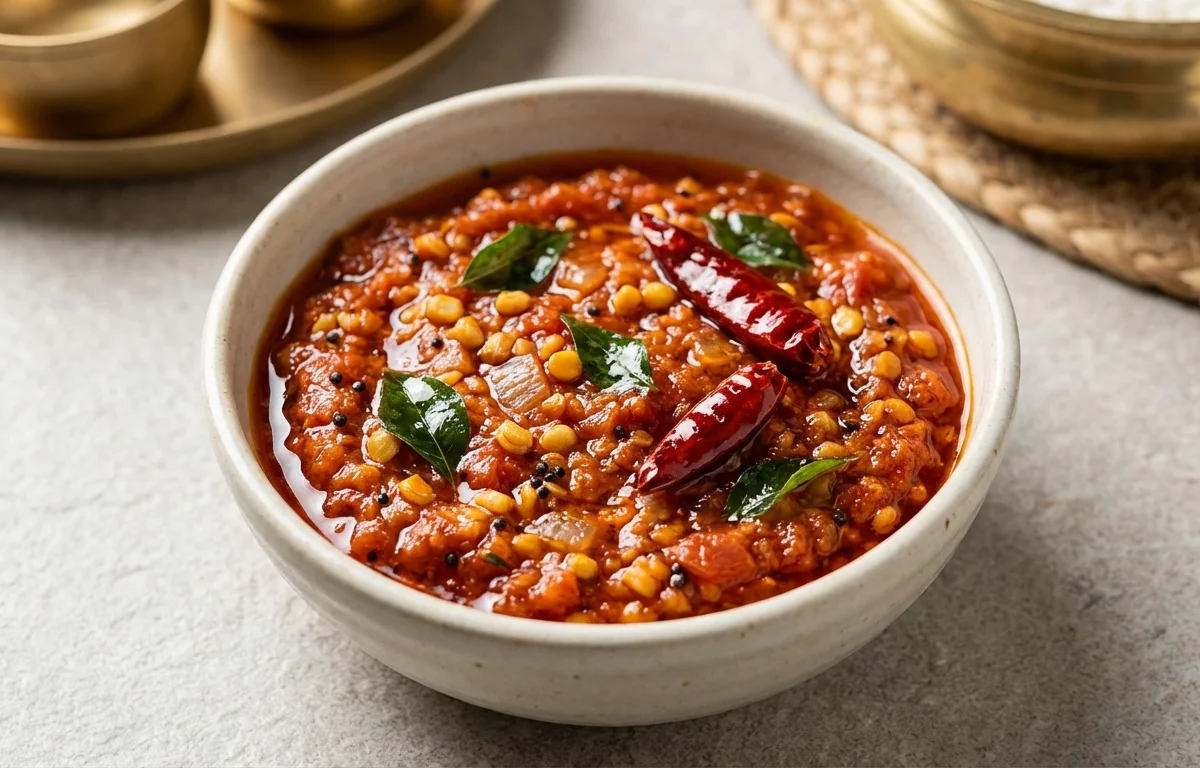
A tangy, lightly spiced South Indian tomato pachadi made by cooking tomatoes until soft and finishing with a simple tempering. It pairs beautifully with hot rice, dosa, idli, or curd rice.
For 4 servings
- prep · ~5 min
Prep the vegetables and tamarind.
1.Chop the tomato and onion roughly.2.Peel the garlic cloves.3.Slit the green chili.4.Keep the tamarind ready with the other ingredients. - saute · ~13 min
Cook the tomato mixture.
1.Heat 1 tbsp oil in a pan over medium heat.2.Add onion, garlic, and green chili; cook until the onion softens, 3 to 4 minutes.3.Add tomato, tamarind, turmeric powder, red chili powder, and salt.4.Cook until the tomatoes turn soft and pulpy and most of the moisture cooks off, 8 to 10 minutes.TIPCook the tomatoes down well so the pachadi tastes rich and not watery. - mix · ~3 min
Mash the pachadi.
Let the cooked mixture cool slightly, then mash it well with the back of a spoon for a rustic texture. Keep it slightly chunky rather than fully smooth.
- temper · ~2 min
Make the tempering.
1.Heat the remaining 1 tbsp oil in a small pan.2.Add mustard seeds and let them splutter.3.Add urad dal, cumin seeds, dried red chili, and curry leaves.4.Cook for 20 to 30 seconds until fragrant and the urad dal turns light golden.TIPKeep the heat medium so the spices bloom without burning. - assemble · ~1 min
Finish the pachadi.
Pour the hot tempering over the mashed tomato mixture and mix well. Taste and adjust the salt if needed.
- serve
Serve with rice, dosa, idli, or curd rice.
What to keep in mind.
7 tips from the recipe — small details that make a real difference to the final dish.
- 1Cook the tomatoes until the oil starts to separate at the edges; that is the best cue the pachadi will not taste raw or watery.
- 2If your tomatoes are very tart, reduce the tamarind slightly so the pachadi stays balanced rather than overly sour.
- 3Mash while the mixture is still warm, not hot; it breaks down easily and keeps a rustic, spoonable texture.
- 4Let the mustard seeds fully splutter before adding urad dal, or the tempering can taste bitter and undercooked.
- 5Fry the urad dal only to light golden; if it turns deep brown, it will make the final pachadi taste harsh.
- 6This pachadi often tastes even better after 30 minutes, once the hot tempering has infused the tomato mixture.
- 7Store refrigerated in a clean airtight container and use within 2 to 3 days; reheat gently or serve at room temperature.
Adapt it for your goals.
No-onion
Skip the onion for a simpler, sharper tomato pachadi that suits fasting or onion-free meals while still keeping the garlic and tempering.
garlic freeGarlic-free
Omit the garlic for a lighter version with a cleaner tomato-curry leaf flavor, ideal if you prefer a more traditional satvik-style profile.
spicierSpicier
Add one extra green chili or a little more red chili powder if you want the pachadi to stand up strongly to plain rice or curd rice.
smooth textureSmooth-texture
Blend the cooled cooked mixture briefly instead of mashing for a smoother chutney-like consistency that pairs especially well with dosa and idli.
Why this is on our healthy list.
Tomato-Rich Antioxidants
Tomatoes bring protective plant compounds and natural acidity, making this pachadi a flavorful way to include more vegetables in the meal.
Digestive Spice Support
Cumin, curry leaves, garlic, and tamarind are commonly used in South Indian cooking to add aroma and support comfortable digestion.
Moderate-Oil Side Dish
Because it is served as a condiment or side, this pachadi adds bold flavor to rice or tiffin without needing heavy gravies.
Frequently asked questions
Yes. If your tomatoes are very tangy, you can skip or reduce the tamarind, though the pachadi will lose some of its deeper sour note.