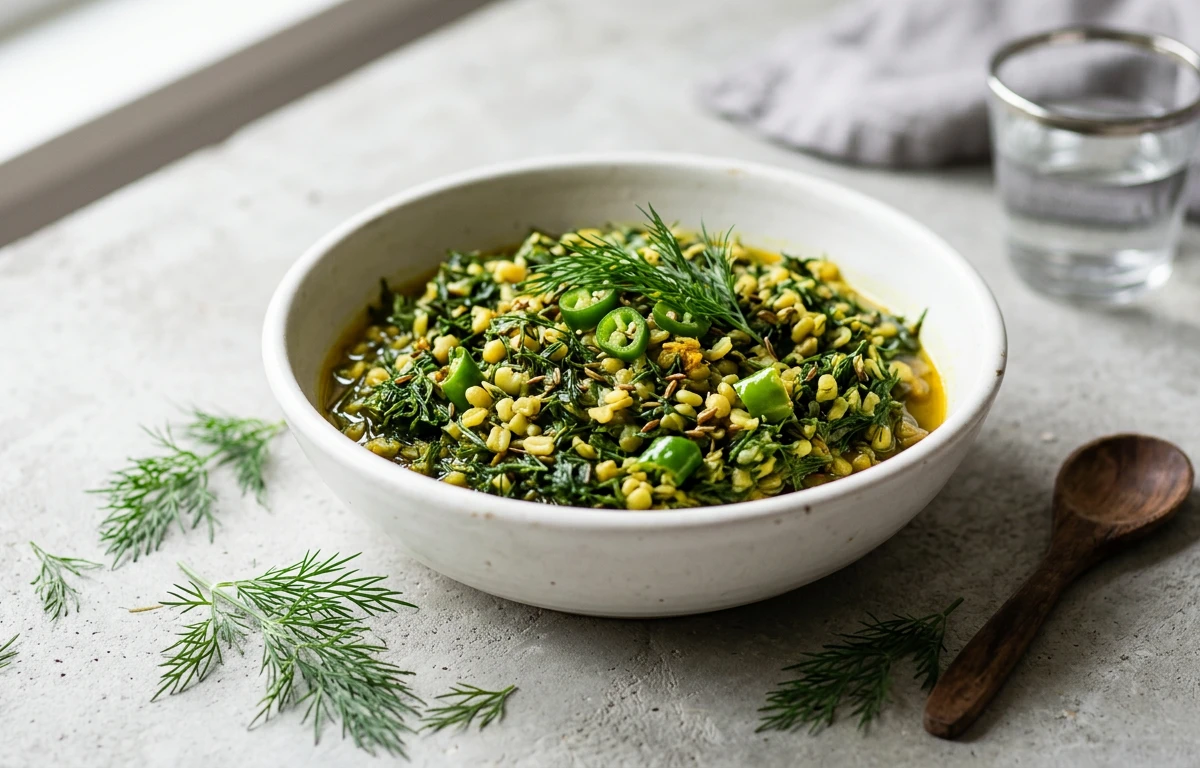
Ukadpendi
A humble Maharashtrian breakfast made by cooking roasted jowar flour with a simple tempering of onion, chili, and spices. It turns soft, savory, and comforting, with a porridge-like texture that tastes best hot.
For 4 servings
- prep · ~5 min
Measure the flour and prep the aromatics.
1.Measure the jowar flour into a bowl and keep it ready.2.Chop the onion and green chili finely.3.Crush the garlic cloves lightly.4.Keep the coriander leaves and lemon juice ready for finishing. - temper · ~2 min
Make the tempering.
1.Heat oil in a pan over medium heat.2.Add mustard seeds and let them splutter.3.Add cumin seeds and asafoetida.4.Add the crushed garlic and green chili and cook for 30 seconds.TIPKeep the heat medium so the garlic and spices smell fragrant, not burnt. - saute · ~4 min
Cook the onion.
Add the chopped onion and turmeric powder. Cook for 3 to 4 minutes until the onion softens and turns lightly golden.
- boil · ~4 min
Add water and salt and bring it to a boil.
Pour in the water, add salt, and bring the mixture to a brisk boil so the flour cooks evenly when added.
- mix · ~3 min
Stir in the jowar flour.
1.Lower the heat.2.Sprinkle in the jowar flour gradually with one hand.3.Stir continuously with the other hand to avoid lumps.4.Mix until the flour is fully combined and starts to thicken.TIPAdd the flour slowly; dumping it in at once makes the mixture clumpy. - simmer · ~5 min
Cook until soft and thick.
Cover and cook on low heat for 4 to 5 minutes, stirring once or twice, until the ukadpendi looks soft, moist, and cooked through.
- garnish
Finish with coriander leaves and lemon juice.
- serve
Serve hot in small bowls.
What to keep in mind.
7 tips from the recipe — small details that make a real difference to the final dish.
- 1If your jowar flour smells raw, dry-roast it lightly first so the final ukadpendi tastes nuttier and cooks more evenly.
- 2Bring the water to a proper brisk boil before adding the flour; warm water makes the mixture more likely to turn pasty and lumpy.
- 3Sprinkle the jowar flour in slowly while stirring constantly, ideally with a whisk or flat wooden spatula for a smoother texture.
- 4Cook the onions only until lightly golden, not deeply browned, so they blend into the soft porridge-like texture.
- 5Keep the finished ukadpendi slightly loose in the pan, because jowar thickens further as it stands.
- 6Add the lemon juice only after switching off the heat to keep its fresh brightness and prevent any bitter edge.
- 7Leftovers firm up on cooling; reheat with a splash of hot water and stir well to bring back the soft texture.
Adapt it for your goals.
Vegan
This recipe is already naturally vegan, making it a simple plant-based Maharashtrian breakfast with no extra substitutions needed.
low oilLow-oil
Reduce the oil slightly and use a heavy pan; the tempering will still flavor the dish well if you keep the spices moving.
spicierSpicier
Increase the green chilies or add a pinch of red chili powder for a sharper, hotter breakfast.
vegetable loadedVegetable-loaded
Add finely chopped peas, grated carrot, or capsicum with the onions for more texture and a heartier one-pan meal.
Why this is on our healthy list.
Naturally Gluten-Free Grain
Jowar is a naturally gluten-free millet, so this dish is a useful option for people looking to avoid wheat-based breakfasts.
Rich in Plant-Based Fiber
Jowar and onion together make this breakfast more filling and satisfying than many refined-flour morning dishes.
Light Yet Satisfying
With simple tempering, water, and jowar flour, ukadpendi is comforting without feeling overly heavy or greasy.
Includes Protective Aromatics
Garlic, green chili, turmeric, cumin, and coriander add flavor along with beneficial plant compounds from everyday spices.
Frequently asked questions
Lumps usually happen when the jowar flour is added too quickly or the water is not boiling enough. Sprinkle the flour gradually and stir continuously.



.webp)