
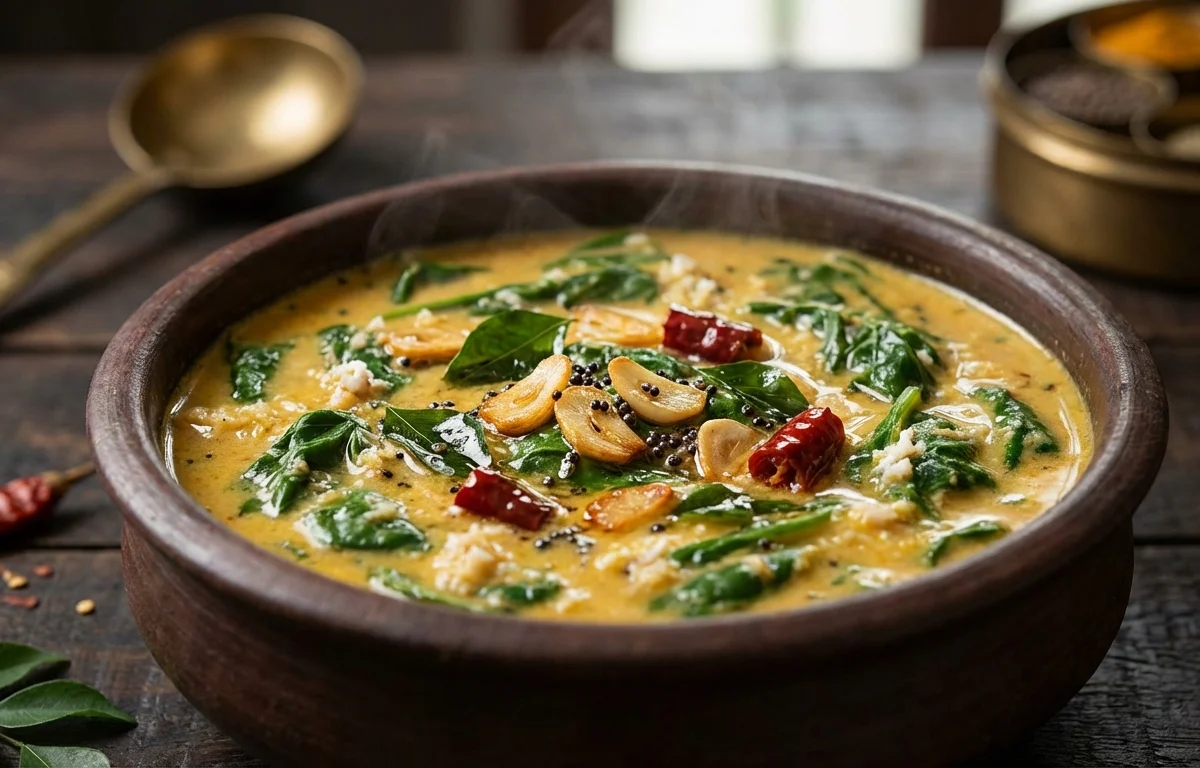
Vali Ambat
A mild, coconut-rich curry from the coastal kitchens of Karnataka and Kerala, made with tender Malabar spinach leaves simmered in a spiced coconut paste. The gentle sweetness of the coconut balances the earthy greens, while a fragrant tempering of mustard seeds and curry leaves brings everything together. Best enjoyed with a bowl of steamed rice.
For 4 servings
- prep
Wash and chop the Malabar spinach.
Pick the tender vali leaves along with the soft stems. Discard any thick, fibrous stalks. Wash thoroughly in several changes of water and roughly chop the leaves and stems.
- prep
Grind the coconut-spice paste.
In a blender, combine the grated coconut, dried red chilies, cumin seeds, turmeric powder, and tamarind paste. Add water and grind to a smooth, fairly thick paste. Set aside.
TIPA thinner paste will make the gravy runny, so add water cautiously. Start with half the water and add more as needed. - boil · ~7 min
Cook the Malabar spinach.
Place the chopped vali leaves in a deep pan. Add just enough water to cover the bottom of the pan (about 2 tbsp). Sprinkle with salt, cover, and cook on medium-low heat for 5-7 minutes until the leaves wilt and soften completely.
TIPDo not add too much water at this stage; the spinach releases its own moisture. Overcooking will make the leaves slimy. - simmer · ~8 min
Combine and simmer the curry.
Add the ground coconut paste to the cooked spinach. Rinse the blender jar with 2-3 tbsp of water and add that to the pan. Stir well and bring to a gentle simmer. Cook for 6-8 minutes on low heat until the raw smell of the coconut disappears and the curry turns fragrant.
- temper · ~1 min
Make the tempering.
1.Heat coconut oil in a small pan over medium heat.2.Add mustard seeds and wait until they splutter completely (30 sec).3.Toss in the curry leaves and fry until crisp and fragrant (10-15 sec).4.Immediately pour the hot tempering over the simmering curry.TIPStand back when pouring; the hot oil will sizzle vigorously on contact. - simmer · ~5 min
Finish and rest.
Stir the tempering into the curry gently. Turn off the heat and let it rest for 5 minutes before serving. This allows the flavors to meld.
- serve
Serve hot with steamed rice.
Ladle the Vali Ambat into bowls and serve as part of a traditional meal alongside plain rice and a side of pickle or papad.
What to keep in mind.
6 tips from the recipe — small details that make a real difference to the final dish.
- 1Use only the tender leaves and soft stems of Malabar spinach; discard thick fibrous stalks to avoid a stringy texture.
- 2Grind the coconut paste with minimal water — a thick paste yields a richer, creamier gravy.
- 3Cook the spinach covered with just a splash of water; it releases its own moisture and will wilt without becoming slimy.
- 4Simmer the curry after adding the paste until the raw coconut aroma disappears, about 6-8 minutes.
- 5For the tempering, wait until mustard seeds pop completely before adding curry leaves to release their full fragrance.
- 6Let the curry rest for 5 minutes off heat before serving so the coconut and spices meld beautifully.
Adapt it for your goals.
Vegan
The recipe is naturally vegan as written, using coconut and plant-based oil, so no substitutions are needed.
low oilLow-oil
Reduce coconut oil for tempering to 1 tsp and skip the final sizzle pour, or add a dry tadka with mustard seeds and curry leaves in a nonstick pan.
high proteinHigh-protein
Add a handful of cooked chana dal or split pigeon peas (toor dal) along with the spinach for a heartier, protein-packed version.
with other greensWith other greens
Substitute amaranth leaves, drumstick leaves, or a mix of spinach and fenugreek greens if Malabar spinach is unavailable.
Why this is on our healthy list.
Rich in Iron & Folate
Malabar spinach is a good source of non-heme iron and folate, supporting healthy blood cells and energy levels.
High in Dietary Fiber
The leaves and stems provide natural fiber that aids digestion and helps maintain steady blood sugar.
Healthy Fats from Coconut
Fresh coconut contributes medium-chain triglycerides (MCTs), which can support metabolism and provide quick energy.
Antioxidant Spices
Turmeric and curry leaves offer anti-inflammatory and antioxidant compounds that may support overall wellness.
Frequently asked questions
Yes, thaw and squeeze out excess water before cooking, but the texture may be softer than fresh leaves.


.webp)
.webp)