Vankaya Pachadi
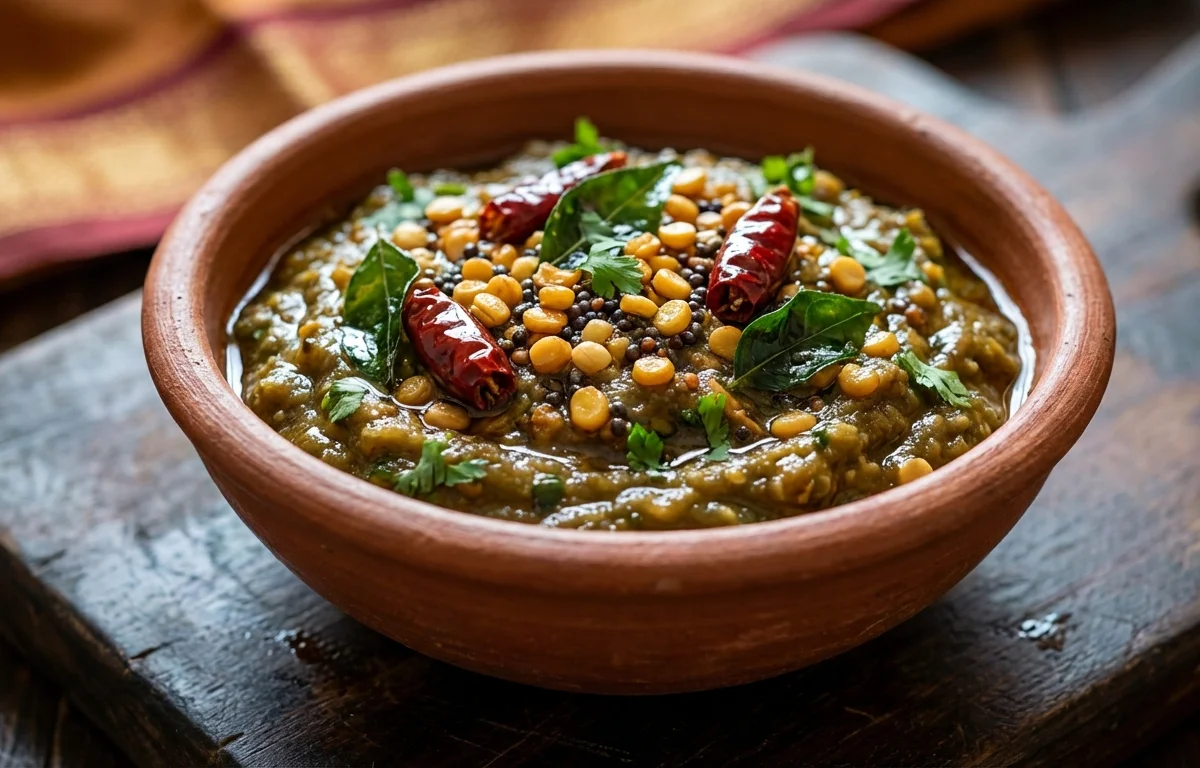
Smoky roasted eggplant gets ground with tamarind, garlic, and green chilies into a bold Andhra-style pachadi. It is earthy, tangy, and lightly spicy, with a fresh tempering on top that makes each bite even more fragrant.
For 4 servings
- prep · ~10 min
Soak the tamarind.
Soak the tamarind in a few spoonfuls of warm water for 10 minutes, then squeeze and extract a thick pulp. Set it aside.
- roast · ~15 min
Roast the eggplant until soft and smoky.
1.Rinse and dry the eggplant well.2.Roast it directly over a flame or on a hot pan, turning often, until the skin is charred and the inside is completely soft.3.Cook until a knife slides in easily and the eggplant starts to collapse.TIPRoast on medium heat so the flesh cooks through before the skin burns too much. - rest · ~5 min
Cool the eggplant slightly.
Set the roasted eggplant aside for a few minutes until it is cool enough to handle.
- prep · ~4 min
Peel and mash the eggplant.
1.Peel off and discard the charred skin.2.Remove any large stem pieces.3.Mash the soft flesh lightly with a spoon. - mix · ~3 min
Grind the pachadi base.
1.Add green chili, garlic, salt, and tamarind pulp to a mortar or small grinder jar.2.Crush or pulse to a coarse paste.3.Add the roasted eggplant and grind briefly to keep the pachadi slightly chunky.TIPDo not over-grind. A little texture gives this pachadi its traditional feel. - temper · ~2 min
Make the tempering.
1.Heat oil in a small pan over medium heat.2.Add mustard seeds and let them splutter.3.Add urad dal and cook until lightly golden.4.Add dried red chili and curry leaves, then fry for a few seconds until fragrant.TIPKeep the heat moderate once the curry leaves go in, as they can splutter quickly. - assemble · ~1 min
Finish the pachadi.
Pour the hot tempering over the ground eggplant mixture and mix well. Taste and adjust salt if needed.
- serve
Serve with hot rice.
What to keep in mind.
8 tips from the recipe — small details that make a real difference to the final dish.
- 1Choose a heavy, glossy eggplant; spongy or seedy ones can make the pachadi bitter.
- 2Dry the eggplant fully before roasting so the skin chars instead of steaming.
- 3Roast until the eggplant collapses and a knife slides through with no resistance; any firm spots will taste undercooked.
- 4After roasting, rest it briefly in a covered bowl to loosen the charred skin for easier peeling.
- 5Keep the grind coarse and slightly chunky; a smooth puree loses the rustic Andhra pachadi texture.
- 6Use thick tamarind pulp, not watery extract, so the chutney stays bold and not diluted.
- 7Mix the hot tempering into the pachadi right away so the smoky eggplant absorbs the mustard, urad dal, and curry leaf aroma.
- 8Store refrigerated for up to 2 days; bring to room temperature before serving for the fullest flavor.
Adapt it for your goals.
Spicier
Add an extra green chili or one more dried red chili in the tempering for a hotter Andhra-style finish.
no garlicNo-garlic
Skip the garlic for a simpler, lighter pachadi that still keeps the smoky-tangy eggplant character.
low oilLow-oil
Use just enough oil for a minimal tempering; the chutney still tastes full because the roasted eggplant carries most of the flavor.
rustic hand mashedRustic-hand-mashed
Mash by hand in a mortar instead of using a grinder for a more traditional texture with visible bits of roasted eggplant.
Why this is on our healthy list.
Vegetable-Forward Side
This pachadi is built mainly from roasted eggplant, making it a flavorful way to include more vegetables in the meal.
Digestive Ingredients
Tamarind, garlic, curry leaves, and chilies are commonly used in home cooking to add depth while keeping the condiment light.
Moderate Use of Oil
Only a small tempering is used, so most of the body comes from roasted eggplant rather than heavy fats.
Frequently asked questions
Yes. A hot pan works well, though the pachadi will be less smoky than flame-roasted eggplant. Turn it often until fully soft inside.



.webp)