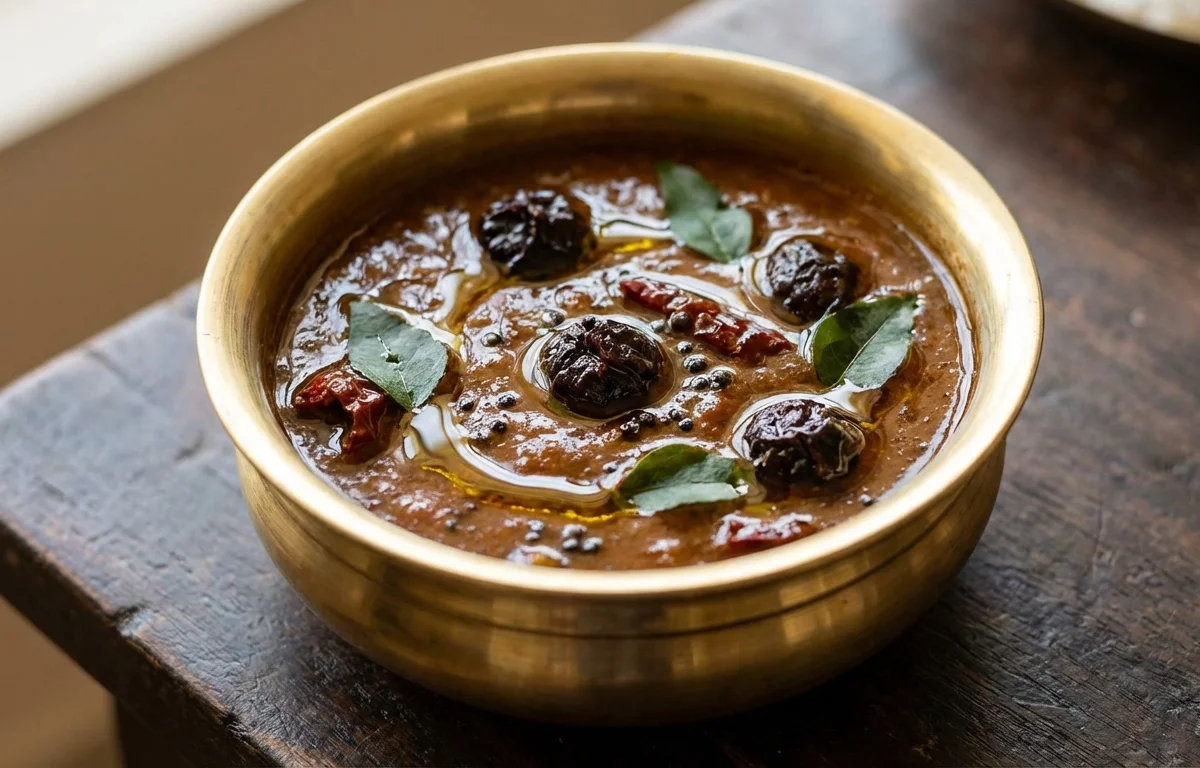
Vatha Kuzhambu
A bold Tamil-style tamarind gravy with sun-dried turkey berries, roasted spices, and a deep, tangy finish. It keeps well, tastes even better the next day, and pairs beautifully with hot rice and a mild poriyal.
For 4 servings
- prep · ~15 min
Soak the tamarind and make the extract.
1.Place tamarind in a bowl with 1 cup warm water and soak for 15 minutes.2.Squeeze well to extract the pulp.3.Strain and add the remaining water to make about 2.5 cups tamarind liquid.TIPA smooth tamarind extract gives the kuzhambu a cleaner finish without fibrous bits. - temper · ~2 min
Make the tempering.
1.Heat sesame oil in a kadai over medium heat.2.Add mustard seeds and let them splutter.3.Add fenugreek seeds, dried red chili, curry leaves, and asafoetida.4.Stir for a few seconds until fragrant.TIPDo not let the fenugreek seeds turn dark brown or they will make the gravy bitter. - fry · ~2 min
Fry the sundakkai vathal.
Add the sundakkai vathal to the hot oil and fry on low to medium heat for 1 to 2 minutes until they puff slightly and smell toasty.
- boil · ~5 min
Add the tamarind liquid and seasonings.
1.Pour in the tamarind extract carefully.2.Add sambar powder, turmeric powder, jaggery, and salt.3.Mix well and bring the gravy to a boil over medium heat. - simmer · ~18 min
Simmer until the gravy thickens.
Lower the heat and simmer the kuzhambu for 15 to 18 minutes, stirring now and then, until the raw tamarind smell fades and the gravy reduces slightly.
TIPThe oil should begin to rise lightly on top when the kuzhambu is properly cooked. - mix · ~1 min
Stir in the rice flour slurry.
Mix rice flour with 2 tbsp water until smooth. Add it to the simmering kuzhambu and stir well so it thickens evenly without lumps.
- simmer · ~4 min
Cook for a few more minutes.
Simmer for 3 to 4 minutes more until the kuzhambu turns glossy and lightly thick, with a spoon-coating consistency.
- rest · ~10 min
Let the kuzhambu rest for 10 minutes.
- serve
Serve with hot rice.
What to keep in mind.
7 tips from the recipe — small details that make a real difference to the final dish.
- 1Fry the sundakkai vathal gently until slightly puffed; this removes raw bitterness and keeps them pleasantly crisp.
- 2Keep the fenugreek pale golden, not dark brown, or the whole kuzhambu can turn bitter.
- 3Simmer until the raw tamarind smell disappears and a light sheen of oil appears on top.
- 4Add the rice flour slurry only after mixing it smooth, then stir continuously to avoid lumps.
- 5Let the kuzhambu rest before serving; the gravy settles, thickens, and tastes rounder after 10 minutes.
- 6This gravy tastes even better the next day, so make it ahead if serving for lunch boxes or a full South Indian meal.
- 7Store it in a clean dry container and reheat gently; vatha kuzhambu keeps well because of the tamarind and oil.
Adapt it for your goals.
Garlic
Add a few peeled garlic cloves to the tempering for a more robust, earthy kuzhambu that pairs especially well with plain rice.
shallotShallot
Saute small shallots before adding the tamarind extract for a sweeter, fuller-bodied version with more texture.
no rice flourNo-rice-flour
Skip the rice flour slurry and reduce the gravy a little longer if you prefer a more traditional, sharper, thinner finish.
milderMilder
Reduce the dried red chili slightly if you want the tamarind and sundakkai flavours to stand out more than the heat.
Why this is on our healthy list.
Digestive Spice Base
Fenugreek, asafoetida, curry leaves, and tamarind are commonly used in South Indian cooking to make rich, tangy gravies easier to enjoy.
Rich in Plant Compounds
Tamarind, dried red chili, turmeric, and curry leaves contribute a range of naturally occurring plant compounds and bold flavor.
Moderate, Satisfying Gravy
Because it is intensely flavored and eaten with rice in small portions, this kuzhambu adds impact without needing a large serving.
Frequently asked questions
Usually the fenugreek got too dark or the sundakkai vathal was overfried. Keep both on moderate heat and stop at fragrant, lightly browned stages.