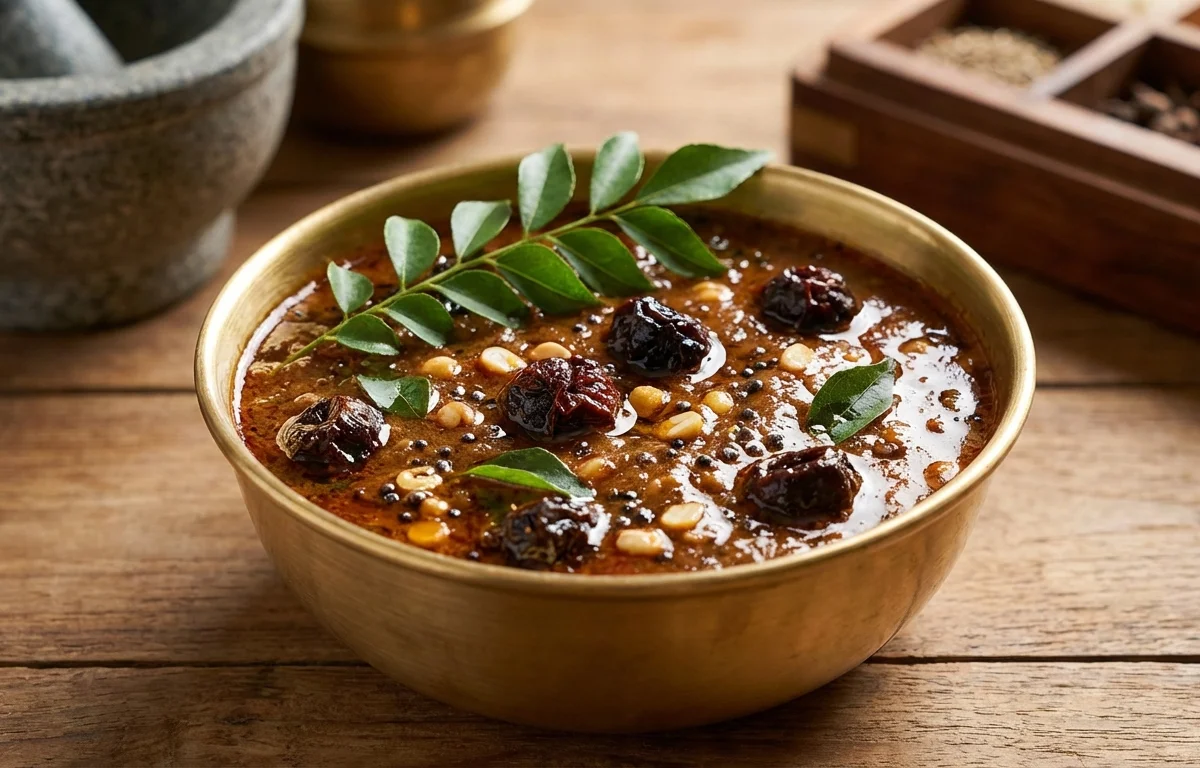
Vathal Kozhambu
A bold, tangy Tamil Nadu kuzhambu made with tamarind, sun-dried berries, and a fragrant spice tempering. It cooks into a dark, glossy gravy that tastes even better after resting and pairs beautifully with hot rice.
For 4 servings
- prep · ~15 min
Soak the tamarind and make the extract.
Soak the tamarind in warm water for 15 minutes. Squeeze well and strain to make a smooth tamarind extract.
TIPA smooth extract gives the kuzhambu a cleaner texture with no fibrous bits. - mix · ~1 min
Mix the rice flour slurry.
Stir the rice flour with a little water until smooth and lump-free. Keep it ready for later.
- temper · ~2 min
Make the tempering.
1.Heat sesame oil in a kadai over medium heat.2.Add mustard seeds and let them splutter.3.Add fenugreek seeds, dried red chili, asafoetida, and curry leaves.4.Stir for a few seconds until fragrant.TIPKeep the heat medium so the fenugreek turns aromatic, not bitter. - fry · ~2 min
Fry the sundakkai vathal.
Add the sundakkai vathal to the hot oil and fry until they darken slightly and puff a little. This brings out their deep, savory flavor.
- saute
Toast the spice powders.
Lower the heat and add sambar powder and turmeric powder. Stir quickly for a few seconds without letting the spices burn.
- simmer · ~5 min
Add the tamarind extract and seasonings.
1.Pour in the tamarind extract and remaining water carefully.2.Add salt and jaggery.3.Mix well and bring the kuzhambu to a gentle boil. - simmer · ~15 min
Cook the kuzhambu until slightly thick.
Let it simmer uncovered until the raw smell of tamarind fades and the gravy darkens and reduces slightly.
TIPThe oil should begin to float lightly on top when the kuzhambu is well cooked. - mix · ~1 min
Stir in the rice flour slurry.
Pour in the rice flour slurry while stirring continuously so it blends in smoothly and thickens the kuzhambu lightly.
- simmer · ~3 min
Simmer briefly to finish.
Cook for 2 to 3 minutes more until the kuzhambu turns glossy and lightly thickened.
- rest · ~10 min
Let the kuzhambu rest for 10 minutes.
TIPResting helps the dried berries soften more and lets the sour, spicy flavors settle. - serve
Serve hot with rice.
What to keep in mind.
7 tips from the recipe — small details that make a real difference to the final dish.
- 1Fry the sundakkai vathal until just puffed and a shade darker; underfried berries stay hard, while overfried ones turn bitter.
- 2Keep the flame low when adding sambar powder so the spices bloom in the oil instead of scorching.
- 3Simmer uncovered until the raw tamarind smell disappears and the kuzhambu turns deep brown and glossy.
- 4Whisk the rice flour slurry again right before pouring, since it settles quickly and can form lumps.
- 5Taste only after the main simmer; tamarind tastes sharper early on and mellows as the kuzhambu reduces.
- 6This kuzhambu tastes even better after a few hours, so make it ahead if serving for lunch or the next day.
- 7Store refrigerated for a couple of days and reheat gently; the gravy often thickens, so loosen with a splash of hot water.
Adapt it for your goals.
Manathakkali
Replace sundakkai vathal with manathakkali vathal for a slightly gentler, more earthy version of the same Tamil kuzhambu.
shallotShallot
Add peeled small shallots after the tempering and sauté before the tamarind extract for a sweeter, fuller gravy.
garlicGarlic
Cook a few crushed garlic cloves in the oil before adding the tamarind extract for a more robust, homestyle flavor.
jainJain
Skip asafoetida if needed and keep the recipe as-is otherwise; it still delivers a tangy, spice-forward kuzhambu.
Why this is on our healthy list.
Digestive spices
Fenugreek, asafoetida, curry leaves, and tamarind are traditional ingredients often used in South Indian cooking for their digestive qualities.
Antioxidant-rich ingredients
Tamarind, turmeric, dried chilies, and curry leaves contribute plant compounds that add both flavor depth and antioxidant value.
Moderate and satisfying
Because it is intensely flavored with tamarind, spices, and sesame oil, a small amount of kuzhambu can make a simple rice meal feel complete.
Frequently asked questions
The usual causes are overbrowned fenugreek seeds, burnt spice powders, or overfried sundakkai vathal. Keep the heat moderate and fry each stage only until aromatic.