
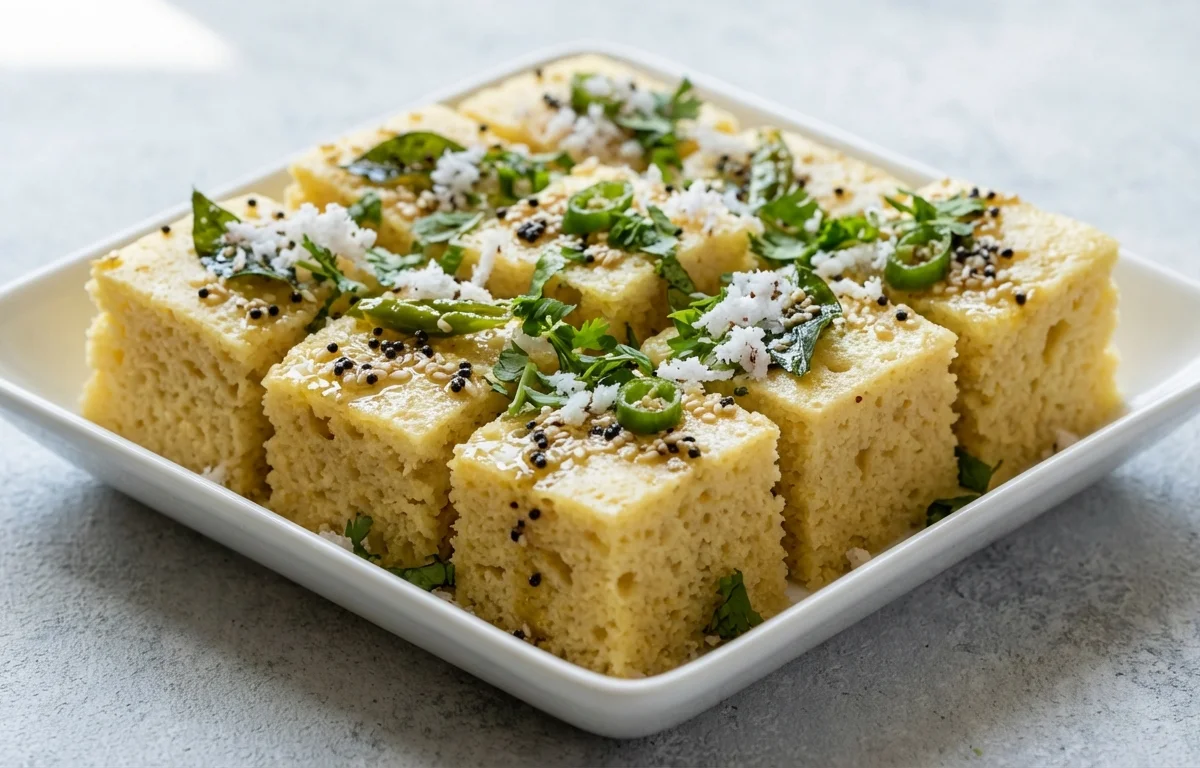
Vati Dal Khaman
A rustic Gujarati steamed lentil cake made from soaked chana dal, fresh ginger, green chili, and a light tempering. It turns out fluffy, savory, and gently spiced, making it perfect as a snack or light side.
For 8 servings
- prep · ~360 min
Soak and drain the chana dal.
Wash the chana dal well, soak it in enough water for 6 hours, then drain completely before grinding.
TIPDrain the dal very well so the batter stays thick and the khaman turns fluffy. - mix · ~5 min
Grind the dal into a coarse batter.
1.Add the drained chana dal, ginger, and chopped green chili to a grinder.2.Add a little water for grinding and make a slightly coarse, thick batter.3.Transfer the batter to a bowl. - mix · ~3 min
Season the batter.
1.Add yogurt, sugar, turmeric powder, salt, and 1 tbsp oil to the batter.2.Mix well until the batter looks even and light.3.Grease a steaming plate or shallow tin lightly with a little batter oil. - boil · ~5 min
Heat water for steaming.
Bring water to a boil in a steamer or deep pot so it is ready before the fruit salt goes into the batter.
TIPKeep the steamer hot before adding fruit salt so the batter goes in right away and rises properly. - mix · ~1 min
Add fruit salt and pour the batter.
1.Sprinkle fruit salt over the batter.2.Mix gently in one direction until the batter turns airy.3.Pour it immediately into the greased steaming plate and level the top lightly. - steam · ~15 min
Steam the vati dal khaman.
Place the plate in the steamer, cover, and steam on medium heat until the khaman is set and a skewer comes out clean.
- rest · ~5 min
Cool the khaman slightly.
Take the steamed khaman out and let it rest for a few minutes so it firms up and cuts neatly.
- temper · ~2 min
Make the tempering.
1.Heat 2 tsp oil in a small pan.2.Add mustard seeds and let them splutter.3.Add sesame seeds, curry leaves, and slit green chili.4.Cook for a few seconds until fragrant.TIPKeep the heat medium so the sesame seeds toast lightly without burning. - assemble · ~2 min
Cut and finish the khaman.
1.Cut the khaman into 8 equal pieces.2.Pour the tempering evenly over the top.3.Sprinkle cilantro and drizzle lemon juice over it. - serve
Serve the vati dal khaman warm.
What to keep in mind.
8 tips from the recipe — small details that make a real difference to the final dish.
- 1Drain the soaked chana dal very thoroughly; extra water makes the batter loose and the khaman dense.
- 2Grind the dal slightly coarse, not silky smooth, so the steamed texture stays rustic and light.
- 3Keep the steamer boiling before adding fruit salt, then steam immediately for the best rise.
- 4After adding fruit salt, mix gently just until airy; overmixing can knock out the lift.
- 5Steam on medium heat rather than high so the center cooks through without turning rubbery.
- 6Let the khaman rest a few minutes before cutting, otherwise the pieces may crumble at the edges.
- 7Pour the mustard-sesame tempering while the khaman is still warm so it absorbs the flavor better.
- 8Leftovers keep well refrigerated; re-steam or sprinkle with a little water before reheating to soften.
Adapt it for your goals.
Jain
Skip ginger and green chili, and use black pepper or mild chili powder for heat while keeping the steamed lentil texture intact.
veganVegan
Replace yogurt with a little plant-based yogurt or a splash of lemon water for tang, making the khaman fully dairy-free.
no sugarNo-sugar
Omit the sugar if you prefer a more savory profile; the lemon and tempering will still keep the flavor lively.
spicierSpicier
Add extra green chili to the batter and tempering for a sharper heat that suits tea-time snacking.
Why this is on our healthy list.
Protein-Rich Lentil Base
Chana dal gives this khaman plant protein and makes it more filling than many refined-flour snacks.
Steamed, Not Fried
Because it is steamed, the dish stays lighter while still delivering a soft, satisfying texture.
Digestive Spice Support
Ginger, green chili, curry leaves, and mustard seeds add aroma and can make the savory lentil batter feel less heavy.
Frequently asked questions
The batter was likely too thin, overmixed after adding fruit salt, or left standing too long before steaming. Keep it thick and steam immediately.


