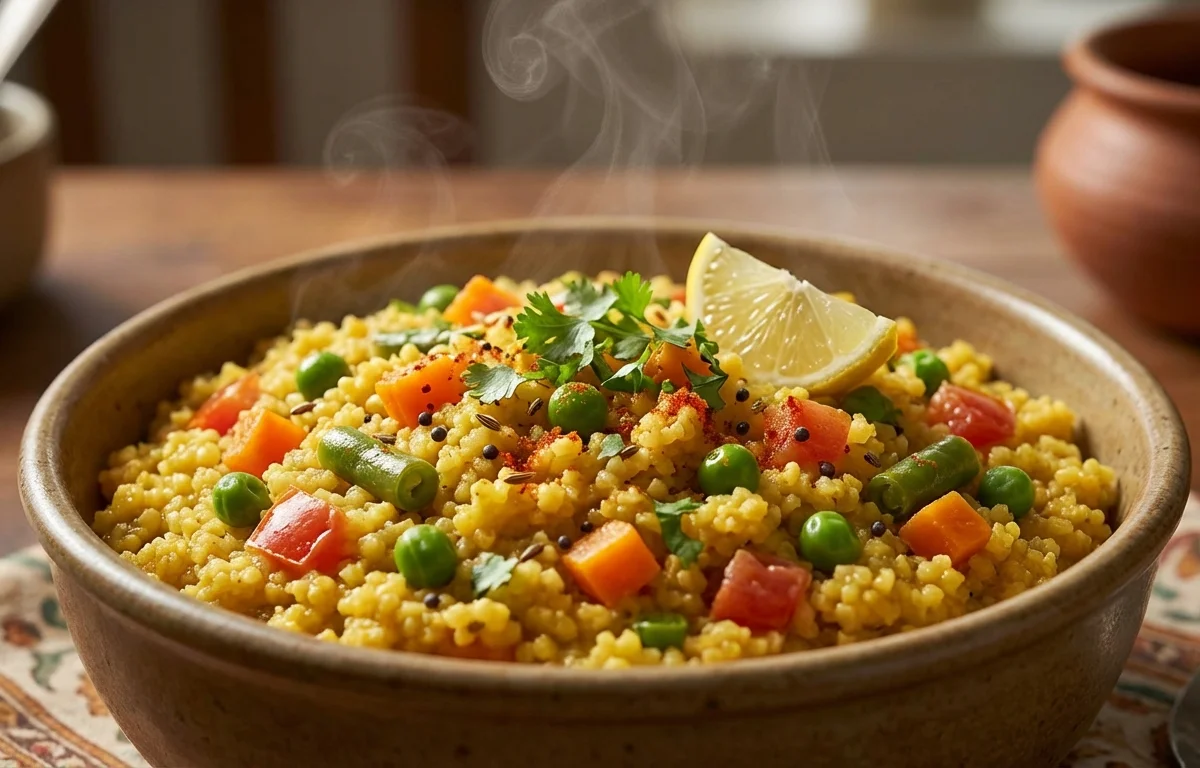
Vegetable Dalia
A light, comforting bowl of broken wheat cooked with everyday vegetables, mild spices, and plenty of water until soft and hearty. It makes a wholesome Indian meal that feels filling without being too heavy.
For 4 servings
- prep
Prep the vegetables and measure everything.
Finely chop the onion, ginger, green chili, carrot, and beans. Keep the peas, dalia, hot water, salt, turmeric powder, coriander leaves, and lemon juice ready near the stove.
- saute · ~3 min
Roast the dalia lightly.
Heat a pressure cooker over medium heat and add the dalia. Dry roast for 2 to 3 minutes, stirring often, until it smells nutty and turns slightly deeper in color. Transfer to a plate.
TIPKeep the heat medium and stir often so the broken wheat toasts evenly without burning. - temper · ~5 min
Make the base.
1.Heat oil in the same cooker over medium heat.2.Add cumin seeds and let them sizzle for 20 to 30 seconds.3.Add onion, ginger, and green chili.4.Cook until the onion turns soft and lightly golden, 3 to 4 minutes. - saute · ~2 min
Cook the vegetables with the spices.
1.Add carrot, peas, and beans to the cooker.2.Add turmeric powder and salt.3.Mix well and cook for 2 minutes so the vegetables get lightly coated in the oil and spices. - pressure cook · ~12 min
Pressure cook the dalia.
Add the roasted dalia and mix once. Pour in the hot water, stir well, and close the cooker lid. Pressure cook on medium heat for 2 whistles, then turn off the heat and let the pressure drop naturally.
TIPHot water helps the dalia cook evenly and keeps the grains from clumping. - mix
Fluff and finish the dalia.
Open the cooker and stir gently. If it looks too thick, add a splash of hot water and mix. Stir in the lemon juice.
- garnish
Garnish with coriander leaves.
- serve
Serve hot.
Spoon the vegetable dalia into katoris and serve warm as a light breakfast or simple meal.
What to keep in mind.
7 tips from the recipe — small details that make a real difference to the final dish.
- 1Dry-roast the dalia only until nutty and slightly darker; over-roasting can make it cook up tough.
- 2Use hot water when pressure cooking so the broken wheat swells evenly instead of turning patchy or clumpy.
- 3Chop the carrot and beans quite fine so they soften in the same time as the dalia.
- 4Let the cooker pressure release naturally; quick release can leave the grains unevenly cooked.
- 5If the dalia thickens after resting, loosen it with a little hot water before serving.
- 6Add lemon juice only after cooking is done to keep its fresh tang and avoid any bitter note.
- 7This dish keeps well for lunchboxes; pack it slightly looser because dalia continues to absorb moisture as it sits.
Adapt it for your goals.
Moong-dalia
Add a small handful of yellow moong dal with the broken wheat for a more filling, protein-rich khichdi-style bowl.
veganVegan
The recipe is already naturally vegan; just serve it with extra lemon and coriander instead of any dairy side.
jainJain
Skip onion and ginger, and use extra cumin, green chili, and coriander for a simpler Jain-friendly version.
south indian styleSouth-indian-style
Add curry leaves and a few mustard seeds to the tempering for a more aromatic South Indian touch.
Why this is on our healthy list.
Whole Grain Comfort
Broken wheat brings the wholesome benefits of whole grain wheat, making this dish filling and steady rather than overly heavy.
Vegetable-Rich Meal
Carrot, peas, and beans add fiber, color, and a broader mix of plant nutrients to a simple one-pot dish.
Light Yet Satisfying
With modest oil and plenty of water, this dalia cooks up soft and comforting without feeling greasy.
Digestive Spice Support
Cumin, ginger, and green chili add flavor while making a mild grain-based dish feel warmer and more lively.
Frequently asked questions
Yes. Cook it in a covered pot with hot water on low until the dalia is soft, stirring occasionally and adding more hot water if needed.