
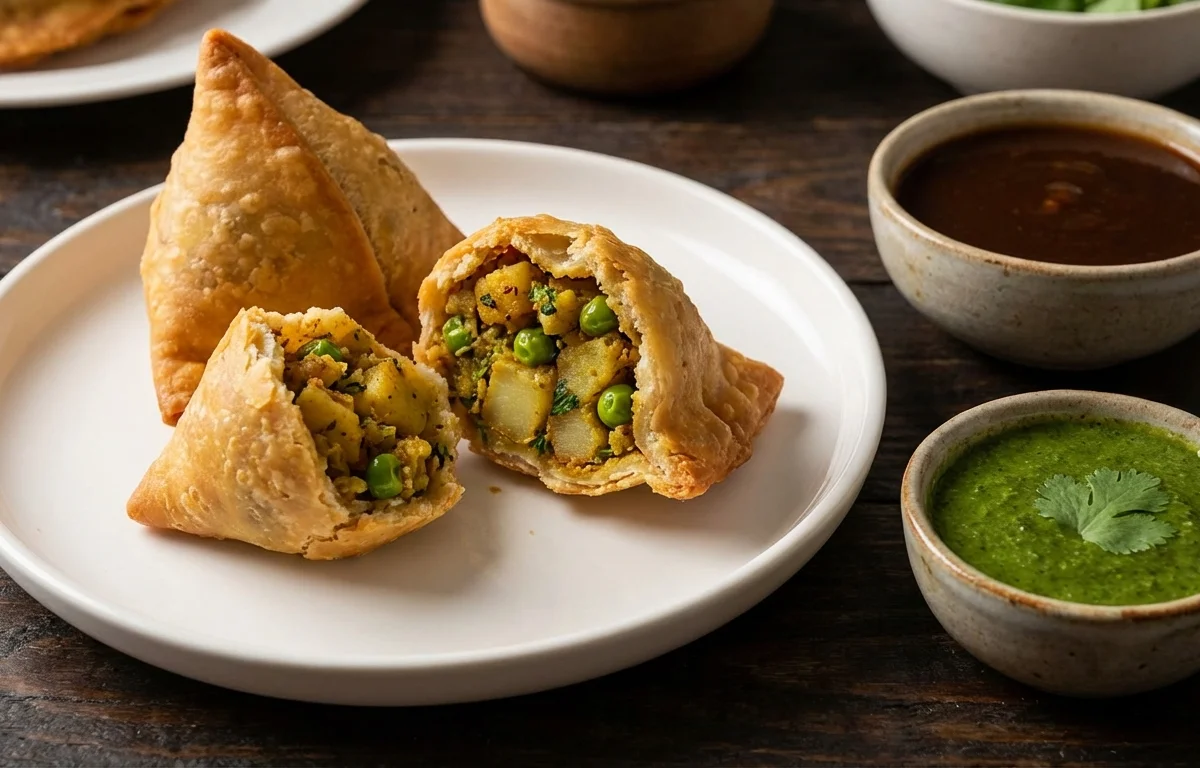
Vegetable Samosa
Crisp, flaky pastry filled with a warmly spiced mix of potato, peas, and aromatics, then fried until golden. These classic Indian samosas make a satisfying snack and pair perfectly with chutney or masala chai.
For 8 servings
- boil · ~15 min
Boil the potatoes.
Cook the potato in enough water until just tender, about 12 to 15 minutes. Drain well and lightly mash, keeping a few small chunks for texture.
TIPDrain the potatoes thoroughly so the filling stays dry and the samosas stay crisp. - knead · ~20 min
Make the samosa dough.
1.Add 2 cups all-purpose flour, carom seeds, and half of the salt to a bowl.2.Rub in the ghee with your fingertips until the flour looks crumbly and holds shape when pressed.3.Add water little by little and knead into a stiff dough.4.Cover and let the dough rest for 20 minutes.TIPA stiff dough gives the pastry its classic flaky shell, so do not make it soft. - saute · ~7 min
Cook the filling.
1.Heat 2 tsp oil in a pan over medium heat.2.Add cumin seeds, ginger, and green chili, and cook until fragrant.3.Add green peas and cook for 2 minutes.4.Add the mashed potato, remaining salt, coriander powder, cumin powder, garam masala, red chili powder, and dry mango powder.5.Mix well and cook for 2 to 3 minutes until the filling looks fairly dry.6.Turn off the heat and mix in the coriander leaves.TIPKeep the filling dry, not wet or sticky, or the samosas can burst while frying. - mix · ~1 min
Make the sealing paste.
Mix 1 tbsp all-purpose flour with 2 tbsp water into a smooth, thick paste. Keep it ready for sealing the edges.
- assemble · ~15 min
Shape the samosas.
1.Divide the dough into 4 equal balls and roll each into an oval.2.Cut each oval in half to make 8 pieces.3.Take one half, brush the straight edge with sealing paste, and form a cone.4.Fill the cone with 2 to 3 tbsp potato mixture.5.Brush the open edge with sealing paste and press firmly to seal.6.Repeat with the remaining dough and filling.TIPPress the seams well so the samosas do not open in the oil. - fry · ~20 min
Fry the samosas on low heat.
1.Heat oil for frying in a deep pan over low to medium-low heat.2.Slide in a few samosas at a time without crowding the pan.3.Fry slowly, turning occasionally, until crisp and evenly golden brown.4.Lift out and drain briefly before frying the next batch.TIPStart frying in moderately warm oil, not very hot oil, so the pastry cooks through and blisters evenly. - serve
Serve the vegetable samosas hot.
What to keep in mind.
6 tips from the recipe — small details that make a real difference to the final dish.
- 1Rub the ghee into the flour until it clumps when squeezed; that fat coating is what gives samosas their flaky khasta shell.
- 2Keep the dough stiff and rest it fully, or the wrapper will blister unevenly and lose its classic shape in the oil.
- 3Let the potato-pea filling cool before shaping so steam does not soften the pastry from the inside.
- 4Do not overfill the cones; a little headspace makes sealing easier and helps prevent bursting while frying.
- 5Fry on low to medium-low heat from the start so the crust cooks through slowly and turns crisp instead of developing bubbles.
- 6If making ahead, shape the samosas and refrigerate them uncovered for 30 minutes before frying for firmer seams and easier handling.
Adapt it for your goals.
Baked
Brush the shaped samosas with oil or ghee and bake until golden for a lighter version with less active frying.
veganVegan
Replace the ghee in the dough with neutral oil to make the samosas fully plant-based.
air fryerAir-fryer
Lightly oil the samosas and air-fry them for a crisp shell with less oil and easier small-batch cooking.
spicierSpicier
Add extra green chili or a little more red chili powder if you want the potato filling to have a sharper heat.
Why this is on our healthy list.
Vegetable-Based Filling
The potato, peas, ginger, and coriander filling adds vegetables and herbs instead of relying only on pastry.
Peas Add Plant Nutrients
Green peas contribute plant protein and fiber, making the filling more balanced and satisfying.
Digestive Spices
Cumin, carom seeds, ginger, and coriander are classic warming spices that bring aroma and can make rich snacks feel easier to enjoy.
Frequently asked questions
This usually happens when the oil is too hot or the dough is too soft. A stiff dough and slow frying at low to medium-low heat give a smoother, crisper crust.


